


Rose Color Meanings, Decoded (Well, Our Version Anyway)
Aug 28, 2026
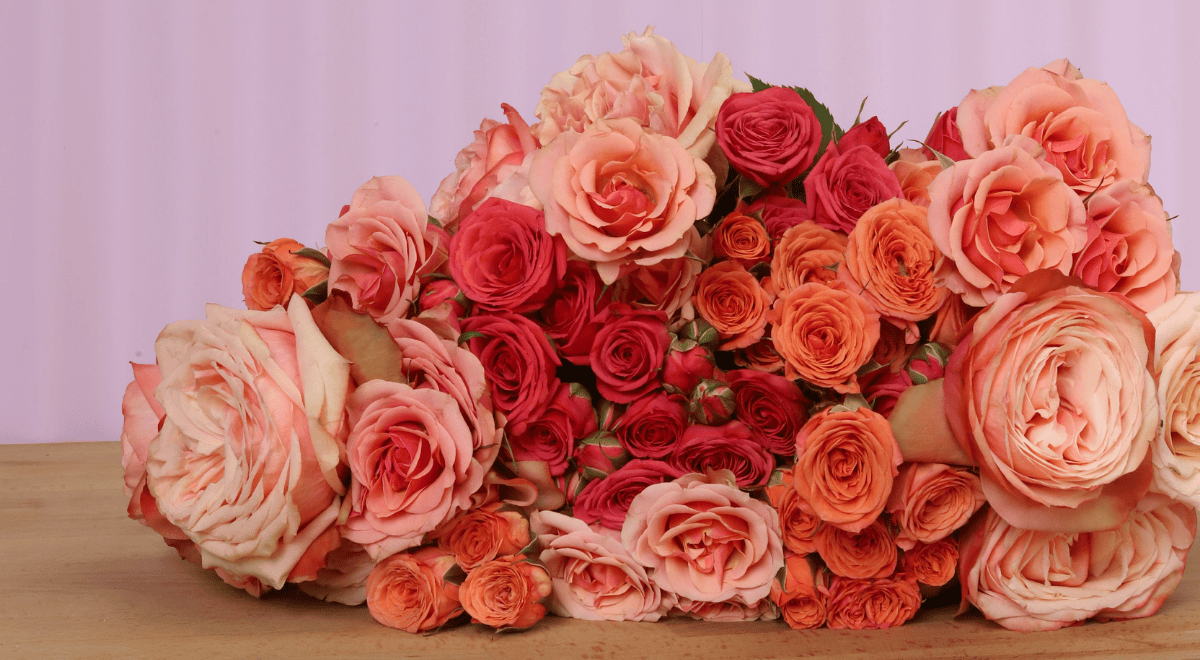
I've spent 15 years selling flowers, designing with them, and now growing way more roses at our Farmquarters than we need, but how many we need really is so subjective, right?
But here's the thing about roses, they really come with a lot of baggage. Baggage that dates back more years than we've been alive, so it's going to take a minute to unpack. We should feel a little bad for roses. After all, a peony can just show up for the party and be beautiful no matter what color she comes in. A rose walks into the room with a whole backstory, carrying an absolutely ridiculous amount of emotional luggage.
Red roses mean love. Yellow means friendship. White means purity. Pink means admiration. Somewhere along the way, we assigned every rose color a personality like they were contestants on a sexist dating show (you know the one).
But as weird and outdated as it is, the symbolism is kind of fun, as long as you don't get too precious about it. If your best friend loves red roses, please send her red roses. No one is going to arrest you for violating Victorian flower etiquette. And if they are, just kill them with kindness while wondering (on the inside, of course) what must be going on with them to try and bring you down with their negativity.
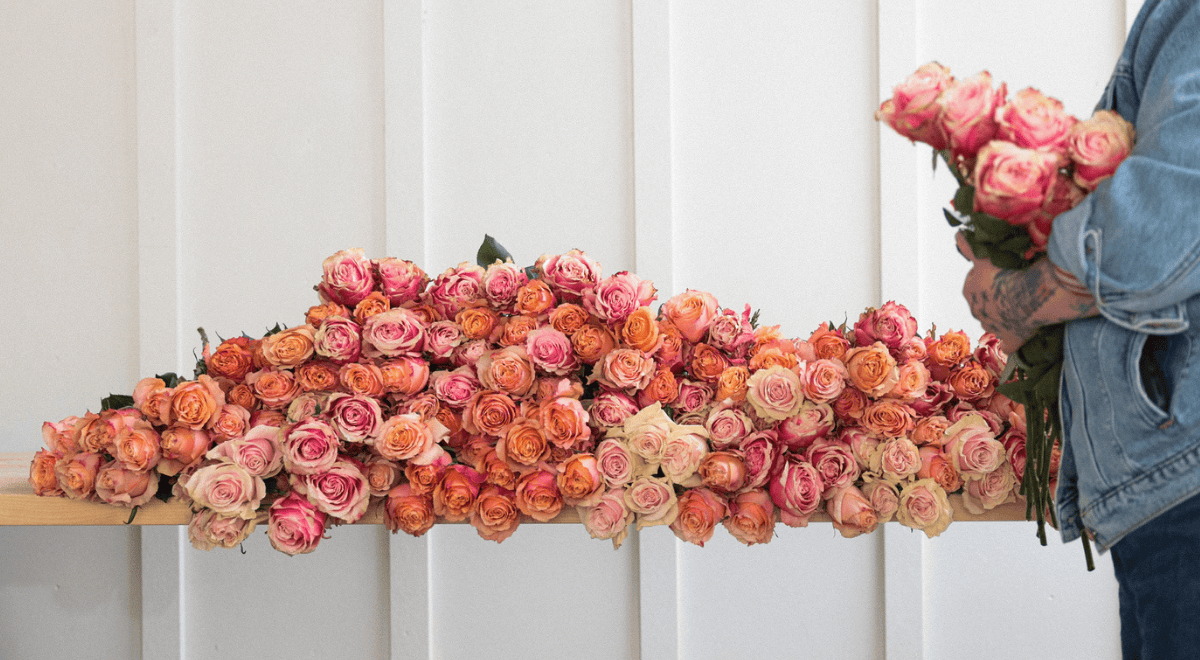
But if you're curious what the colors traditionally have meant over the years, here's my very unofficial guide.
- The Quick Version (For the Skimmers — We Love You Too)
- Red roses mean love, romance, and passion — the classic.
- Pink roses mean affection, admiration, and gratitude — the safe-to-send-anyone color.
- White roses mean peace, remembrance, and new beginnings — which is why they show up at weddings and funerals.
- Yellow roses mean friendship, joy, and optimism.
- Peach roses mean gratitude, sincerity, and appreciation.
- Coral and orange roses mean enthusiasm, energy, and excitement.
- Lavender roses mean enchantment, wonder, and love at first sight.
- Beige, brown, and earth-tone roses are too new to have Victorian baggage — right now they mostly mean "you have great taste."
That's the cheat sheet. Now for the backstories, the opinions, and which ones I'd actually send.
Red Roses: The Main Character
I doubt there's any surprise here that red roses mean love, romance, passion—all the big, lovey-dovey stuff.
Red roses have had exceptionally good PR for a couple thousand years. The Greeks associated roses with Aphrodite, the goddess of love, and even had myths explaining their red color with blood and heartbreak (ouch!). Then the Victorians came along, invented an entire coded language around flowers, and officially made the red rose shorthand for passionate love. Add a century or so of Valentine's Day marketing and, well, here we are.
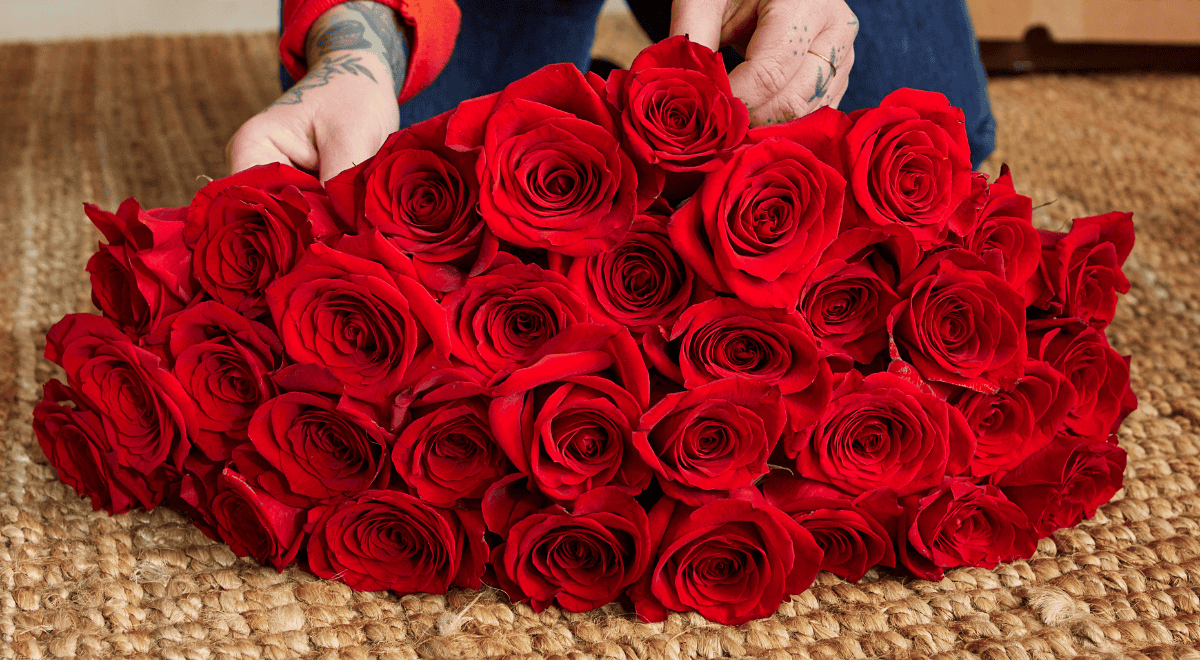
And the numbers back it up. In a 2022 IPSOS poll for the Society of American Florists, 83% of Valentine's Day flower purchases included roses — and 65% of those were red. Which is to say: if you sent red roses last February, you were in extremely good company.
We like to think of them basically as the LBD of Valentine's Day. Classic, expected, and occasionally so overdone that you want to rebel against them entirely and wear the big magenta dress instead.
I've never been particularly excited by twelve tight red roses lined up like soldiers and fluffed out with baby's breath. Maybe it's the lack of bridge color (throw in a peach tone maybe?) between the saturated red and the stark white, but it's never worked for me personally. But a big, floofy, almost too beautiful to be real garden rose? Now that's a whole different story. Especially those deep reds that verge on burgundy and look like they belong in an old Dutch painting.
So yes, red roses are romantic. And they've earned their reputation. We just think they're a whole lot better when they look like they have one.
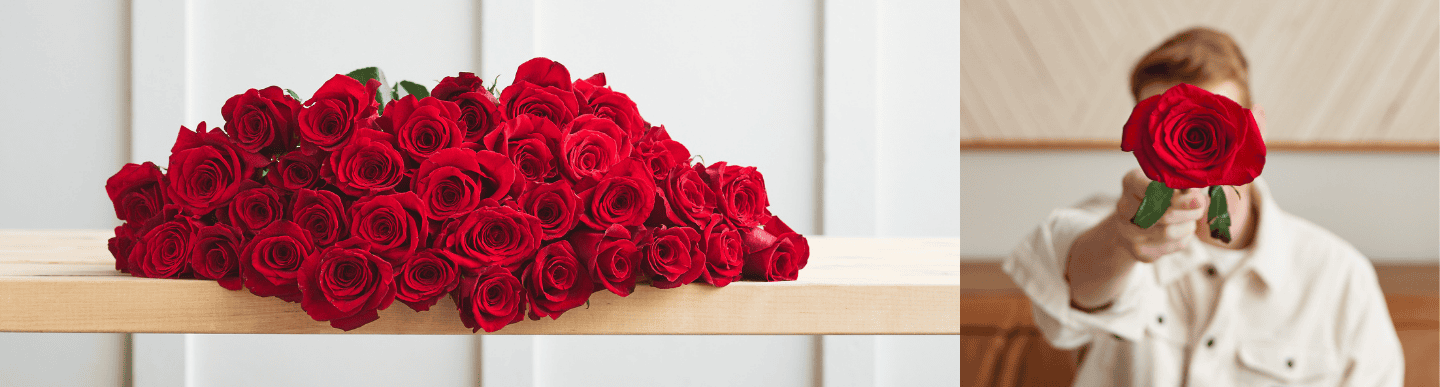
The most common red roses on the cut-flower market are varieties like Freedom and Explorer—the classic, straight-up red roses most of us picture when we think Valentine's Day. (And if a big armload of exactly that classic red is what your person loves, that's precisely what our Red's Up! bouquet is — three dozen farm-fresh Freedom roses, ready for fluffing!) But thankfully, there are so many more options now: rufflier, fuller-faced varieties, and roses that move just slightly around the color wheel into those deep, saturated wine, berry, garnet, and almost-black reds. Those are the ones we're constantly searching the earth for, because they still say romance, just with a little more personality.
Pink Roses: The One I'd Actually Invite Everywhere
Pink roses are probably the easiest color to send because they can mean affection, appreciation, admiration, gratitude, love—all without immediately making the recipient wonder if a proposal is coming. And with that many meanings, we all have so many people in our lives they'd be appropriate to send them to.
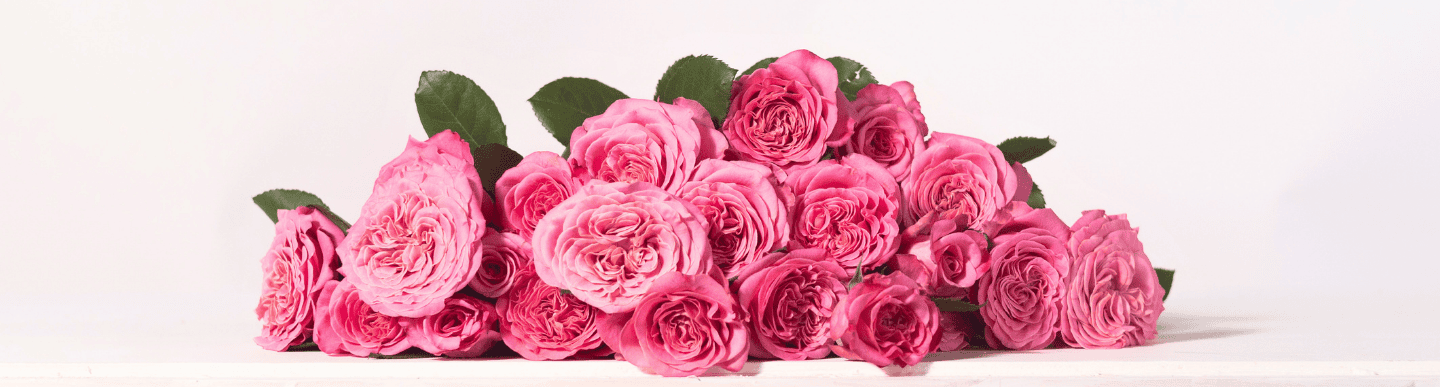
And there are approximately eight million shades of pink, which means "pink roses" could really be THE category instead of just one category all on its own. I mean, blush and magenta technically being the same color feels like a fairly loose interpretation of the word "same."
Pink roses don't have quite the scandalous origin story red roses do—no goddesses bleeding on them or doomed lovers that I could find. Their PR campaign really took off with the Victorians, who created the secret language of flowers. Pink became the softer cousin to red: affection, admiration, gratitude, and a gentler kind of love. Even the shade mattered. Pale pink leaned sweet and graceful, while deeper pinks said more of a "thank you, you're wonderful." Which actually feels pretty accurate to me, because pink isn't one personality—it's basically your entire group chat.
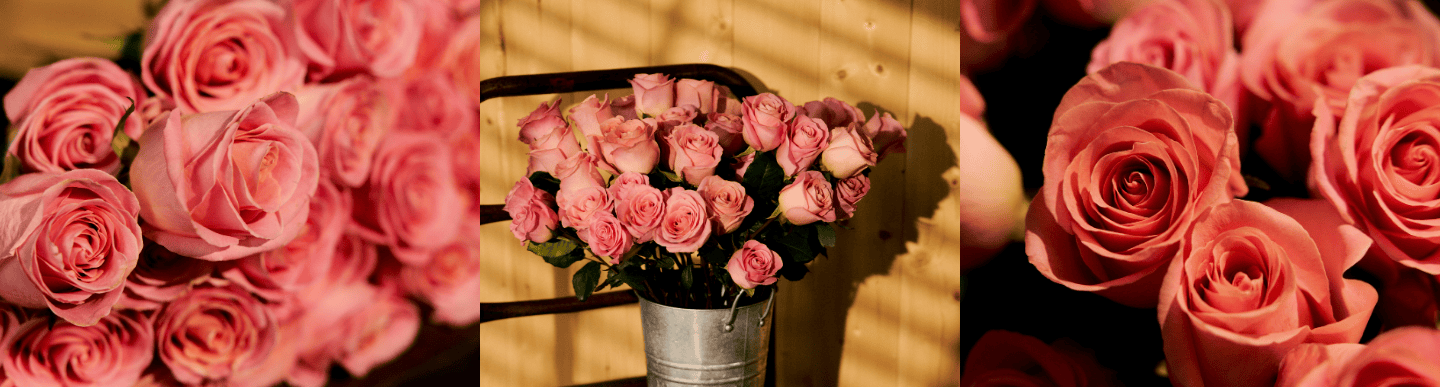
Pale blush is soft, elegant, and incredibly sweet without feeling too precious. That warm, chalky medium pink we all decided to call Millennial pink had a serious moment—and it's still one of our favorites. It's glamorous and optimistic, feminine without feeling sugary, and somehow plays nicely with almost everything. Mauve is what happens when pink grows up, buys a great coat, and stops trying so hard. It's smoky and romantic and just mysterious enough to make an arrangement really interesting. Hot pink is energetic, confident, and impossible to ignore. And magenta is its slightly spicier older sister—richer, moodier, and, in my opinion, wildly underrated.
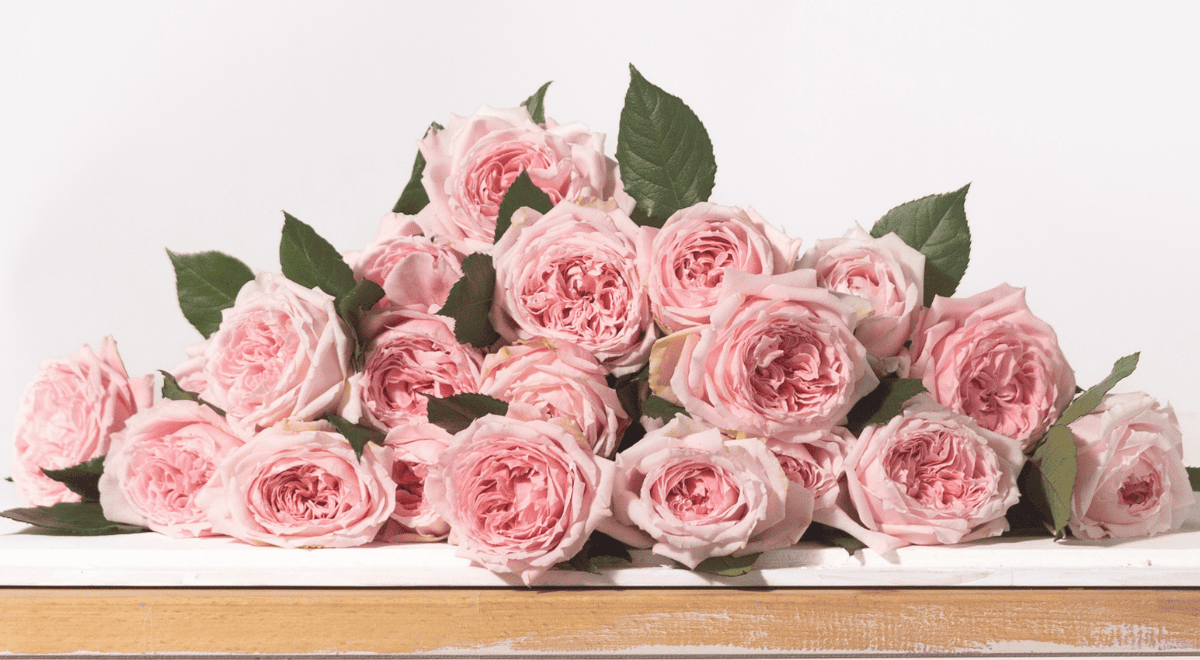
Pink roses are basically everyone in your group chat—sweet, bold, elegant, loud, understated, a little spicy, and occasionally all of those things before noon. There's a shade for every personality, which is probably why you can send pink roses to almost anyone: your mom, your partner, your sibling, your best friend, the coworker who just saved your rear on something, or yourself. (It's also why our I Can't Believe They Aren't Peonies garden roses—a pastel pile so ruffly they get mistaken for peonies on a near-daily basis—go to moms, partners, and "it's Tuesday" recipients in roughly equal measure.)
Turns out, pink really is the color that can do it all (but we already knew that, right?).
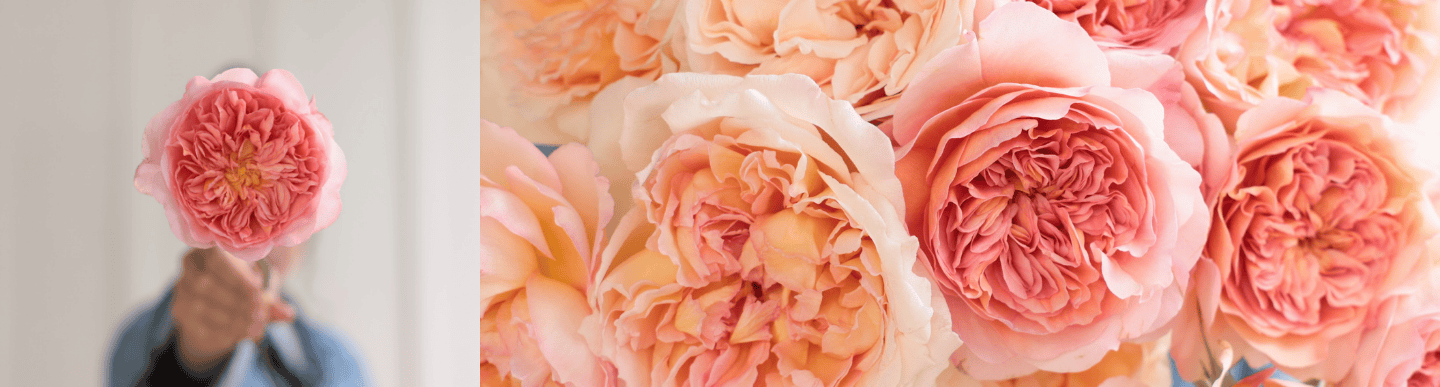
White Roses: The Carolyn Bessette-Kennedy of Roses
This is probably the easiest way I can explain white roses: they're the Carolyn Bessette-Kennedy of roses. Simple. Chic. Impossibly elegant. No extra accessories required.
White roses have traditionally meant purity, innocence, peace, remembrance, and new beginnings, which is why you see them at both weddings and funerals. That sounds a little contradictory until you think about it. Both are these enormous life moments where flowers are somehow expected to communicate all the things nobody really knows how to say out loud. No pressure, flowers.
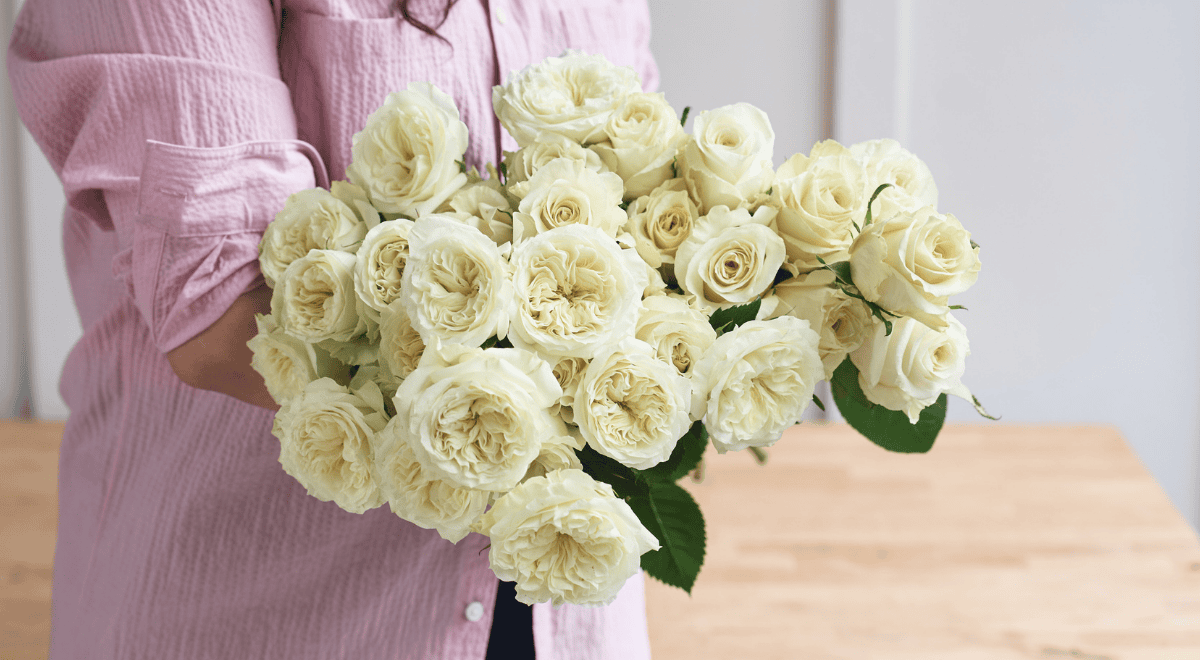
The purity and innocence part? We're a very feminist bunch around here, so you can probably guess how interested we are in carrying forward centuries-old ideas about female virtue. Approximately zero percent. We'll happily leave that with the Victorians and keep peace, remembrance, and new beginnings.
When I started Farmgirl, the absolute height of "modern" floral design was white roses lined up perfectly in a short square glass vase, usually with a ti leaf wrapped around the inside of the vase to hide the stems. They were everywhere. And listen, there was nothing wrong with them, but they were a little too buttoned-up for me then, and they definitely are now. (Although if that clean, minimalist look is your thing, absolutely no judgment—that's exactly what our Blanc de Blanc is for, and it does it beautifully sans vase leaf to really date it!).
At Farmgirl, we like our white roses with a little more life to them. Give us white roses mixed with eucalyptus and some textural bits—scabiosa, snaps, alstroemeria, maybe even a few big floofy rose lilies—and suddenly they feel completely different. Still elegant, but looser. Softer. A little less hotel-lobby-in-2010 and a little more like something you actually want sitting on your kitchen table. In fact, the roses I carried at my own wedding are exactly this idea: an antiqued ivory garden rose called Eugenie, which we now sell as Christina's Wedding Roses because apparently I have no secrets left. But, that’s ok, I love to share all the hidden floral varieties out there so we can all enjoy them!
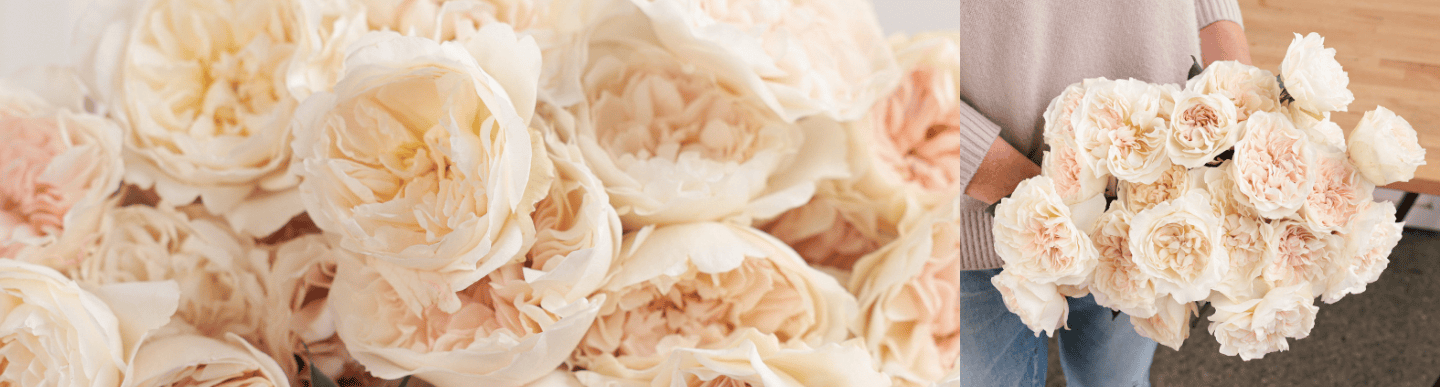
There really is something incredibly calming about white roses. They're sophisticated without looking overly styled, elegant without being fussy, and they somehow make an entire room feel more pulled together just by being there. Which, now that I think about it, is also very Carolyn Bessette-Kennedy.
White roses don't need to shout to make an impression. They just quietly look better than everybody else in the room and carry on. Which might be the most modern thing about them.
Yellow Roses: They've Had a Rebrand
Yellow roses have had a bit of a reputation makeover—and, apparently, so have I.
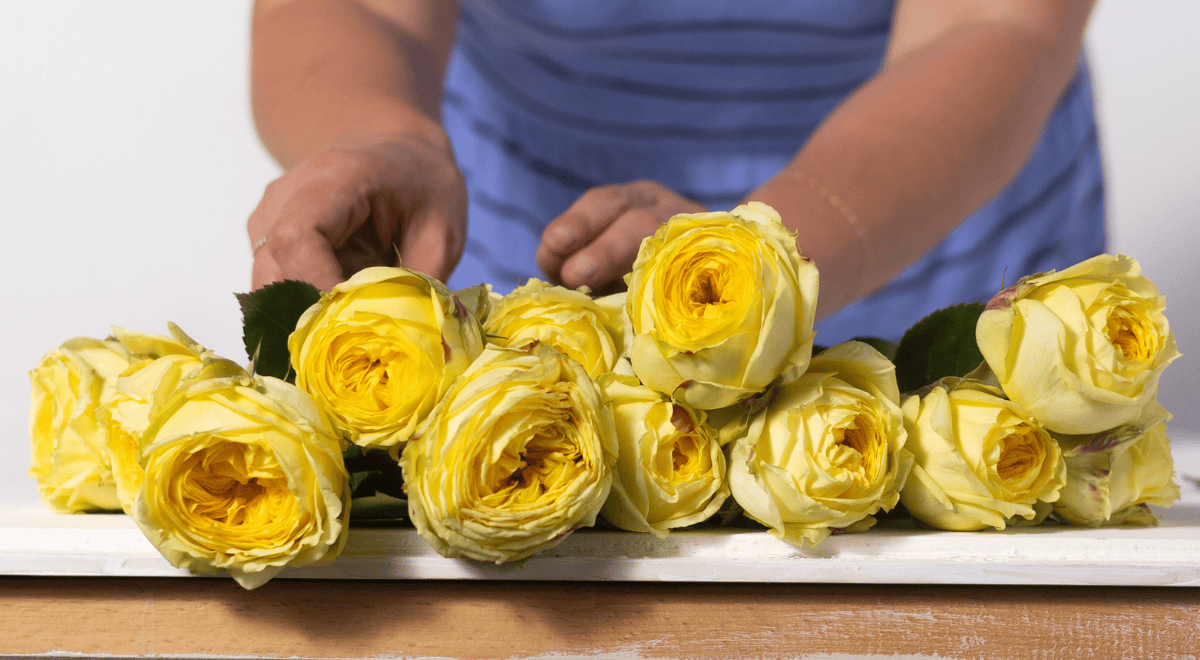
Historically, yellow roses were associated with jealousy and infidelity, which feels like an awfully dramatic burden to put on such a cheerful flower. Imagine looking at something that basically resembles sunshine with petals and deciding, Yes, betrayal. Thankfully, somewhere along the way we all came to our senses, and yellow roses got reassigned to much happier territory: friendship, joy, warmth, and optimism.
I should also confess that I used to hate yellow flowers. Roses included. They always felt too bright, too primary, too…yellow. I know that sounds ridiculous, but if you've ever had a color you just couldn't get behind, you understand. And now, because the universe absolutely loves proving me wrong, one of my very favorite roses is a gigantic yellow garden rose called Antonia Garden.
To be clear, I have not completely changed my ways. Bright caution-vest yellow and I have not reconciled, and I don't see that relationship healing anytime soon. But butter yellow? Pale lemon chiffon? A gigantic ruffly rose that looks like someone somehow turned warm sunlight into a flower? I will fully support that from now through eternity.
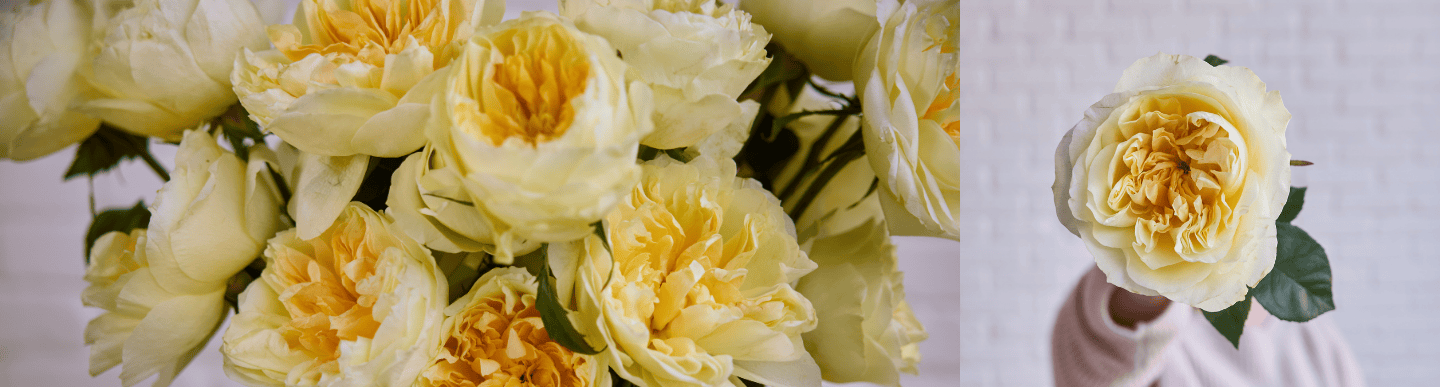
And that's probably why the newer meaning of yellow roses feels so right to me. They're for the people who make your life lighter. Your best friend, your mom, your sibling, the coworker who knows exactly when you need coffee—or a fridge cigarette (aka Diet Coke) from the breakroom vending machine—or anyone who deserves a little sunshine for absolutely no reason at all.
They're happy without being romantic, thoughtful without feeling overly serious, and honestly kind of impossible to look at without feeling at least marginally better.
Apparently yellow roses didn't need a rebrand nearly as much as I did.
Peach + Coral Roses: The Nancy Meyers Kitchen of Flowers (and my favorite!)
If a Nancy Meyers kitchen were a flower, I'm pretty sure it would be peach—beautiful and polished, but still warm, inviting, and completely approachable.
And I mean that as the highest possible compliment. Nancy Meyers somehow makes a room look incredibly expensive and completely lived-in at the same time—beautiful enough to photograph, but still like someone might be making pasta at the island in ten minutes. That's peach to me. It's elevated, but it never feels untouchable.
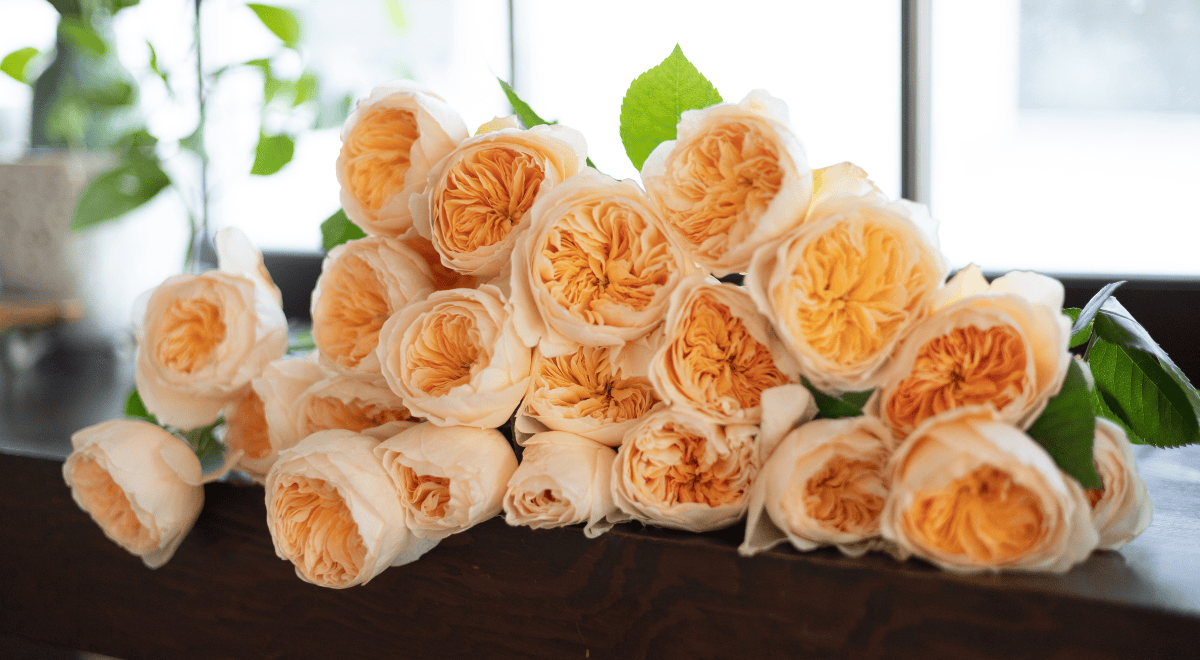
Peach roses traditionally symbolize gratitude, sincerity, and appreciation, while coral and orange lean more toward enthusiasm, excitement, and energy. The colors get bolder, and so does the feeling.
Peach is actually my favorite rose color, and has been for years, because it's the ultimate bridge flower. It can sit between pink and red, cream and orange, blush and burgundy—honestly, almost anything—and somehow make the whole palette make sense. If I'm staring at an arrangement thinking something isn't quite working, peach is very often the answer. It's basically my floral version of "have you tried adding a lamp?"
I love this whole family: peach, apricot, coral, and those hard-to-describe pinky-orange shades that seem to change depending on what you put next to them. They're warm without being sugary, romantic without being predictable, and incredibly forgiving when you're designing.
And the best peach rose story in the business belongs to Juliet. She's a garden rose that famed English breeder David Austin spent roughly fifteen years developing before her debut at the 2006 Chelsea Flower Show—an investment reported at $3 million, which earned her the nickname "the $3 million rose" and, eventually, a reputation as one of the most requested wedding roses in the country. About 90 petals per bloom, that perfect peachy-apricot rosette, and worth every penny of somebody else's money. She's also the exact rose in our Team Buttercream bouquet (and her double-dozen sister, Extra Buttercream), so you're welcome to audit the investment personally.
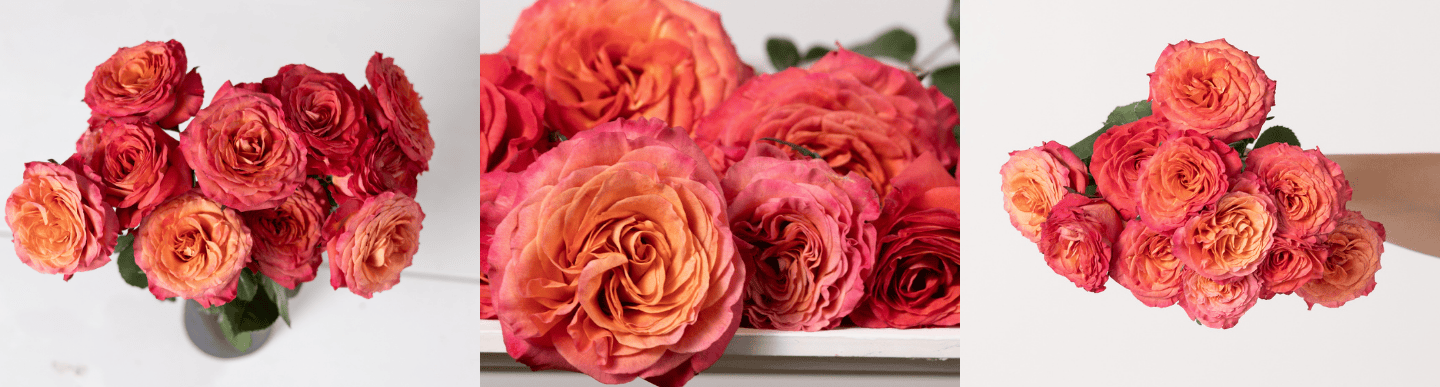
Here's a fun bit of contrarian math, though: in that same florist-industry poll I mentioned earlier, only 21% of Valentine's rose buyers chose peach or coral. I choose to read that not as unpopularity but as the rest of the world simply not having caught on yet. More Juliets for us.
Peach is the softer one—the cashmere sweater, the linen napkin, the giant bowl of lemons on the counter. Coral has a little more kick. It's peach after a glass of wine, basically. Still warm and beautiful, just louder and more fun.
They're also perfect when red feels too obvious and pink feels a little too sweet. Peach and coral roses are for thank-yous, celebrations, dinner-party hosts, new relationships, old friends, or the person who has impeccable taste and will absolutely notice that you didn't send the obvious choice.
Peach has that same Nancy Meyers energy: beautiful enough to aspire to, but warm enough that you actually want to live there. Put-together without feeling precious, elegant without being chilly, and always inviting you to pull up a chair and stay awhile.
Honestly, if I could only design with one rose color for the rest of my life, this would probably be it.
Orange Roses: Not Exactly Wallflowers
Orange roses traditionally symbolize attraction, fascination, enthusiasm, and energy. Which tracks because there is absolutely nothing shy about an orange rose.
They're bolder than peach and less serious than red, and they have this incredible ability to wake up an arrangement. A few stems can take something pretty and make it feel completely different—warmer, more interesting, and a lot less expected. (They're also the underdog of the bunch: just 12% of Valentine's rose buyers go orange, per that same poll—which honestly tracks, because orange roses were never meant for the big holiday of obligation. They're for the random Tuesday celebration.)
Peach pulls up a chair. Orange turns the music up.
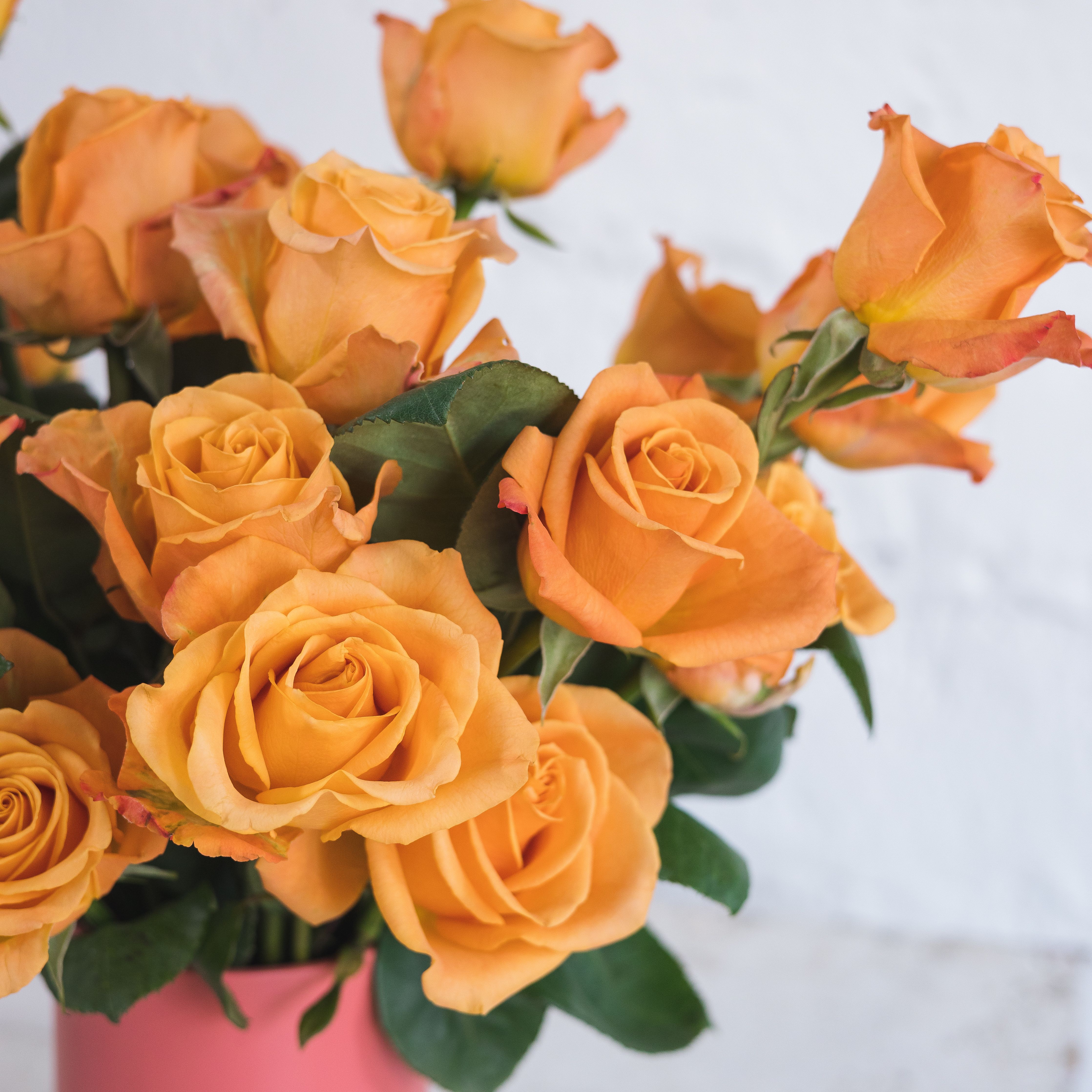
I especially love the slightly strange oranges: burnt orange, persimmon, copper, or anything that looks like someone mixed in a tiny bit of rust, caramel, or brown. Straight-up traffic-cone orange is still a harder sell for me. I don't need my flowers to look like they're directing airport ground traffic. But muddy it up a little and I'm completely in.
One of my forever favorites is Babe spray rose, which is basically the perfect chalky orange. It's not bright, it's not loud, and it has just enough chalky warmth to make it work with almost everything we want to use in fall. Dahlias, mums, hypericum, eucalyptus, burgundy foliage, textural bits—you name it. I'm pretty sure we could put Babe in every fall arrangement we ever make and I'd never get tired of it.
Orange roses are for celebrations, congratulations, big personalities, new adventures, or anyone who could use a little extra energy sent their way. They're not trying to be subtle—and sometimes the whole point of sending flowers is that you don't want them to be.
Lavender Roses: The Beautiful Weird Ones
Lavender roses traditionally symbolize enchantment, mystery, wonder, and even love at first sight—which somehow feels exactly right because there's something about them that makes you stop and look twice.
The best lavender roses are almost impossible to describe. Are they lavender? Mauve? Gray? Dusty pink with a little purple thrown in? Yes. And that's exactly why I like them. They're not quite pink, not quite purple, and the really good ones have this smoky, chalky quality that almost doesn't look real.
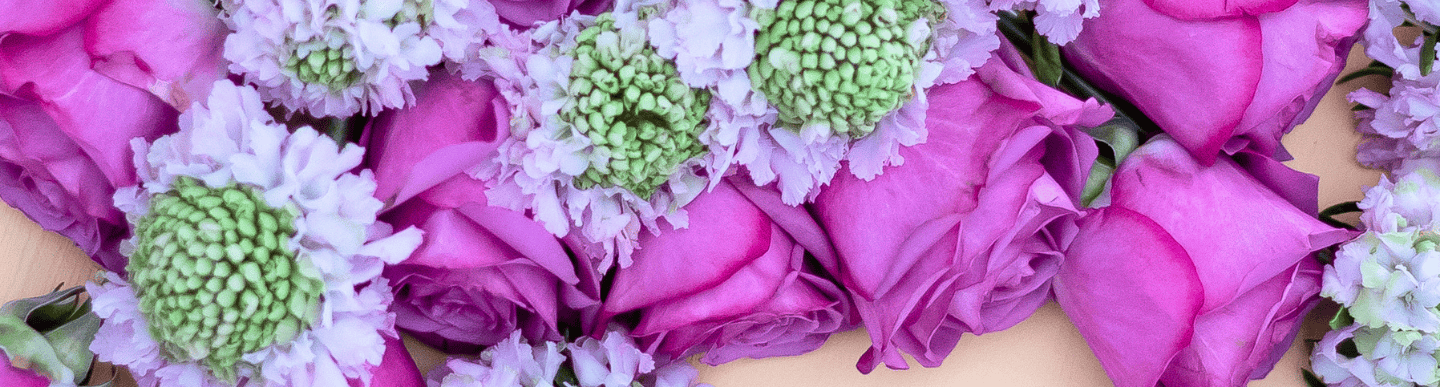
I should clarify that bright purple and I are not particularly close. But give me a lavender rose that leans gray, dusty mauve, mushroom, or some strange color I can't adequately describe even though flowers are literally my job? I'm in. The harder the color is to name, the more I usually like it.
They can also be a little bit diva-ish. In my experience, lavender roses don't always open as enormously as I want them to, and they're not necessarily winning any vase-life endurance awards. (If vase life is your love language, I ranked the marathon runners in What Flowers Last the Longest.) But beautiful things get away with a lot, apparently, because I keep ordering them anyway.
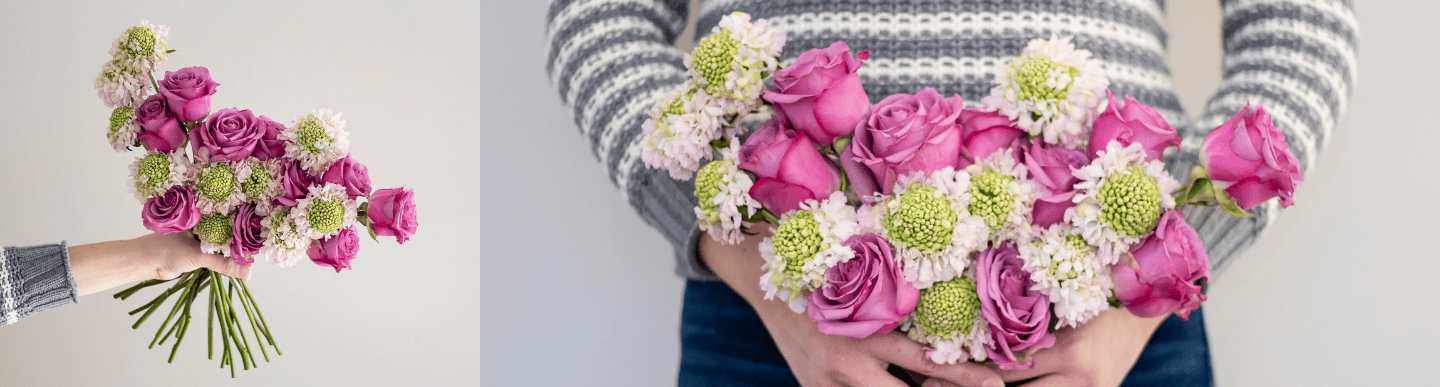
Lavender roses are for the person who likes things a little less obvious. The friend with the great coat. The person whose house has something weird and beautiful in every room. Anyone who would rather get the rose you had to look twice at than the one everyone else picked.
They're not the obvious choice, which is probably exactly why they're so memorable.
The Trendy Roses — Beige, Brown + Dusty Earth Tones
These are the roses that, ten years ago, I probably would have looked at and thought, Is that…brown? And now, of course, I'm obsessed with them. Apparently this is what personal growth looks like.
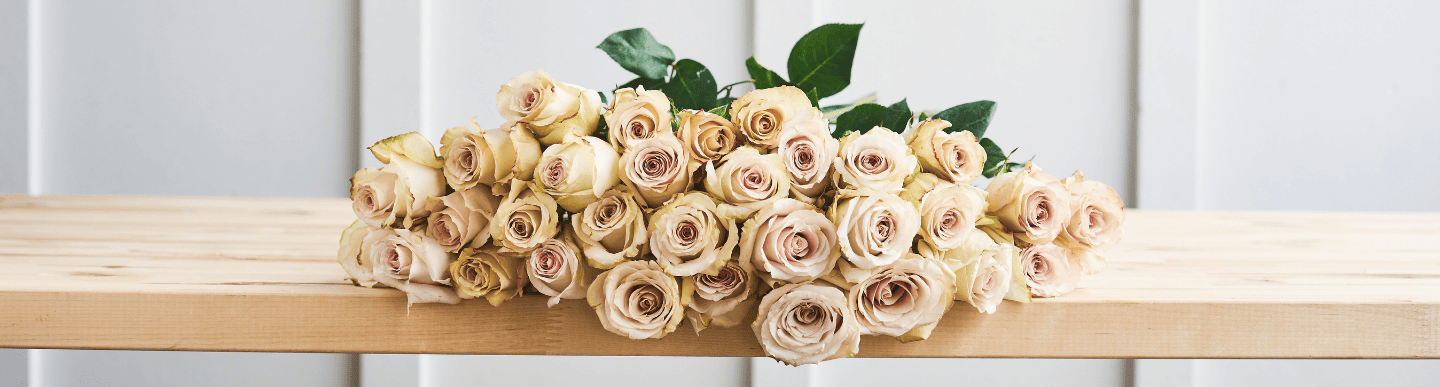
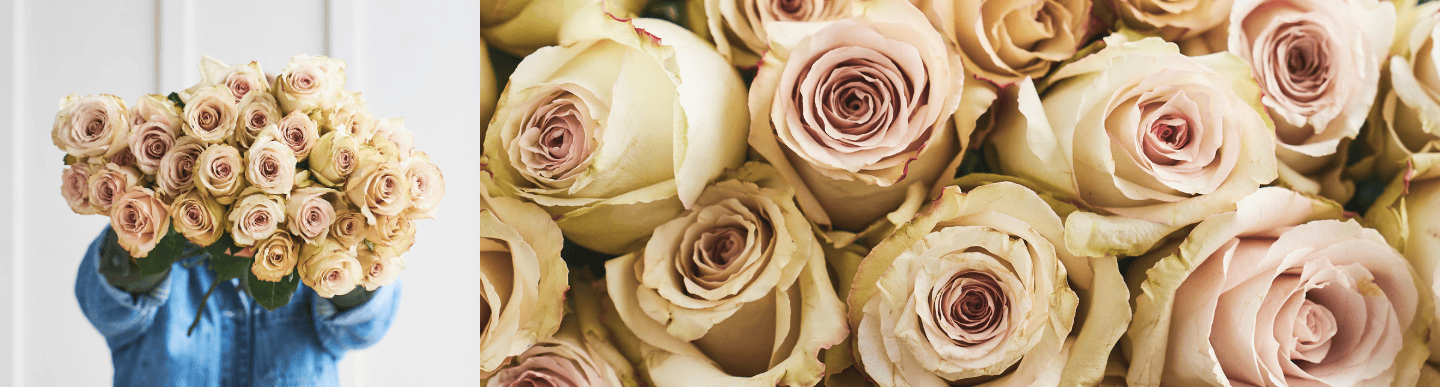
Beige, taupe, caramel, café-au-lait, dusty mauve, brown—basically all the colors we spent years avoiding in flowers are now the It Girls of the rose world. They're the ones florists want to get their hands on, designers build entire palettes around, and people screenshot because they need to know exactly what that rose is. Somehow the colors that once might have been described as "muddy" became the coolest flowers in the room.
And honestly, I get it. They're weird. They're beautiful. They make everything around them look cooler. They have the floral equivalent of that maddening quality some women have where they throw on an oversized sweater, slick their hair back, add one really good pair of sunglasses, and suddenly you're questioning every outfit you've ever worn.
Somewhere along the way, rose breeders also apparently handed the naming job to a coffee shop. Café Latte, Coffee Break, Cappuccino, Espresso, Toffee—the trendiest roses now sound like my order before 9 a.m. And weirdly, the names are perfect because they really do live in that creamy, caramel, mocha, slightly muddy world.
Case in point: my current favorite rose on the entire planet is the Miyabi Brown, a taupey, caramel-y garden rose that shifts color depending on the light and the company she keeps. I love her so much we named the bouquet after me—Christina's Favorite Garden Roses—because subtlety, as previously established, is not my strong suit. (And if you want the beigey gateway version, the Quicksand roses in our All Sands bouquet are exactly where I'd tell you to start.)
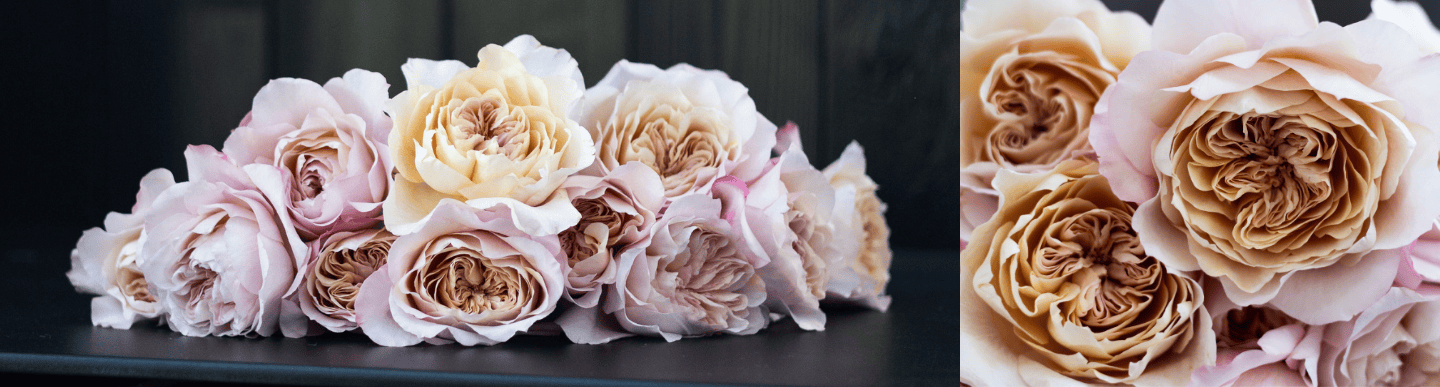
They're not pretty in the really obvious, pageant-queen way. They're cooler than that. Depending on the light, the same rose can look peach one minute, taupe the next, and somehow a little lavender five minutes later. They're the woman wearing head-to-toe neutrals who somehow looks impossibly chic, while I try the exact same thing and look like I forgot to finish getting dressed.
And, like most true It Girls, they somehow make everyone around them look better too. I love using them as bridge colors because they can pull warm and cool tones together, soften something that feels too bright, or add just enough weirdness to keep a pretty arrangement from feeling predictable. They make everything feel more layered and intentional without having to scream for attention.
These are the roses for the person who knows what greige is, has spent an unreasonable amount of time debating paint undertones, owns at least one item of clothing she insists is "mushroom," and will choose the strange little muddy rose over the perfect red one every single time.
They may not have centuries of symbolism behind them yet, but they have something arguably harder to get: cool-girl status. And right now, they're absolutely the roses everyone else wants to be.
The Rose Colors That Don't Technically Exist (Well, Mostly)
Since we're decoding everything anyway, let's settle the ones the internet asks about constantly.
Are blue roses real?
No—blue roses don't exist in nature. Roses lack delphinidin, the pigment that makes flowers like delphiniums blue, so every "blue" rose you've ever seen at a grocery store was a white rose that took a very long drink of florist dye. Fittingly, the symbolism leans all the way into that: blue roses stand for mystery, the impossible, and the unattainable. Which is genuinely poetic. But as someone who chooses flowers for a living, I'd send you a real, smoky lavender rose over a dyed blue one every single time—and I'd feel great about it.
What about black roses?
Also not quite real. "Black" roses are actually the deepest, moodiest burgundy-reds—varieties like Black Baccara get remarkably close, especially in low light. Traditionally they've symbolized farewell and endings, though lately they've picked up a second life as a symbol of rebirth and dramatic new beginnings. They're also, if we're being honest, the very same almost-black reds I told you I'd take over a tight dozen any day of the week. Everything old is goth again.
And green roses?
Plot twist: green roses are actually real. They're rare and a little strange-looking (in the best way), and they symbolize growth, renewal, and good fortune—which makes them a quietly perfect choice for new jobs, new homes, and new chapters. The person who'd love a green rose is the same person who'd love the brown ones. I say that with enormous affection, because I am that person.
And Then There Are Garden Roses…
This is where I lose all objectivity. To me, garden roses are almost their own species. I know they technically aren't, so please don't send me angry horticulture emails, but once you've worked with them it's hard to put them in the same bucket as the tight little roses most of us grew up seeing at the grocery store.
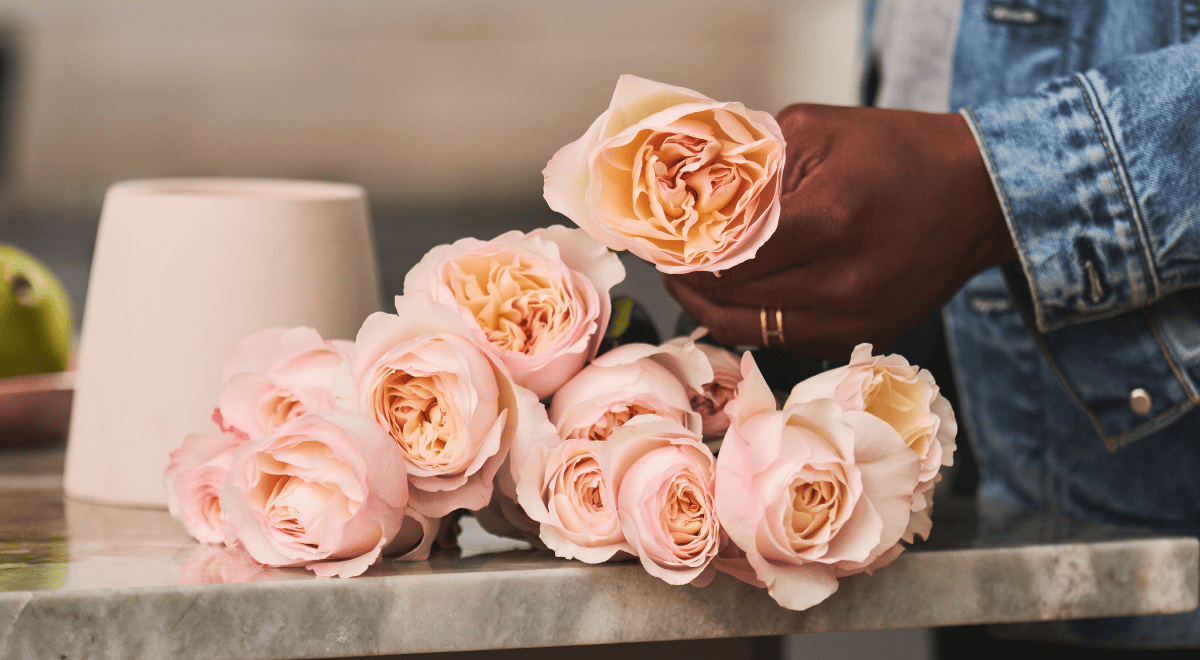
They're bigger, looser, rufflier, usually more fragrant, and a little less perfect—which is exactly why I love them. The petals bend, the centers get wonky, one side sometimes opens before the other, and some get so enormous they look like they're about to completely fall apart. That's usually when I think they're the most beautiful.
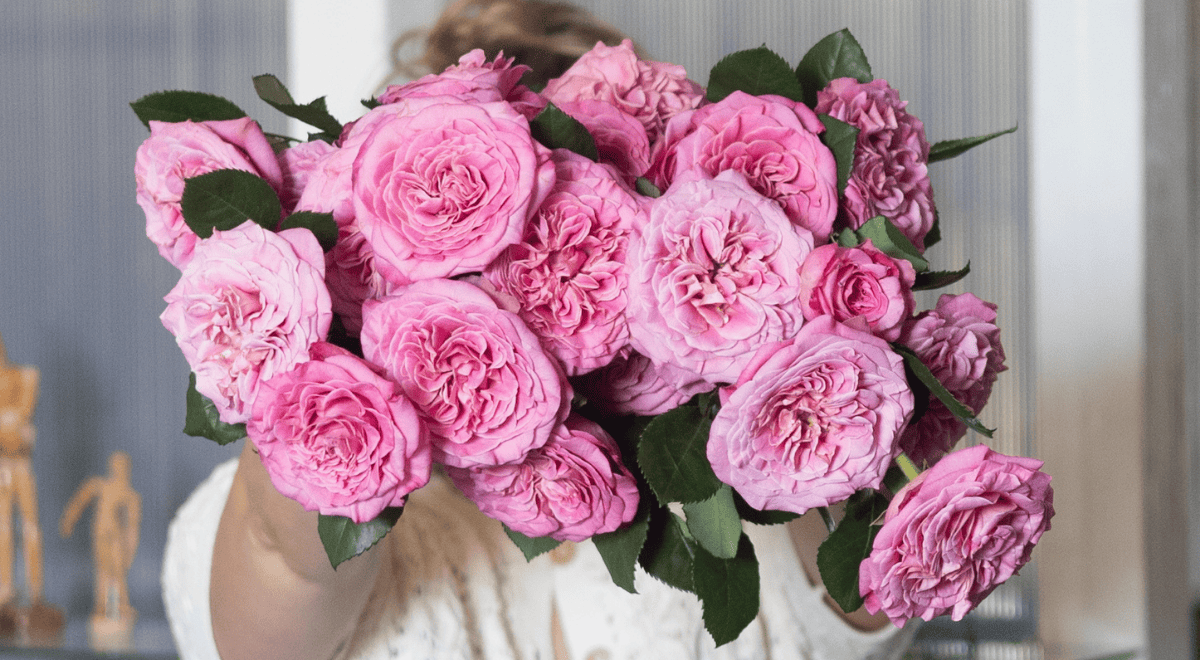
I've handled a truly ridiculous number of roses over the last fifteen years, and garden roses still get me. I'll see one opening in the cooler and stop what I'm doing to go look at it—which, at this point, feels like it should be harder to impress me. Apparently not. Give me a huge, ruffly garden rose and I'm right back to being amazed that a flower can actually look like that. (Every rose in our garden roses collection got picked this way, by the way: me, standing in a cooler, losing all professional composure.)
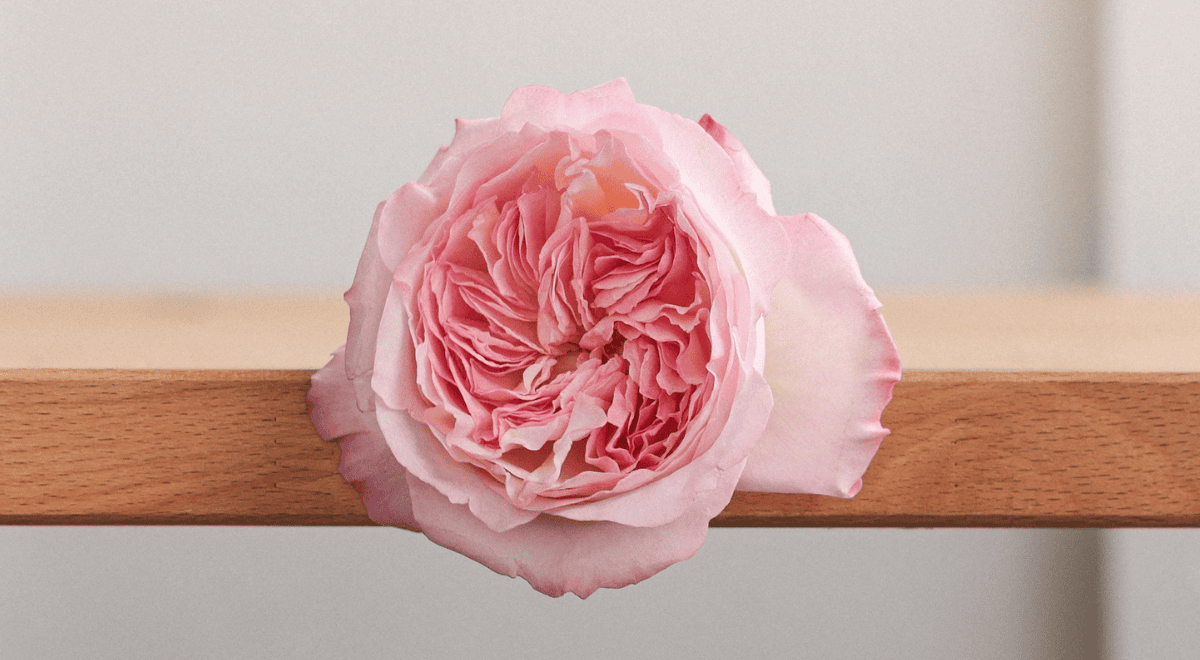
And color almost becomes a different thing with a garden rose. A blush standard rose can be perfectly lovely. A blush garden rose with 100 petals, three slightly different shades happening at once, a center that's somehow darker and lighter at the same time, and a fragrance that makes you want to stick your entire face into it? Totally different experience.
It's like the difference between a perfectly pressed white button-down and that slightly rumpled, oversized linen shirt that makes someone look like they casually own a house in Provence and have never once checked their credit card balance.
Same basic color. Completely different life.
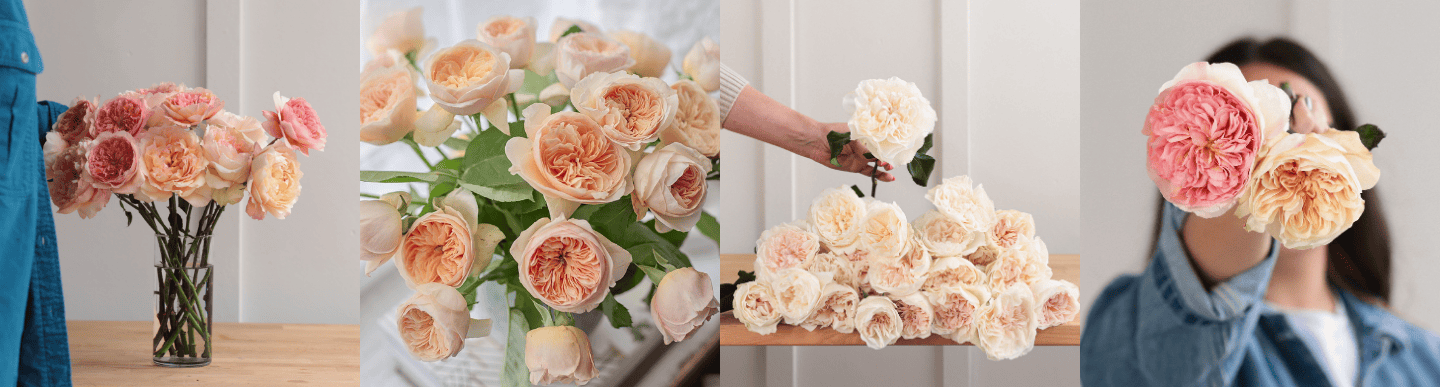
And yes, I realize I'm now assigning socioeconomic status to roses. Does that mean this whole article has gotten away from me? Maybe. But that's okay. This is fun. And if any flower deserves its own unnecessarily elaborate personality profile, it's a garden rose.
Does Any of This Actually Matter?
A little. But only a little.
It's pretty amazing that flowers have carried meaning for hundreds of years. I mean, clearly that's special—so special that we just spent an entire article talking about it. But I would never choose a rose based on its official symbolism over the actual person you're giving it to.
If your mom has loved red roses her whole life, send her red roses. If your partner thinks red roses are boring but loses their mind over giant butter-yellow garden roses, please don't show up with red because someone—or worse, some flower company on the internet (!!) told you it's more romantic. And if your best friend has always wanted an enormous armload of hot pink roses, I promise they're not going to stop admiring them long enough to say, "Wait, don't these technically mean admiration?"
The meanings are fun. They can be thoughtful. They can even help when you don't know where to start. (And if you truly don't know where to start, I wrote a whole post on how to pick the flowers they'll actually love—it's the same advice I give my own friends.)
But the best flowers aren't necessarily the ones that say the "right" thing according to a Victorian flower dictionary. They're the ones that make the person opening the box think: You know me.
And after 15 years of sending a whole lot of flowers, I think that might be the very best thing flowers can say.
xx, Christina
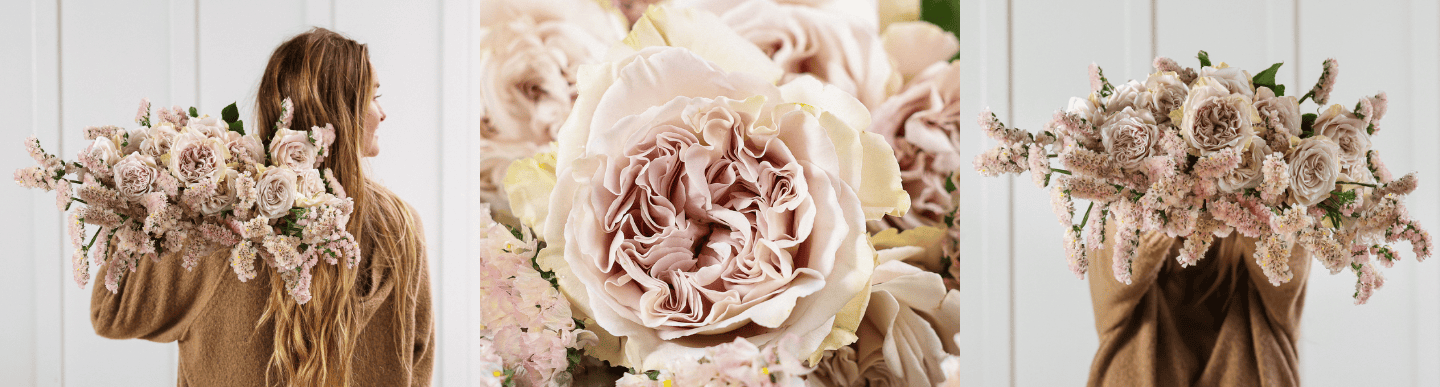
Christina Stembel is the founder and CEO of Farmgirl Flowers, which she bootstrapped from her San Francisco apartment into one of the largest women-owned e-commerce flower companies in the country. She has spent 15 years designing with, selling, and (more recently) growing roses.
The Questions I Get Asked All the Time
What color roses should you send a friend?
Yellow roses are the traditional friendship pick, symbolizing joy, warmth, and platonic love, with pink roses a close second for gratitude and admiration. That said, the real answer is whichever color your friend actually loves—the symbolism is a suggestion, not a rule. If she's a hot-pink person, be a hot-pink friend.
What color roses say "I love you" besides red?
Deep pink and magenta roses both carry romantic meaning—love, admiration, and appreciation—without red's formality, and burgundy garden roses read even more romantic than a classic red to a lot of people (myself very much included). If your person finds red roses predictable, a big ruffly garden rose in almost any shade will out-romance a standard dozen every time.
How many roses should you send?
A dozen roses is the classic declaration of love, and the Victorians (of course) assigned meanings to nearly every number—one for love at first sight, two dozen for "I'm yours," and so on. After fifteen years of doing this, my honest advice is to ignore the numerology and send what you want, or can afford. Roses are always a good idea, if you’re sending a single stem, or three dozen flowers.
What color roses are appropriate for sympathy?
White roses are the traditional sympathy choice, symbolizing peace, remembrance, and honor. Soft pastels—pale pink, cream, and peach—are also appropriate and feel a little warmer. What matters most isn't the exact shade; it's that flowers show up when words fall short, and they're very good at that job. There’s been a trend lately, especially for celebration-of-life gatherings, toward sending brighter roses in the person’s favorite color — or at least a color that matches their personality. If she was the life of the party, white roses might feel a little off. But a big bunch of hot pink or bright yellow roses could feel exactly right — something that actually matches her spirit.
Can you mix rose colors in one bouquet?
Absolutely—mix away! Mixed rose colors traditionally combine their meanings (red and white together signal unity, for example), but the better reason is that bridge tones like peach make every palette more interesting. If a mixed arrangement isn't quite working, add a peach rose. It's the "have you tried adding a scarf?" of flowers.
What are the trendiest rose colors right now?
Beige, taupe, caramel, café-au-lait, and brown garden or garden-like roses (they’re really a thing!) are the current It Girls of the rose world—the shades florists fight over and people screenshot to identify. Varieties like Café Latte, Toffee, Quicksand, and Miyabi Brown lead the pack. They don't have centuries of symbolism behind them yet, but they've got something arguably harder to earn: cool-girl status.