


Fall Flowers: What’s Blooming in September, October, and November (and What We’re Growing)
Sep 25, 2026
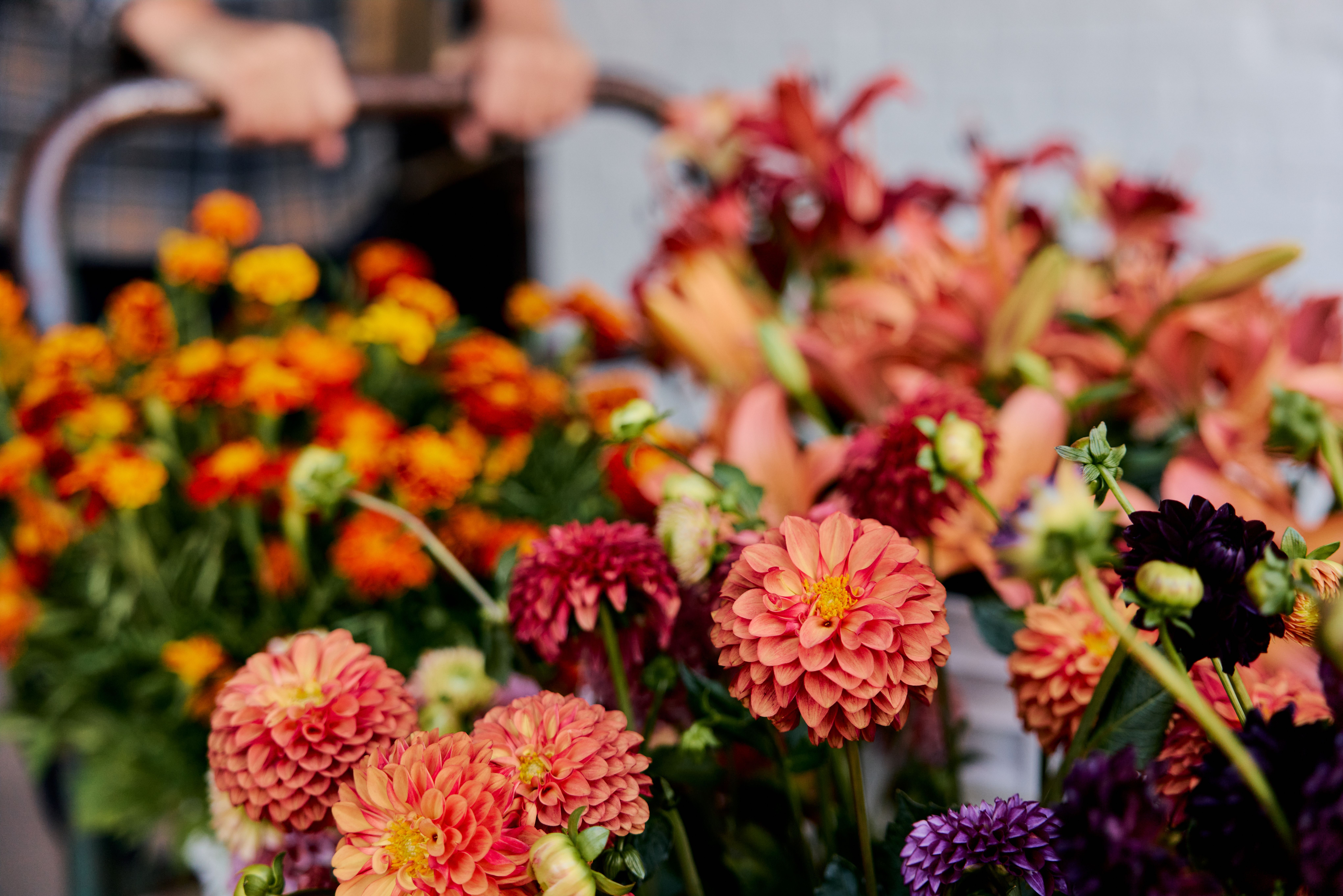
In short: The best fall flowers are chrysanthemums, dahlias, celosia, sunflowers, marigolds, asters, sedum, Japanese anemones, and late zinnias and cosmos, most of which bloom from September until the first hard frost. Below is what’s in season each month, what we’re growing at Farmquarters right now, and what to plant this fall for next year.
Wow, do we love fall around here. I know everyone says that, but maybe everyone says it because fall really is just that good?
I grew up on a farm in Indiana, where fall meant vibrant, crunchy piles of leaves, harvesting fruit from our little orchard, hayrides on the back of an old tractor, spiced cider, and cooler temperatures—which may have been the greatest gift of all. I don’t think I’ll ever shake the feeling that fall is the season when all the hard work finally pays off and you get to slow down and rest a little. Even though, as anyone who has ever lived or worked on a farm knows, that isn’t entirely true.
I remember everyone getting so excited about summer break when I was in school. I was excited too—mostly because I was definitely toward the bottom of the school-popularity food chain—but I never looked forward to how much work summer brought on the farm. By the time fall rolled around, we were dreading going back to school but also deeply relieved that our butts would be planted in seats in an air-conditioned building instead of pulling weeds, canning what felt like a never-ending supply of green beans, and working our way through the long list of other farm chores waiting for us.
Which makes it more than a little funny that, all these years later, I’m back on a farm—by choice this time—at Farmquarters, our farm and design studio in Gig Harbor, Washington. And wow, do I love it now.
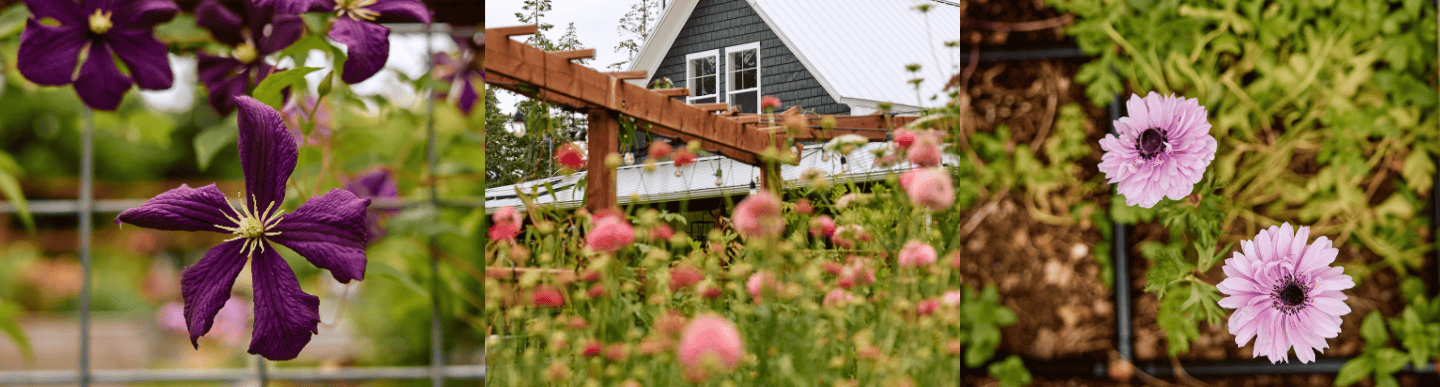
Here in the Pacific Northwest, fall is when our garden goes from pretty to almost ridiculous. The dahlias are taller than I am, the zinnias, sunflowers, and cosmos are still carrying on like it’s July, and the chrysanthemums—which have spent all summer looking like unremarkable green shrubs—finally do their thing. Japanese anemones float above the garden, hydrangeas begin taking on those beautiful muted fall colors, and nearly every trip outside ends with me cutting an armful of something to bring back into the design studio.
So I thought I’d take you through what’s actually blooming at our Zone 8b flower farm in September, October, and November. I’ll share our favorite flowers that bloom in fall, what we’ve learned from growing them ourselves, and what you can plant this fall so your own garden can put on a show like this next year.
What flowers bloom in the fall?
Fall flowers are the ones that either wait all season to bloom (chrysanthemums, asters, sedum, Japanese anemones) or simply refuse to stop (dahlias, zinnias, cosmos, marigolds, celosia, sunflowers) until frost finally makes them. That second group is the secret of a great fall garden: a lot of the best "fall flowers" are summer flowers that kept going, and the trick is planting things in spring that peak late.
Here’s how it tends to shake out across the season. Bloom times shift with your climate, so think of this as a general guide rather than a promise.
September flowers
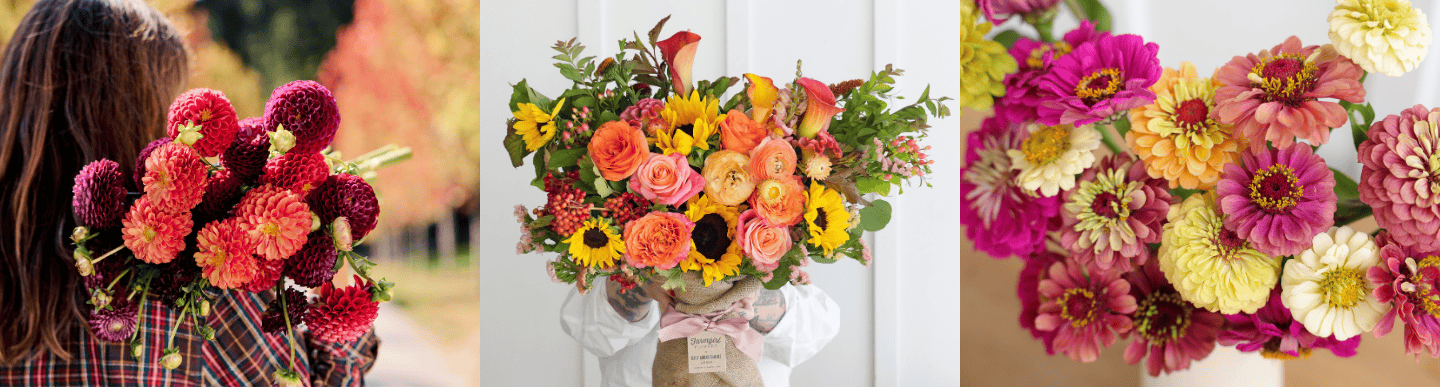
September is the overlap month, when the last of summer meets the first of fall, and it’s arguably the most abundant month in the whole garden. Dahlias are at their absolute peak. Zinnias, cosmos, and celosia are still producing faster than you can cut them. Sunflowers, rudbeckia, and the first asters are opening, sedum is turning from green to rosy pink, and the Japanese anemones (we grow Honorine Jobert, September Charm, and Dreaming Swan at Farmquarters, and September Charm is named that for a reason) are floating around on their tall stems like they own the place. Early mums start to show color at the end of the month.
October flowers
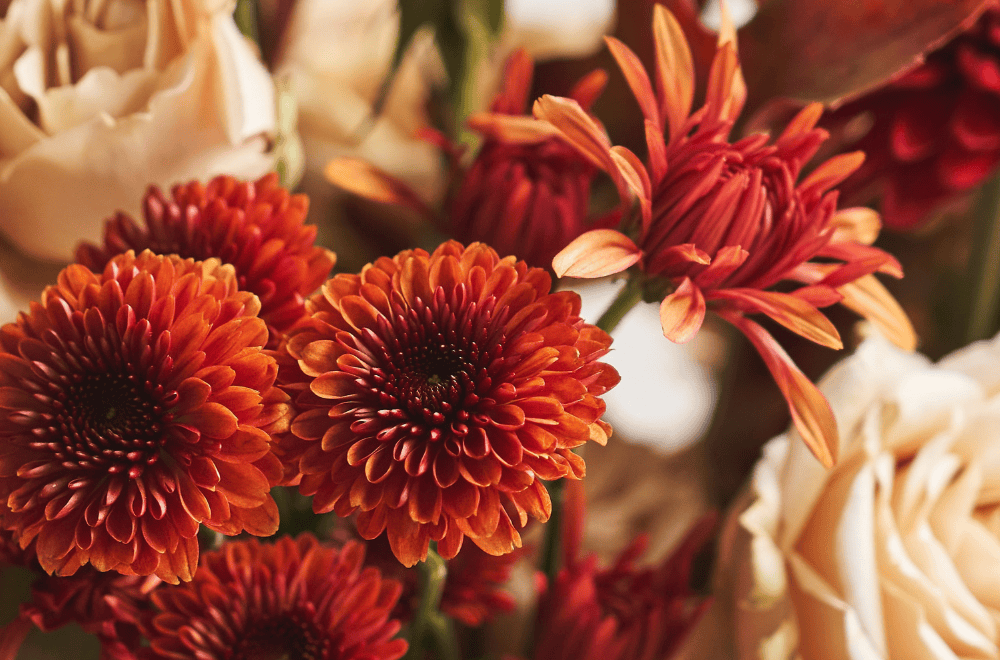
October belongs to the chrysanthemums. This is when the mums peak, along with the asters, and when dahlias give their last big flush before frost. Celosia and amaranth are at their deepest, moodiest colors, ornamental kale and cabbage come into their own, and rose hips, berries, and seed heads start doing as much work in an arrangement as the flowers do. If you can only plant for one month of fall, plant for October.
November flowers
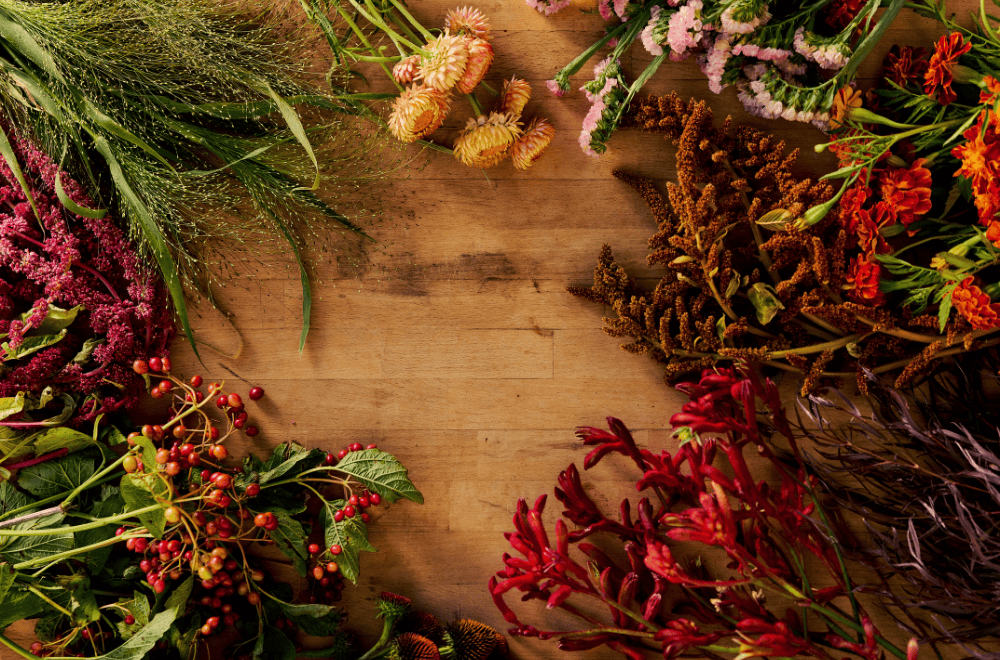
November is quieter, and in most of the country it’s the month the first hard frost ends the dahlias, zinnias, and cosmos for good. What’s left is the tough stuff: late chrysanthemums (especially the heirloom types, which bloom later than the hardware store varieties), hellebores starting up in mild climates, ornamental kale, pansies and violas in warmer zones, and all the textural things, like seed pods, rose hips, dried grasses, and branches, that make late-fall arrangements feel so cozy. Here at Farmquarters, November is when we finally cut the peonies back (after the first hard frost, usually early in the month) and start planting bulbs for spring.
The Fall flowers we’re growing at Farmquarters
I’ll be honest, fall is the season I’ve been most excited to grow for, because so many of the flowers I love best are fall flowers.
Heirloom Chrysanthemums
We’re growing about 350 specialty mums this year in spider, anemone (sometimes called pincushion), pompon, football, spoon, and quill forms, in bronzes, peaches, golds, burgundies, and mauves. If you’ve only ever known mums as the perfectly round pots stacked outside the hardware store every September, I’d gently suggest that’s like judging all roses by the ones at the gas station. A spider mum looks like a firework. A football mum can pass for a peony. The peach ones are my favorites, and for whatever reason they’re also the ones the rabbits eat least, which I’m choosing to take as a sign.
Dahlias
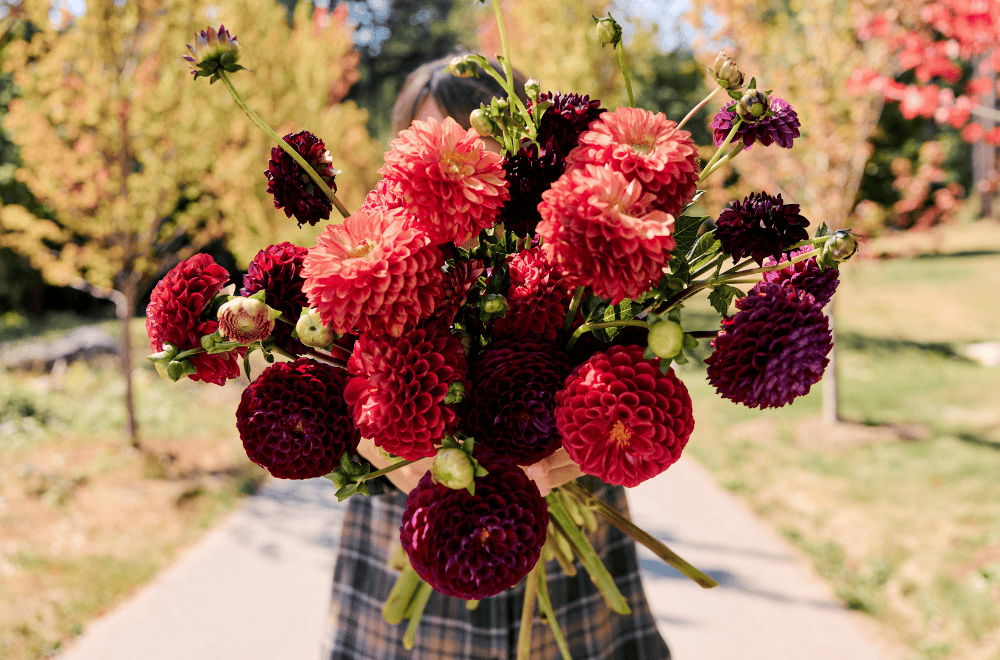
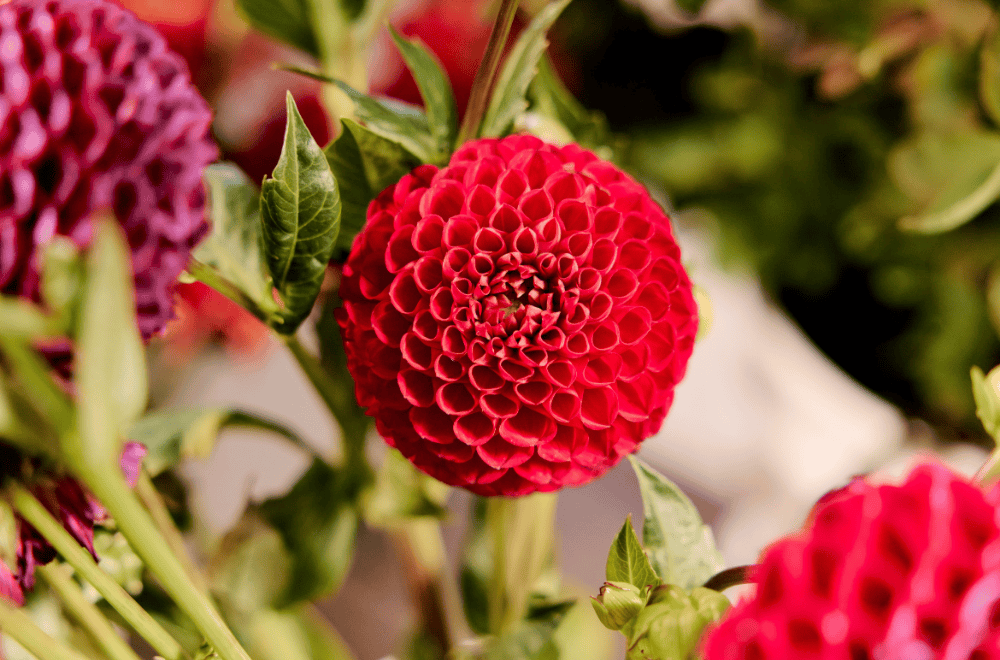
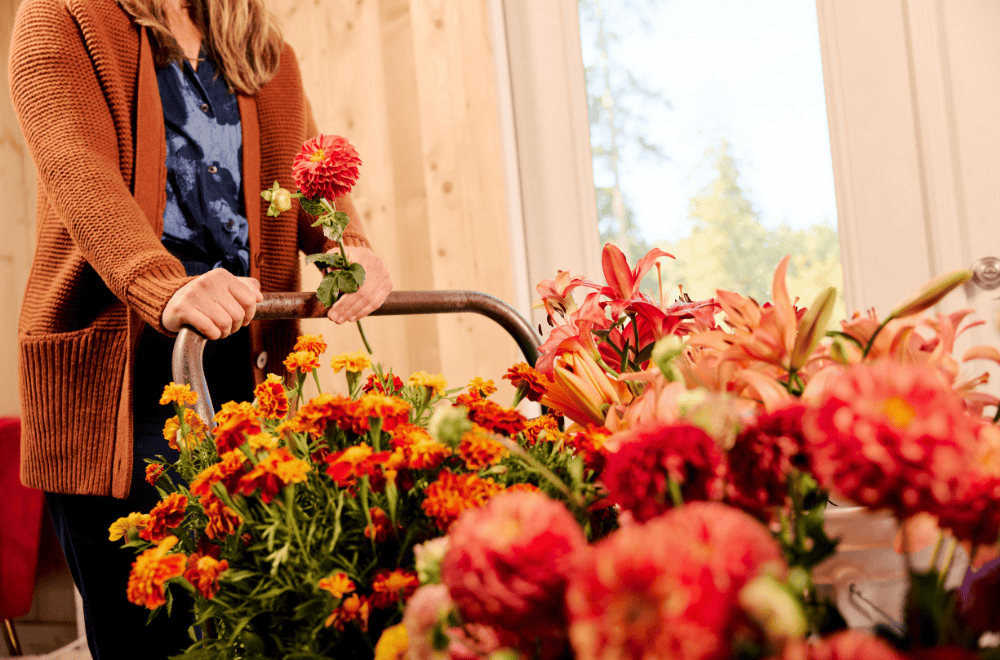
Ball, pompon, cactus, and dinnerplate types, including plants nearly six feet tall with flowers bigger than your face. We find the bees asleep in their petals on cold mornings, which might be my favorite thing that happens on the farm. Dahlias are the flower that gets the most attention in the garden, full stop, and they’ll bloom right up until frost if you keep cutting them. (They’re also finicky as cut flowers with short vase lives, which is a whole other story we’ve told before.)
Japanese Anemones
Honorine Jobert (white), September Charm (soft pink), and Dreaming Swan. Tall, airy, and completely effortless once established, and they bloom for weeks when almost nothing else new is opening.
Zinnias and Cosmos, still.
Ours are the same plants we sowed in late spring, and they will not quit until frost. This is the cheapest fall color you can buy: a packet of seed in May.
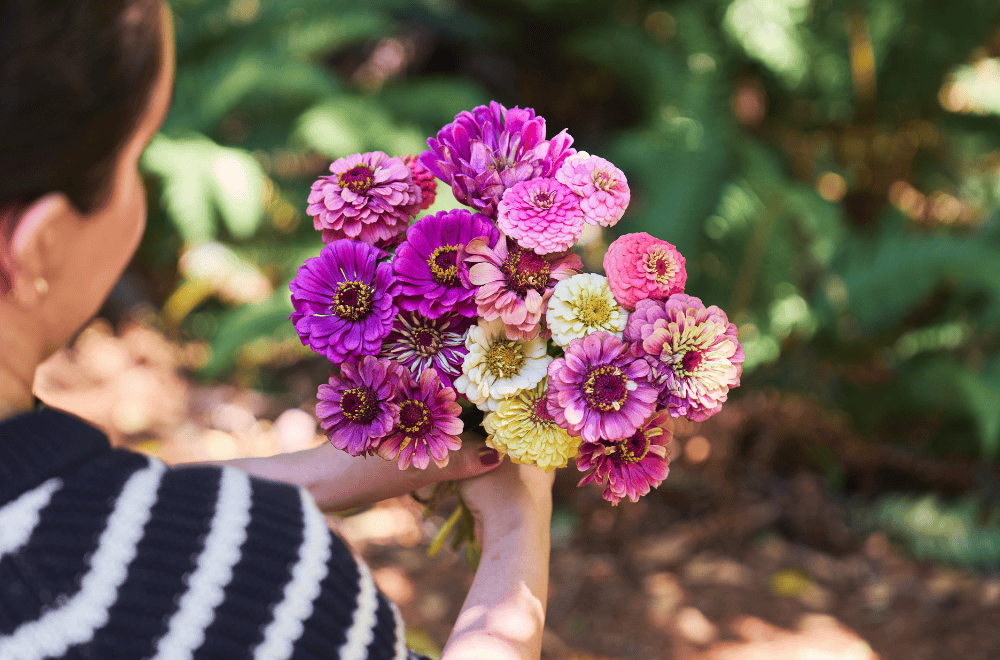
What’s in a Fall bouquet?
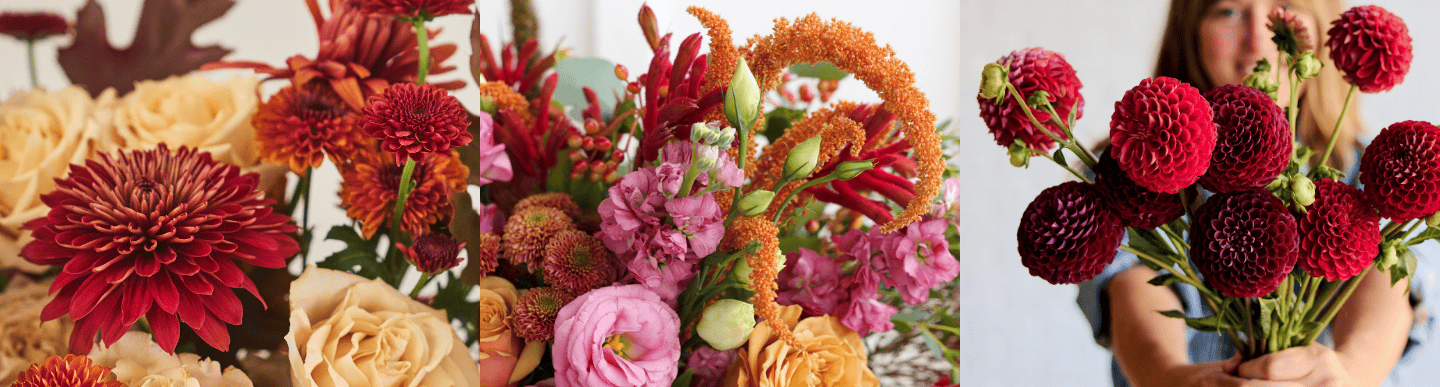
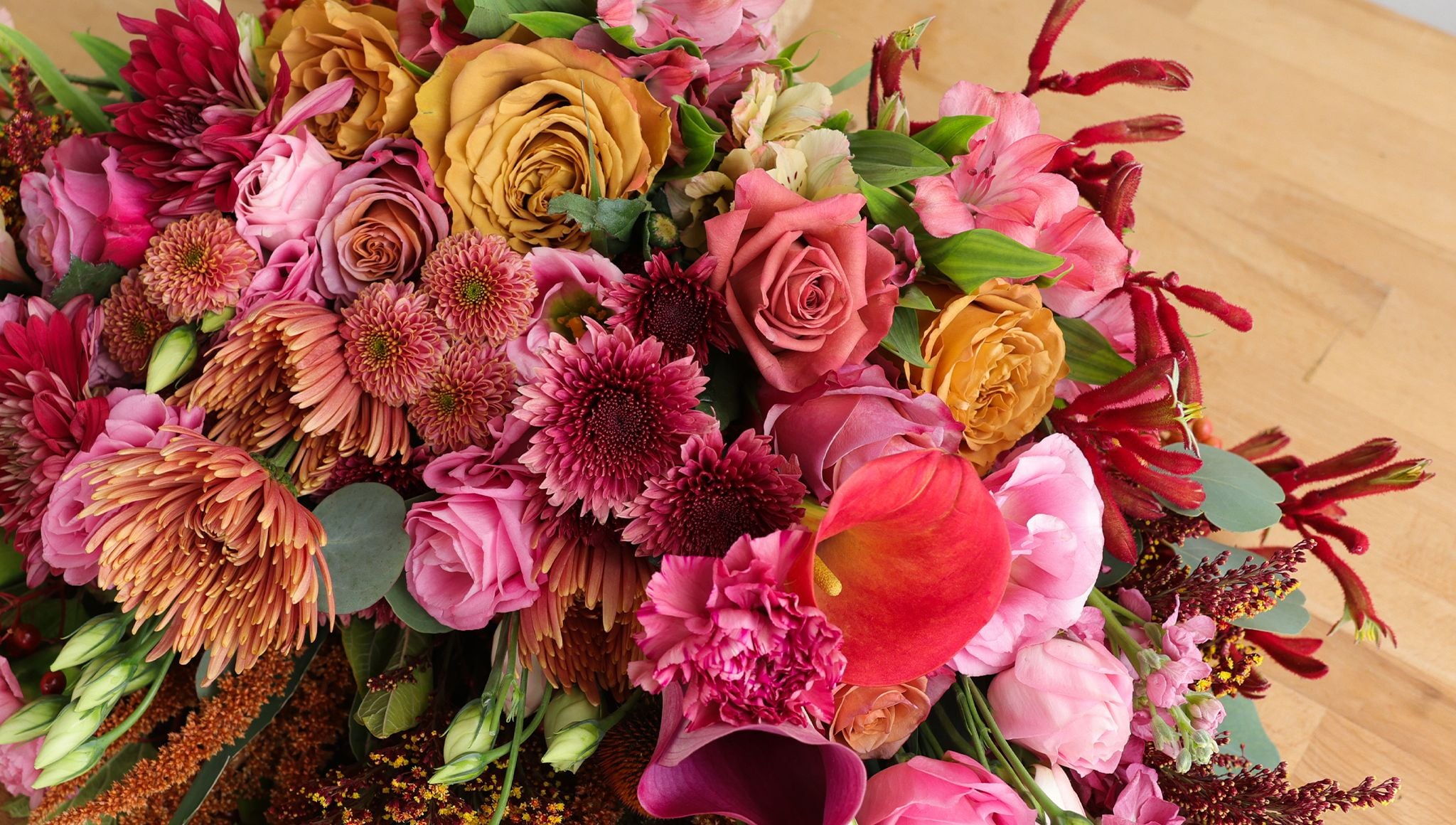
A fall bouquet leans on dahlias, chrysanthemums, roses, and sunflowers for the flowers, and on celosia, amaranth, rose hips, berries, seeded eucalyptus, and dried grasses for texture, usually in warm tones: rust, burgundy, gold, peach, and cream. The texture is what makes it read as fall. Take the same dahlias and roses and swap the berries for greenery and it’s a summer bouquet.
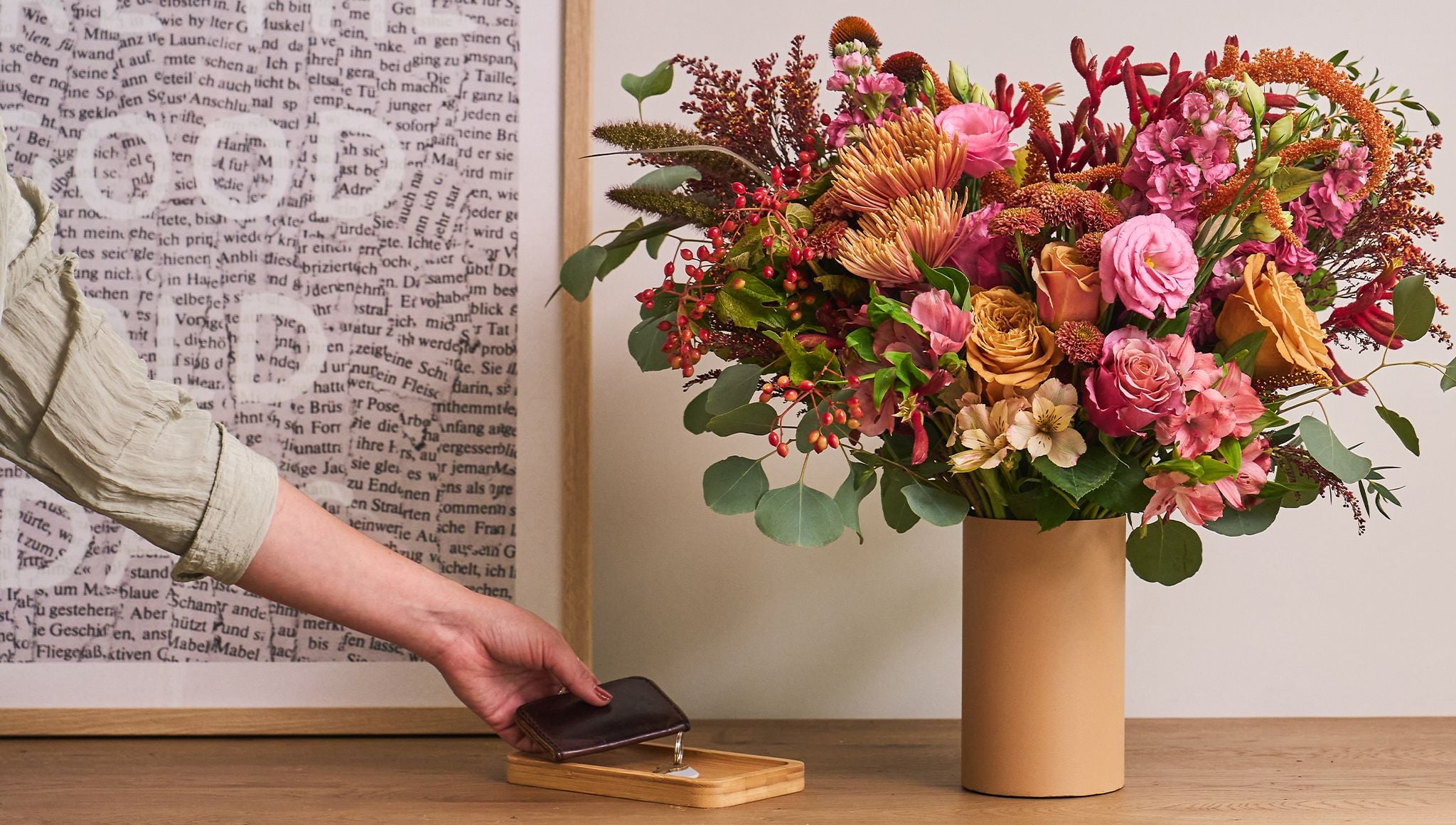
Fall wedding flowers follow the same formula, scaled up: dahlias, chrysanthemums, and roses for the blooms, and amaranth, seeded eucalyptus, and dried grasses for the trailing, textural parts, in bronze, burgundy, peach, and cream. If you’re getting married in October, congratulations, you picked the month with the most to work with, and I’d let the mums have a moment. A football mum in a bridal bouquet makes people lean in and ask what it is, which is my favorite reaction a flower can get.
If you want to build your own, my two pieces of advice are to let one flower be the star and everything else support it, and to add more texture than you think you need. Fall arrangements can take it. If you’d rather we do it, our fall collection is up now!
Fall flowers to plant now (for next year, and for right now)
Fall is planting season as much as it’s bloom season, and there are two kinds of planting to do.
For color right now:
Hardy garden mums, asters, ornamental kale, and (in milder climates) pansies and violas can all go in as plants in September and October for instant fall color. Just know that a mum bought in full bloom and planted in October may or may not come back next year; if you want a mum that’s truly perennial, plant it in spring so it has a whole season to root in.
For next year:
Fall is when you plant spring bulbs (tulips, daffodils, alliums), bare-root peonies, and hardy perennials like sedum, asters, rudbeckia, and Japanese anemones, which all want a winter in the ground before they perform. We’re bouquet-planting bulbs at Farmquarters this fall, clustered the way you’d arrange them in a vase instead of in tidy rows, and I’ll report back on how that turns out.
Skip until spring:
Dahlias, zinnias, cosmos, celosia, and marigolds are warm-season plants. Plant them after your last frost in spring and they’ll give you your fall show six months later.
How to care for mums so they come back
Hardy garden mums come back year after year in most of the country if you plant them in spring, give them full sun and well-drained soil, pinch them until midsummer, and leave the foliage on over winter. Here’s the short version of what we’ve learned growing 350 of them.
Plant in full sun with good drainage. Pinch the growing tips back every few weeks from late spring until about the Fourth of July; this is what gives you a bushy plant covered in flowers instead of a few tall stems with one bloom each. Stop pinching by midsummer so the plant has time to set buds. Water at the base and keep the foliage dry to head off mildew. After they bloom, leave the dead stems standing over winter (they protect the crown) and cut them back in spring when new growth appears. And check whether the mum you’re buying is actually a hardy variety: many florist and exhibition mums, including some of the fanciest heirloom types, need winter protection or fresh cuttings each year. They’re worth it anyway.
A few honest words about fall
Every year around now I catch myself wishing the season would slow down, because it’s the one that goes so fast! The dahlias are perfect for about three weeks. The mums are perfect for about three more. Then one morning there’s frost on the dinnerplates and that’s that. I think it’s part of why fall flowers feel so special, and why people have grown mums and dahlias for generations even though they’re a fair amount of work. You get one glorious stretch, and then you get to look forward to it again for eleven months.
Is it just us, or is that exactly the right amount of time to miss something?
xx, Christina
FAQ
What flowers are in season in the fall?
Flowers in season in fall include chrysanthemums, dahlias, asters, sedum, Japanese anemones, celosia, amaranth, sunflowers, rudbeckia, marigolds, and late zinnias and cosmos, along with textural elements like rose hips, berries, ornamental kale, and dried grasses. Most bloom from September until the first hard frost, with chrysanthemums peaking in October.
What is the best flower to plant in the fall?
The best flowers to plant in fall are hardy perennials and bulbs that need a winter in the ground: tulips, daffodils, alliums, bare-root peonies, sedum, asters, rudbeckia, and Japanese anemones. For immediate fall color, hardy garden mums, asters, ornamental kale, and pansies can be planted as established plants in September and October.
Do mums come back every year?
Hardy garden mums are perennials that come back every year in USDA zones 5 through 9 when planted in spring, given full sun and good drainage, and left uncut over winter. Mums bought in full bloom and planted in fall often don’t survive because they haven’t had time to root in before frost. Florist and many exhibition mums are not reliably hardy.
What are spider mums?
Spider mums are a chrysanthemum bloom form with long, thin, tubular petals that curl or hook at the tips, giving the flower a spiky, firework-like look. They’re one of 13 bloom classes recognized by the National Chrysanthemum Society and are grown mainly as cut flowers. Spider mums come in white, yellow, bronze, lavender, and burgundy and bloom in mid to late fall.
What flowers are good for Halloween?
Good Halloween flowers are the darkest blooms of the fall garden: burgundy and near-black dahlias, bronze and deep red chrysanthemums, dark celosia and amaranth, and bright orange marigolds, paired with ornamental kale, seed heads, dark foliage, and dried grasses. Because Halloween lands right at the October peak, nearly everything is in season, so the trick is color, not availability. Go deep and moody or go full pumpkin, and don’t be afraid of a little on-purpose spooky texture (a seed pod that looks like it might be watching you is a feature, not a bug). We have a whole post on building a Halloween bouquet yourself if you want to make an afternoon of it.
What flowers are good for Thanksgiving?
Good Thanksgiving flowers are fall-blooming varieties in warm tones: chrysanthemums, dahlias (where still available), roses, sunflowers, celosia, and amaranth, paired with textural bits like rose hips, berries, seeded eucalyptus, coneflower, scabiosa pods, and dried grasses. Because Thanksgiving falls after the first frost in most of the country, late chrysanthemums and textural elements do much of the work.