

When to Plant Tulip Bulbs (and How to Plant Them)
Sep 28, 2026
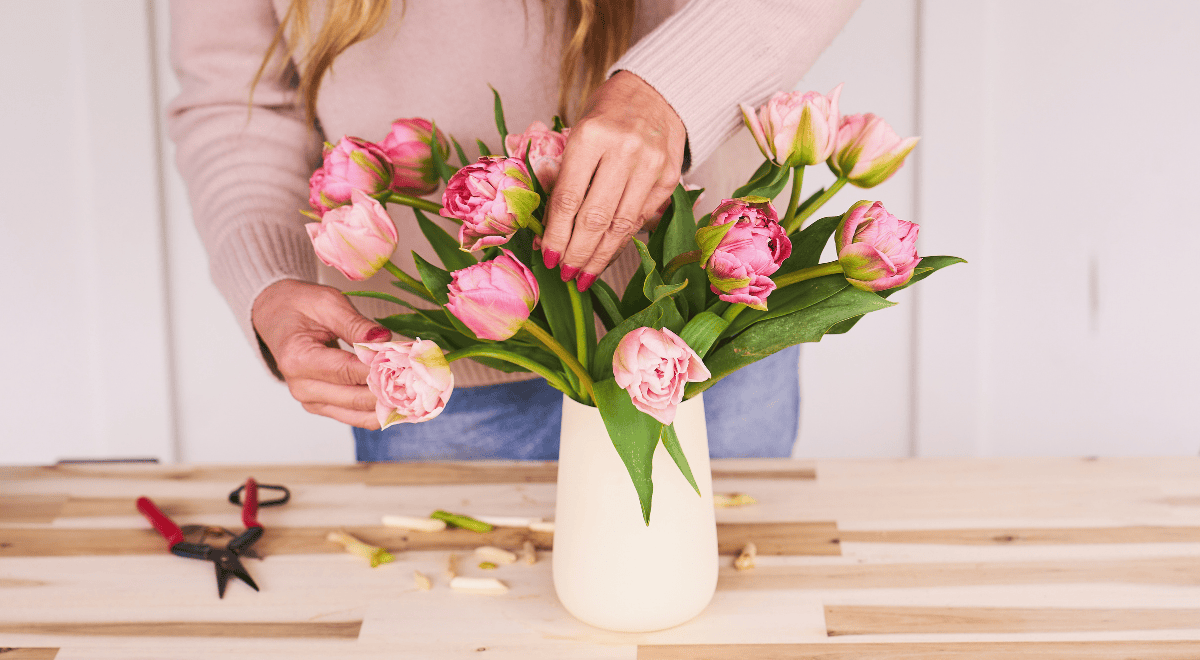
There is something slightly ridiculous about planting tulips.
You spend a cold, probably muddy (given we are up in the PNW) fall day burying hundreds of fairly unremarkable brown bulbs in the ground. Then you cover them up, walk away, and stare at dirt for the next several months while trying to remember exactly where you put them.
And then spring comes.
Just when winter has gone on about three weeks longer than anyone can reasonably tolerate, those first tiny green leaves push through the soil. And a few weeks later, voila - you have tulips! It feels like pure magic, even though you're the one who stood out there in November and made it happen, somehow you don’t remember how cold and wet you felt whe coming in from planting them.
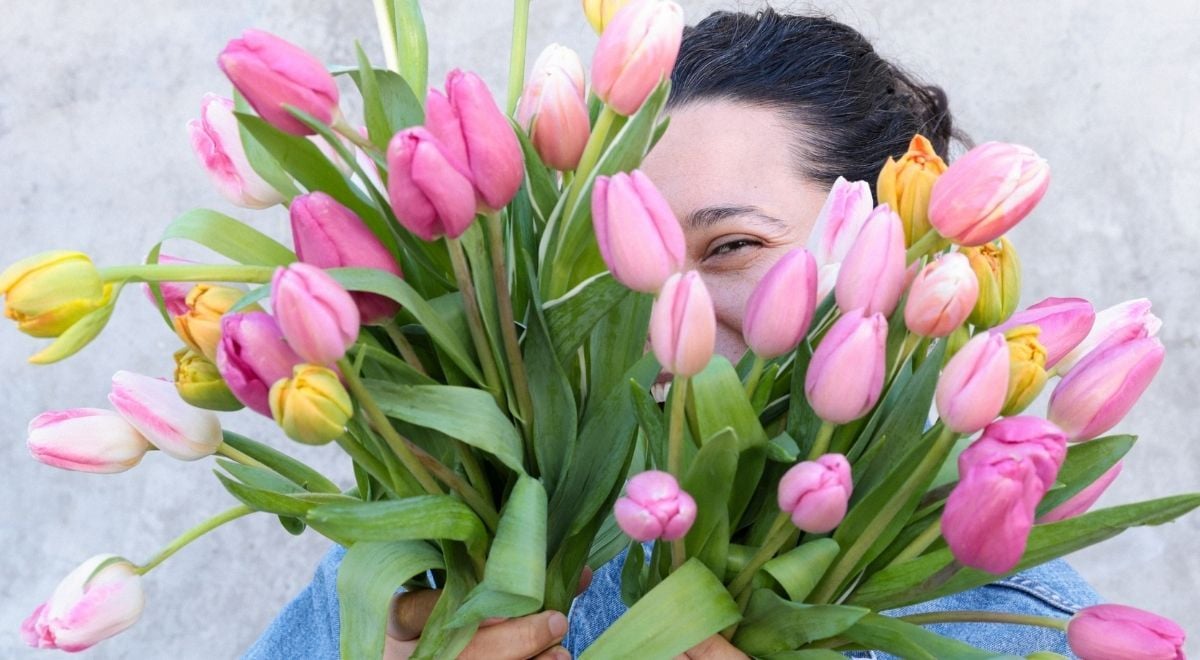
We'll be right there doing just that this fall at our farmquarters. We’re planting both for the gardens and for cutting, and probably if i’m being honest, for our mental health. Up here in Washington, it’s gray for what feels like forever. So seeing color is definitely something we do for our mental health!
But, like almost everything we do here, the project has somehow become considerably larger than it sounded when we first discussed it. "Let's plant some tulips" is a very innocent sentence until many, many boxes of tulips arrive. I order flowers, plants, bulbs, seeds, really all of it throughout the year, and if I had to give a number, I bet I remember about half of what I’ve ordered. I think my subconscious is actually way smarter than I am and just knows that instead of a reasonable amount of tulips, we should really try, so we’ll be planting at least 1500 of them this fall (although there’s still a little bit of time to order, so it may be more!), and I cannot wait until spring to see them. I am very sure future Christina is going to thank me SO much for it!
And I already know that when Copper Image and La Belle Époque start blooming next spring, I will conveniently forget all the cold fingers, sore backs, mud and questionable decisions that got us there.
If you're planting tulips at home this fall, here is everything we've learned about when to plant tulip bulbs, how deep to plant them, which varieties we love and how to give yourself the best possible chance of a beautiful spring. And if you're already deep into fall garden chores, tulips are the fun one, I promise!
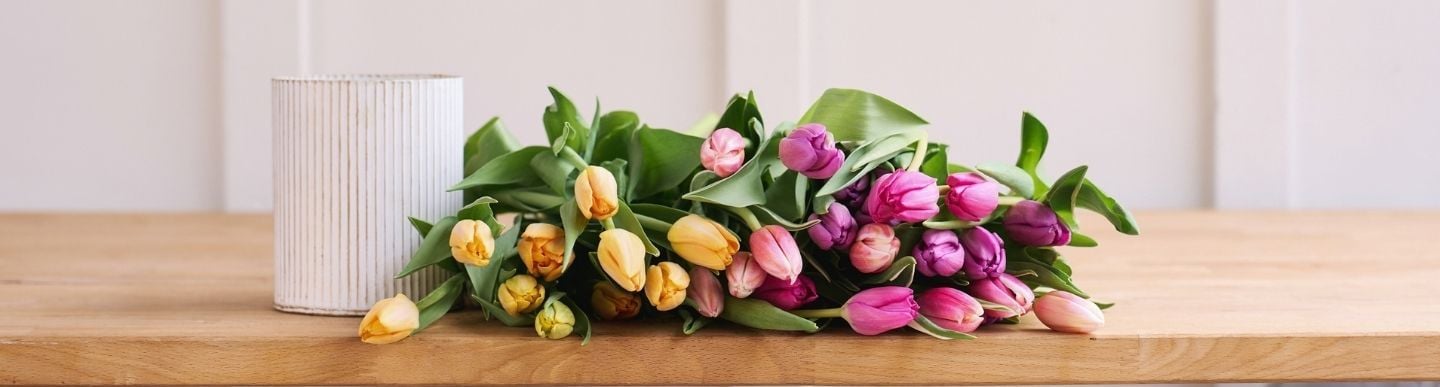
The short answer to when should you plant tulip bulbs?
Plant tulip bulbs in the fall, after the soil has cooled but before the ground freezes solid.
For most gardeners, that means planting sometime between October and December. Northern gardeners will usually plant earlier, while gardeners in warmer climates may need to wait until November or December.
The calendar is helpful, but the soil is more helpful. Tulips prefer to be planted once the soil has cooled to around 55 degrees Fahrenheit or below. Planting too early, while the ground is still warm, can encourage premature growth and leave bulbs sitting too long in warm, damp soil.
You do not need to plant them the minute the first leaf falls. Tulips are one fall project you're allowed to procrastinate on a little (and you never have to tell me twice to lower something on my priority list!).
Here at the Farmquarters in Gig Harbor, Washington, we're in Zone 8b, but our cool Pacific Northwest winters generally give tulips the chill they need. We typically wait until late October or November, when the soil has cooled and our infamous winter rain is beginning to make every outdoor project substantially muddier.
Tulip planting times by growing zone
- Zones 2–4: September through October
- Zones 5–7: October through November
- Zones 8–9: November through December
- Zones 10 and Warmer: December through January, usually after prechilling
These are general guidelines, not legally binding tulip rules. A warm fall may push planting later, while an early winter may mean getting the bulbs into the ground sooner.
Your USDA zone also doesn't tell the whole story. Zone 8b in western Washington has a very different winter from Zone 8b in parts of the South. What tulips really need is a long stretch of cold temperatures, so gardeners in mild-winter climates may need to pre-chill their bulbs.
When to buy tulip bulbs (it’s sooner than you'd think!)
Here's the part nobody tells you: you plant tulips in November, but you buy them in August, or even earlier. The most beautiful varieties sell out super fast, so I ordered most of ours months ago.
Bulb growers and catalogs open ordering in late summer, and the good stuff—the doubles, the muddy apricots, anything with "Belle" in the name—sells out first, often by September. If there's a specific variety you have your heart set on, order it as soon as you see it listed and let it wait in a cool, dry spot until planting time. Garden centers stock bulbs from about September on, which is perfectly fine for a broader mix, just know the selection thins out fast.
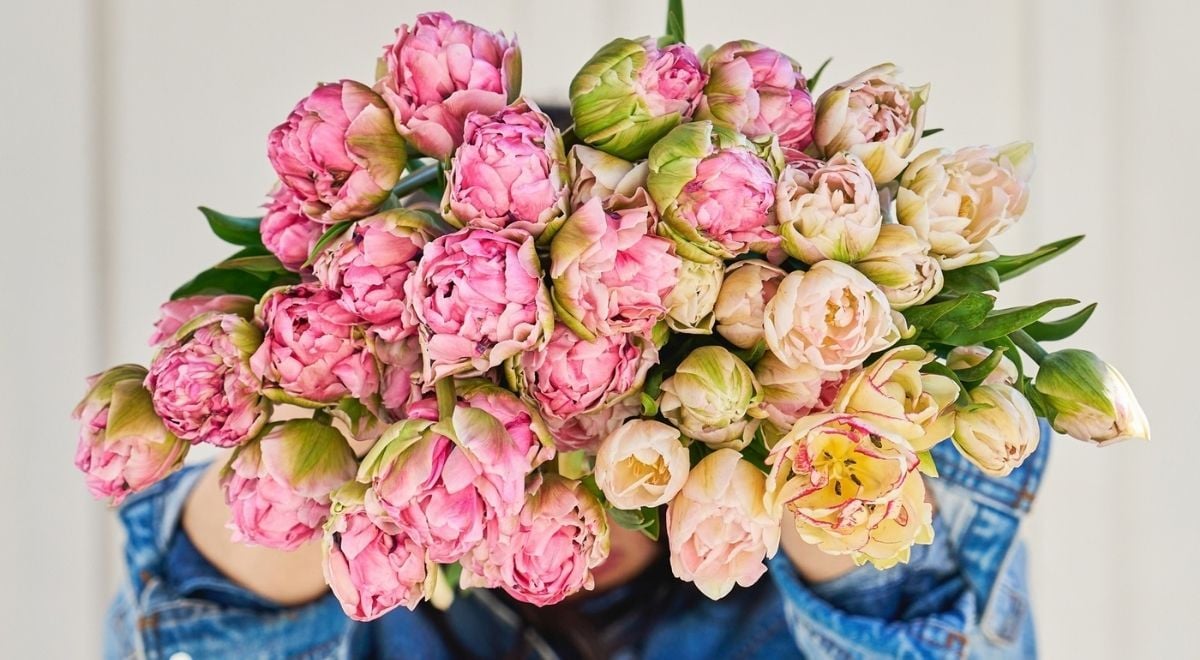
Whether you're ordering or picking bulbs out of a bin, you're looking for the same things you'd look for in a good onion: firm, heavy for their size, no soft spots, no mold and no strong smell. Bigger bulbs generally mean bigger first-year flowers, so if you're choosing between sizes, go bigger. A little loose, papery skin is completely normal and nothing to worry about. Squishy is the only real dealbreaker.
Once they're home, store bulbs somewhere cool, dark and dry with some air circulation—a garage shelf or basement is ideal, a warm kitchen is not—until it's time to plant.
Do tulip bulbs need to be chilled before planting?
Tulips are a little particular about one thing: they need a long stretch of cold temperatures to grow and bloom properly. If you live somewhere with reliably cold winters, nature takes care of that part for you. One less thing to add to the list!
If you live in a warmer climate without a sustained winter chill—particularly in warmer parts of California, Florida, Arizona, Texas, and the Deep South—you may need to refrigerate, or “prechill,” your tulip bulbs before planting. Twelve weeks is a good minimum, but 14 to 16 weeks is even better if you have the time.
Commercial growers have prechilling temperatures and timing down to the nth degree, but you do not need to be nearly that precise at home, I promise. Keep the bulbs consistently cold but never frozen, and store them in a paper or mesh bag rather than an airtight plastic container.
One very important note: don’t store your tulip bulbs near apples, bananas, or other ripening fruit. Fruit releases ethylene gas, which can damage the developing flower inside the bulb. It would be incredibly disappointing to do all that waiting and end up with leaves but no tulips.
Once the bulbs have been chilled, plant them promptly. In truly warm climates, tulips generally perform best when treated as annuals and replanted each year. I know—that is a lot more work, and I’m sorry. But when they all start blooming in spring, I promise that you’ll believe me that they’re worth it!
How to plant tulips
Tulips are relatively easy to plant, which is fortunate because planting one bulb is charming. Planting several hundred is a repetitive-motion workout nobody advertises.
1. Choose a sunny spot with good drainage
Tulips grow and bloom best in full sun, although they can tolerate some partial shade. More important than perfect sunlight is soil that drains well.
Tulip bulbs do not want to sit in wet, heavy soil all winter. If water collects in the area after a heavy rain, choose another location or improve the drainage before planting.
This is especially important for us at the Farmquarters, where Pacific Northwest rain can turn a perfectly respectable planting bed into soup (and not a delicious one!) surprisingly quickly.
2. Dig six to eight inches deep
Plant standard tulip bulbs approximately six to eight inches deep, measured from the bottom of the bulb to the soil surface. Another useful rule is to plant a bulb about two to three times as deep as the bulb is tall.
In very sandy soil, bulbs can be planted slightly deeper. In dense clay soil, planting a little shallower may help prevent rot, but drainage still needs to be addressed.
Planting tulips deeply helps protect the bulbs from sudden temperature swings and can make them a little harder for squirrels to dig up. I say “a little” because the squirrels at the Farmquarters should win some kind of competitive-eating award for the number of seeds, bulbs, and just about everything else they’ve managed to consume this year.
3. Place the pointed end up
The pointed end of the tulip bulb faces up, and the flatter, wider root end sits on the soil. I have messed this up with bulbs, roots, tubers, everything - so don’t feel bad if you have to!
If you genuinely cannot tell which end is which, plant the bulb on its side. The plant will usually sort itself out. Nature has worked around bigger mistakes than this.
4. Space bulbs for the way you intend to grow them
For a traditional garden display, space tulip bulbs about four to six inches apart. Plant them in groups or drifts rather than one lonely bulb every few feet. Tulips look much better gathered together, the same way flowers do in a bouquet.
At the Farmquarters, some of our tulips are being grown specifically for cutting, so we can plant those much more densely—roughly one to two inches apart in a trench, almost like eggs in a carton. Because those bulbs will be harvested as a crop, they do not need the same long-term growing room as tulips we hope to leave in the landscape.
If you want tulips to come back in your home garden, give them more room and follow the after-bloom instructions below.
5. Cover the bulbs and water them
Backfill the hole or trench with soil and water everything well once after planting. This settles the soil around the bulbs and encourages root development.
After that, fall and winter weather will often provide enough moisture. Water again only if conditions are unusually dry. Bulbs need moisture, but they do not need to be kept soggy.
A light layer of mulch can help moderate soil temperatures and protect bulbs in colder climates. Just don't pile on so much that spring growth has to fight its way through a small mountain.
What you don't need to do
Skip the bone meal. It's the classic advice and it's mostly outdated: a healthy tulip bulb already contains everything it needs to bloom next spring, and bone meal in the planting hole is one of the surest ways to invite every squirrel, raccoon and neighborhood dog to come dig up your work. If your soil is genuinely poor, a light scatter of balanced bulb fertilizer on the surface after planting is plenty. Otherwise, save your money.
And don't water through the winter. Once that first good soak is done, the bulbs want to be left alone. Cold and damp is fine. Cold and waterlogged is how you lose them.
How we're planting tulips for bouquets at the Farmquarters
One of our goals at the Farmquarters is to grow more of the flowers and foliage we use in our own design work so we have everything we need for product development and maybe even a special Gunnii Hill collection (more on that soon!). We're still very much learning what grows best here, which varieties perform well as cuts and which ideas sounded far better while sitting indoors with a cup of coffee. (The peonies have gone better than we had any right to expect. The jury is still out on a few other things.)
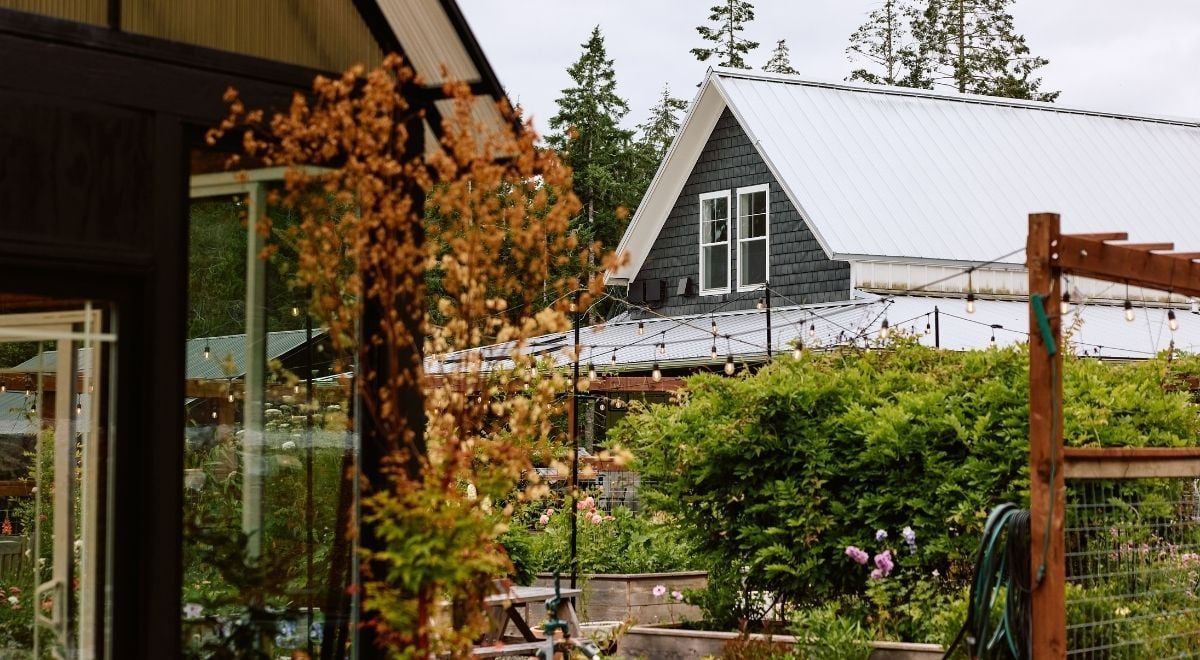
Tulips are one of our fall experiments. When you grow tulips specifically for cutting, you can plant them much more tightly than you would in a perennial garden. We dig out a larger trench, place the bulbs close together and cover the entire group at once. It is much faster than digging hundreds of individual holes, although "faster" is doing some heavy lifting when you are planting this many bulbs.
Commercial cut-flower growers will often harvest the entire tulip—bulb included—when the flower is still closed but showing color. Pulling the bulb gives you the longest possible stem and allows the tulip to be stored before arranging. The bulb is then cut off before the stem goes into water. That also means the tulip will not grow again, so this method is for a cut-flower crop rather than a permanent landscape planting.
In our garden beds, where we want the tulips to be part of the spring show, we'll leave the bulbs in the ground and cut only the flowers we want to bring inside.
How to keep cut tulips happy once they're inside
Tulips are one of the few flowers that keep growing after you cut them—sometimes an inch or two in the vase—and they'll lean toward whatever window is closest. This is not a flaw. It's actually one of my favorite things about them, because an arrangement of tulips looks a little different every morning. But it does mean they need slightly different handling than, say, a rose.

Recut the stems at an angle and put them straight into cold water. Tulips are thirsty, so check the water level daily; a big bunch can drink an entire vase dry in a day or two. If they arrive or come in from the garden floppy, that’s okay, they’re just thirsty. All you need to do is wrap the whole bunch snugly in newspaper or kraft paper, stand it upright in cold water for an hour or so, and they'll straighten right up.
Keep them out of direct sun and away from the fruit bowl (that ethylene again), and if you're mixing them with daffodils, give the daffodils a day in their own water first—their sap shortens the life of everything else in the vase.
Two myths while we're here: a penny in the water does nothing (which we’re testing right now to confirm), and neither does poking a pin through the stem just under the flower head. Cold water, a clean vase and a daily water change are the whole secret.
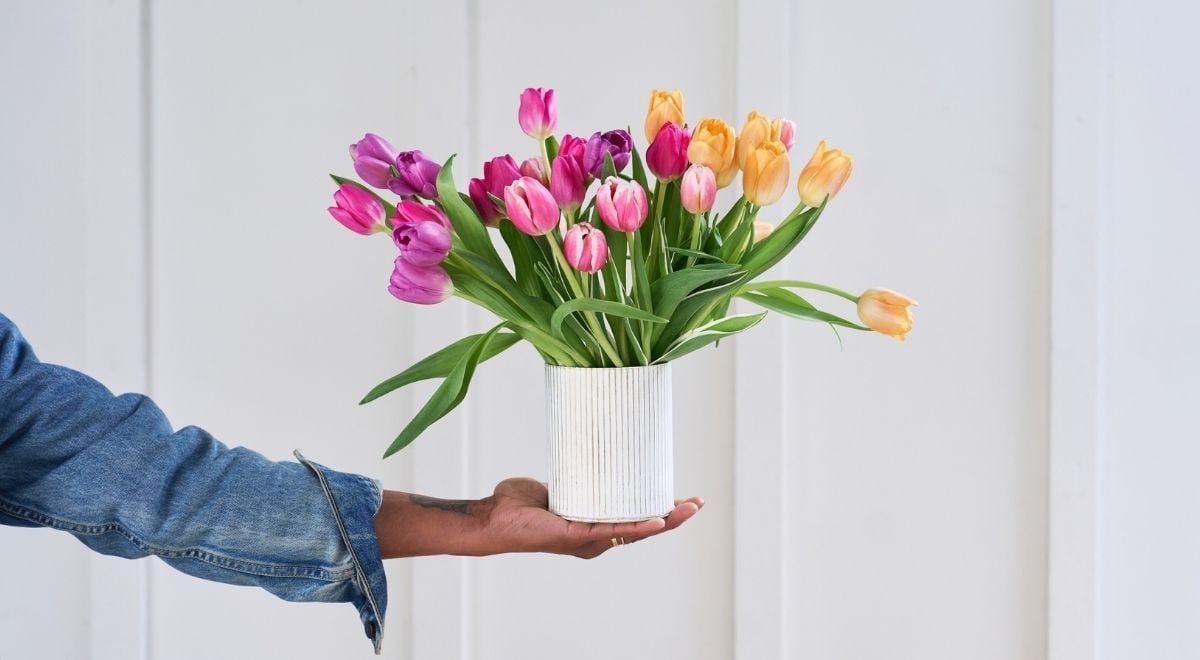
Our favorite tulip varieties
I am predictably drawn to tulips in muddy, complicated colors: copper, caramel, faded apricot, antique pink, cream and the kind of brownish mauve that sounds terrible until you see it in real life! Bright primary-color tulips have their place. That place just tends not to be in my own garden.
Copper Image
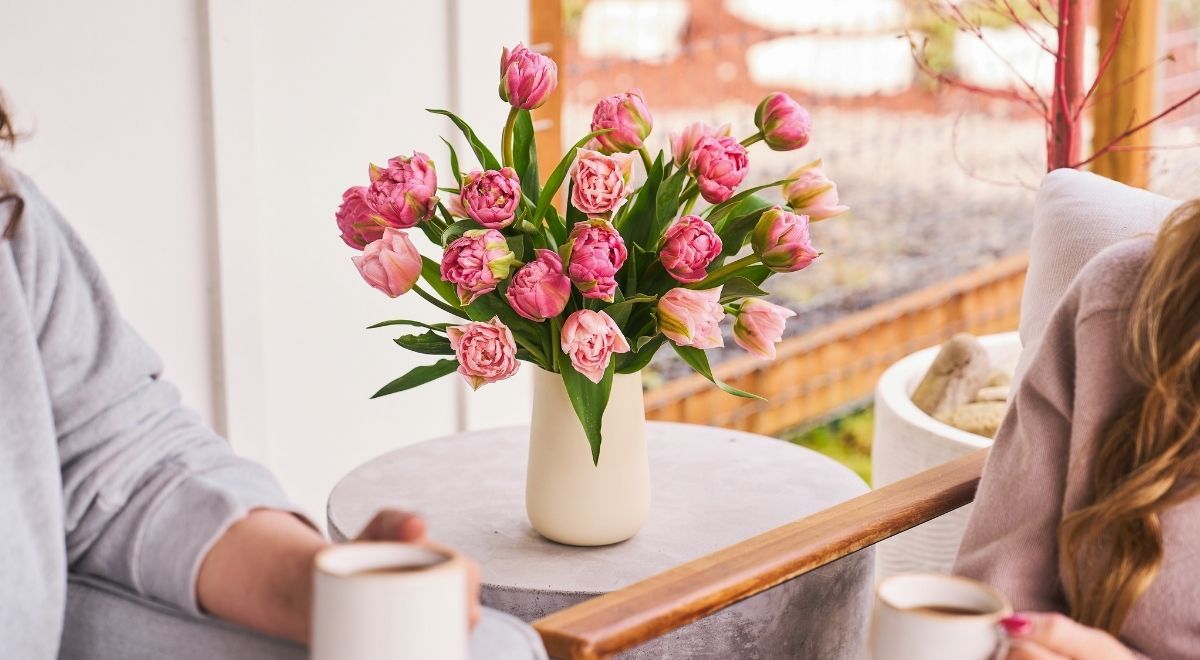
Copper Image is one of my favorite tulips, full stop. It is a double late tulip, sometimes called a peony-flowering tulip because its layers of petals make it look much more like a peony than the classic cup-shaped tulip most of us grew up with.
Its color can move between copper, apricot, salmon and dusty rose as the flower opens. It is almost impossible to describe accurately, which is generally a good sign in a flower. It changes in different light and works beautifully with blush, cream, peach and deeper burgundy stems.
La Belle Époque
La Belle Époque is probably the tulip I would choose if someone told me I could grow only one, although I would immediately begin negotiating for at least three.
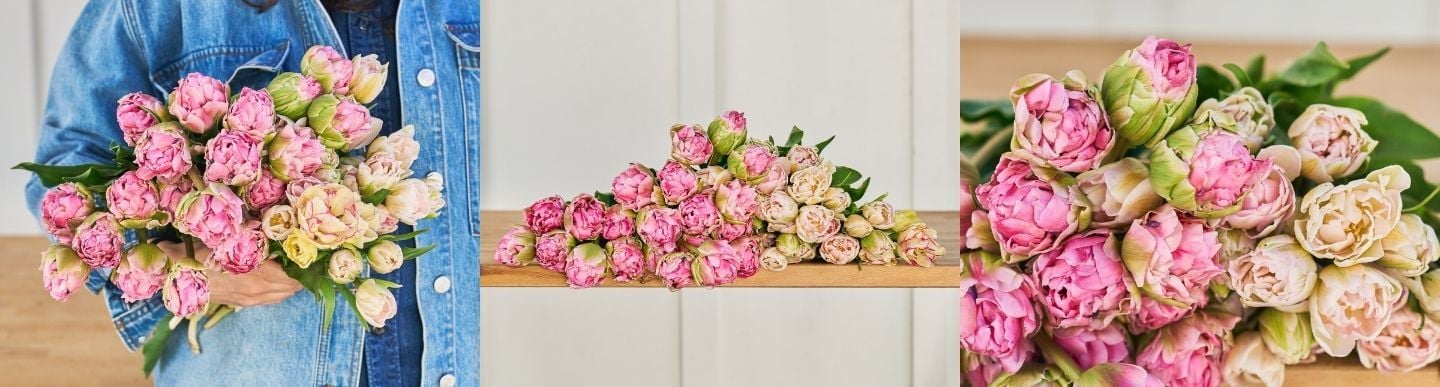
She is another double late, peony-style tulip with flowers that blend caramel, apricot, dusty rose, muted lavender and cream. No two seem to look exactly alike, and the color continues changing as the blooms open.
La Belle Époque is romantic without being overly sweet and neutral without being boring. Basically, she's wearing the flower version of a really good camel coat.
More tulips to grow if you love Copper Image and La Belle Époque
If you like that same antique, painterly palette, these are worth looking for:
Brownie
A double early tulip in warm copper, rust and caramel tones. It blooms earlier than Copper Image and La Belle Époque, which helps stretch the season.
Foxy Foxtrot
A soft peachy-apricot double tulip with touches of rose and cream. It has a beautiful vintage feel without becoming too pink.
Charming Beauty
A full, peony-style tulip in pale peach, apricot and soft blush. It is especially beautiful mixed with cream flowers.
Crème Upstar
Creamy ivory petals brushed with pink and pale green. This one is quieter than Copper Image, but it works beautifully in the same palette.
Apricot Foxx
A classic tulip shape in apricot, salmon and dusty rose. It isn't as ruffled as the doubles, but its color is spectacular in bouquets.
Apricot Beauty
A lovely soft salmon-apricot tulip with a simpler shape and a light fragrance. It is an older variety and still one of the best.
Amazing Grace
A large double tulip in layered shades of rose, pink and apricot. She's a little more colorful but still feels romantic rather than bright.
Gudoshnik Double
Each bloom can be slightly different, with combinations of peach, rose, cream, coral and buttery yellow. It gives you that wonderfully imperfect, collected look.
Renown Unique
A late-flowering double tulip with warm coral-pink petals that soften as they open. It is beautiful when you want to deepen an otherwise pale palette.
Salmon Impression
A tall Darwin hybrid in warm salmon pink. The flower is less ruffled, but the strong stem makes it a good cut flower, and Darwin hybrids are generally more likely to return than heavily doubled varieties.
Planting a mix of early, midseason and late tulips is one of the easiest ways to extend your bloom period. Weather will always have a say, because weather likes to be included in every farming decision, but choosing varieties from different bloom groups can give you several weeks of tulips instead of one enormous, beautiful rush.
Will tulips come back every year?
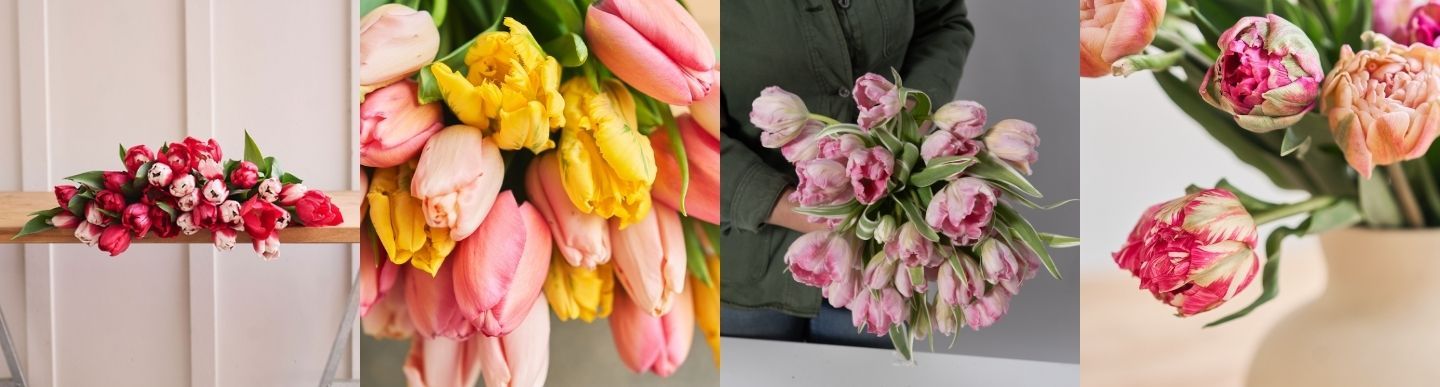
Tulips are botanically perennials, but many modern tulips behave more like annuals in the garden. They may come back the following year with fewer, shorter or smaller flowers—or only leaves and no flower at all.
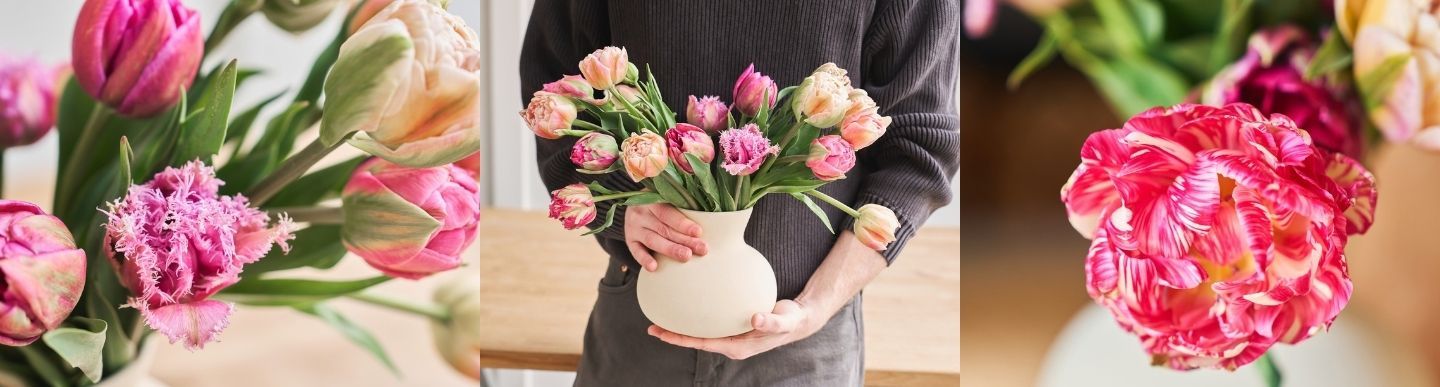
Highly bred double, parrot and fringed tulips are often grown for their spectacular first-year show and then replaced. If you want tulips that are more likely to return, look for Darwin hybrids, Fosteriana tulips and smaller species tulips.
To give any tulip its best chance of returning:
- Plant it deeply in well-drained soil.
- Cut off the spent flower before it forms seeds.
- Leave all the foliage in place until it turns completely yellow and dies back naturally.
- Avoid heavily watering the area during the bulb's summer dormancy.
- Fertilize lightly with a bulb fertilizer when growth appears.
The foliage part is important. I know yellowing tulip leaves are not anyone's favorite spring garden feature, but those leaves are feeding the bulb for the following year. Cutting or braiding them while they are still green makes the garden look tidier now at the expense of next spring's flowers.
Can you plant tulips in pots?
Yes. Tulips grow beautifully in containers as long as the pot has excellent drainage and is deep enough to hold at least six inches of soil beneath and around the bulbs.
You can plant tulips more closely in a container than you would in the ground, but the bulbs should not be touching. Water the pot thoroughly after planting, then keep the soil lightly moist rather than wet.
Tulips in containers still need their winter chilling period. In very cold climates, pots may also need protection because bulbs in a container experience greater temperature swings than bulbs insulated by the ground.
And please use a pot with a drainage hole. This is not the time for that beautiful pot you bought even though it has absolutely no practical way for water to escape. I own several of those too, and inevitably end up asking my husband to drill holes in the bottom so they can eventually serve a purpose beyond being very expensive umbrella stands.
When should you plant daffodils?
Daffodil bulbs are also planted in fall, but they can usually go into the ground a little earlier than tulips. Plant daffodils once the soil begins to cool, generally from September through November depending on your climate.
Daffodils need time to establish roots before the ground freezes, while tulips benefit from waiting until the soil is colder. If you're planting both, it is perfectly reasonable to plant the daffodils first and save the tulips for later in the fall.
Plant standard daffodil bulbs about six inches deep, or approximately two to three times the height of the bulb, with the pointed end facing up.
Daffodils also tend to naturalize and return more reliably than fancy hybrid tulips. And unlike tulips, they are generally ignored by deer, squirrels and rodents. If your garden has become an all-you-can-eat buffet for wildlife, daffodils are one of the safer bets.
How do you keep squirrels and deer away from tulips?
Unfortunately, we are not the only ones who love tulips. Squirrels do too, and I have yet to find a foolproof way to keep them away from mine. We literally invested in fencing our entire 25 acres this year to keep the deer out, only to discover that the much smaller guys can be every bit as challenging.
So take these tips for what they are: things that are absolutely worth trying, but not a promise that some very determined squirrel won’t still outsmart both of us.
Squirrels and other rodents may dig up freshly planted bulbs, while deer and rabbits can eat the flower buds just as they are getting ready to open. Which feels particularly rude after you waited all winter for them.
Planting bulbs deeply helps. You can also lay a piece of chicken wire or hardware cloth over the planting area before replacing the final layer of soil. The tulips will grow through the openings, but animals will have a harder time reaching the bulbs.
Some gardeners also interplant tulips with daffodils, which animals tend to avoid. It isn't a guaranteed force field, but it may make the planting less inviting. This is what we’re planning on doing this year, so I’ll let you know next Spring if it worked!
If deer are a major problem, a physical barrier is still the most reliable solution. Repellents can help, but they usually need to be reapplied, particularly after rain—which, here in Washington, is most days from now until May.
Are tulips toxic to dogs and cats?
Yes. The ASPCA lists tulips as toxic to dogs and cats, with the highest concentration of toxins in the bulb.
I think about this more than I used to. At home, that's because of Roscoe, our 14-year-old Cairn Terrier who I lovingly think of as my third stepson, who is far more interested in the kitchen counter than in anything growing in the yard but who I don't fully trust around a freshly dug bed. At the Farmquarters, it's because of the two little farm dogs who follow Tim around all day and consider anything he's just finished working on to be their business too. Store unplanted bulbs somewhere pets cannot reach them, and supervise any dog who sees freshly disturbed soil as a personal invitation to excavate.
If you believe your pet has eaten a tulip bulb or another part of the plant, contact your veterinarian or animal poison control promptly. We put together a full guide to flowers and plants that are safe for cats and dogs if you're wondering about the rest of your garden.
Is it too late to plant tulip bulbs?
If the ground is not frozen solid and you can still dig a proper hole, you can usually still plant tulip bulbs.
Late planting is generally better than leaving the bulbs in a bag until spring. Bulbs are living things, and most will not improve while spending five months forgotten on a garage shelf. Believe me, I’ve tried planting them when they’re super dry and resemble an old walnut, to no avail.
Tulips planted very late may bloom later than usual or have shorter stems their first year, but they still have a better chance in the ground than they do waiting indefinitely for you to become more organized.
Can you plant tulip bulbs in spring?
Tulip bulbs are best planted in fall because they need a long period of cold temperatures before blooming.
If you discover unplanted bulbs in early spring, plant them as soon as the soil is workable. If they received enough cold storage, they may still bloom, although the flowers may be late, small or inconsistent. Bulbs that stayed warm all winter are unlikely to produce a good spring display.
In other words: plant them and see what happens, but manage your expectations. This is also our general Farmquarters philosophy for at least 40 percent of what we grow.
A little work now for a much prettier spring
One of the things I love most about planting tulips is that it is such a tangible act of optimism.
You're planting something in the cold and dark because you believe spring is coming. Not immediately. Not conveniently. But eventually.
We're putting a lot of that kind of faith into the ground at the Farmquarters right now. Tulip bulbs, daffodils, perennials, shrubs and trees—so many things that will not look like much for months or, in some cases, years. Building this farm has been a lesson in doing the work long before you receive the reward, which is also a fairly accurate description of building Farmgirl Flowers. I keep telling our team to just wait - in three years this place is going to be incredible!
This spring, when the beds are filled with Copper Image, La Belle Époque and all their beautiful, complicated friends, I'm sure I'll tell you it was completely worth it. And I will absolutely mean it. I'll just probably leave out the part about how my back felt the day after we planted them.
Are y'all planting bulbs this fall? Tell me what you're putting in—I'm always looking for an excuse to order a few more.