


12 Heirloom Flowers Our Grandmothers Grew (that We're Still Growing Today)
Oct 02, 2026
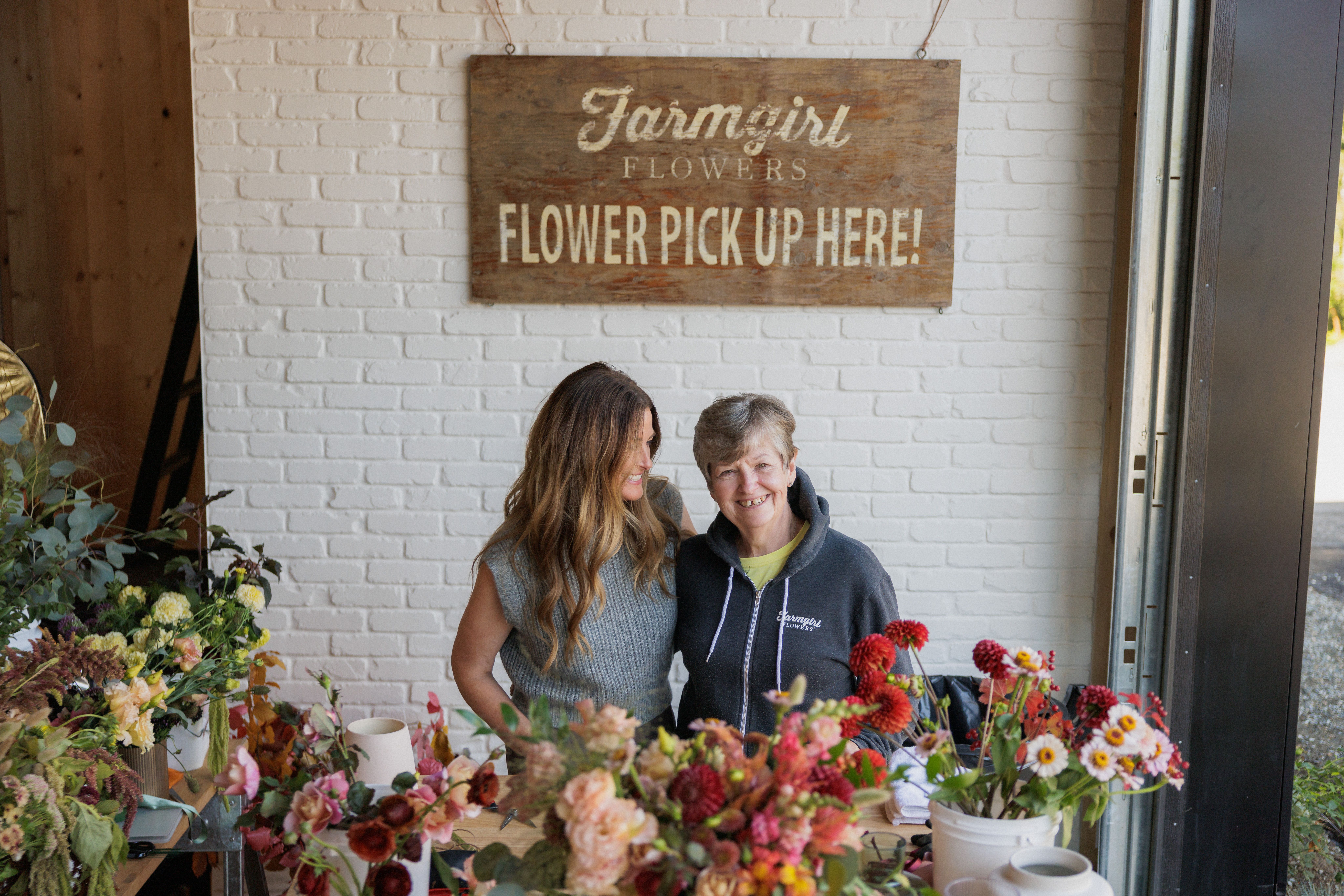
In short: Heirloom flowers are old-fashioned varieties, usually 50 or more years old, that gardeners have saved, divided, and passed down rather than bought new every season. The ones our grandmothers grew most, and the ones we're planting at our own farm now, are garden roses, bearded iris, peonies, zinnias, chrysanthemums, dahlias, marigolds, lilacs, garden phlox, cosmos, hollyhocks, and sweet peas.
There are flowers you think are pretty, and then there are the ones that take you all the way back to another place and time before you've even realized what's happening.
For me, it's lilacs and peonies. We had both a purple lilac and a white tree flanking either side of the swing set behind our farmhouse in Indiana, and one whiff of lilac can still put me right back on that swing with the warm air blowing on my face as I would pump that swing higher and higher. And on our farm, we had a row of big, beautiful hot pink peonies that lined the bank leading up to our big red barn, and I can picture them just as clearly as if I were standing there right now. Flowers are just funny that way in how they hold onto our memories for us and then hand them back, sometimes decades later, and often when we least expect it.
I grew up on a corn and soybean farm in a tiny town in Northern Indiana. We didn’t farm the land ourselves, even back then you needed far more acreage than we had to make a living from it, but farm life gave me a very high tolerance for hard work, which is one of the gifts of my childhood I’m most thankful for. My Mom is the real farmgirl as she grew up on a bigger commodity crop farm and is the one who taught me the pride that comes from a hard days work. My grandma worked that farm too, so she didn't have a big, rambling flower garden, but she loved pretty things - especially flowers, and I'm pretty sure she'd have happily traded a few rows of soybeans for almost anything on this list. I know I would have!
Now, in a twist I'm certain nobody in my family saw coming, we've spent the last few years planting tens of thousands of flowers at our Farmquarters, our small flower farm and design studio in Gig Harbor, Washington, and at our peony farm in Central Oregon. After nearly sixteen years of selling flowers, I finally get to grow a lot of them too. Mostly this has taught me three things: I still have an enormous amount to learn, Mother Nature does not care about my plans, and seeing the first flower open after months of staring at dirt and weeds never, ever gets old.
So when a writer asked me recently about heirloom flowers, I went a little overboard (I do that). This is the even-more-overboard version, with growing notes for every one of them that I thought I’d share in case it’s helpful for you too!
What makes a flower an heirloom?
Technically, an heirloom flower is an open-pollinated variety that's at least 50 years old and has been preserved and passed down by gardeners rather than developed by a commercial breeder. Open-pollinated just means the seeds grow true to the parent, which is how a variety survives for generations: someone saves seed, splits a clump, or hands a rooted cutting over the fence. I wish we did more of that these days.
But when most of us say "heirloom flowers," I think we mean something a little broader. We mean the flowers our mothers and grandmothers grew, divided, and passed along, tucked beside vegetable gardens and planted against barns, fences, and back porches. Some of the varieties below are true heirlooms with names and dates going back a century or more. Others are newer versions of flowers that have been loved for generations. All of them are loose, fragrant, wonderfully imperfect, and make a garden feel like someone has loved it for a very long time. That's the definition this list is working from, and what I’m hoping to create at our farmquarters.
Old-fashioned flowers at a glance
- Garden rose: Perennial shrub · Late spring through fall · Full sun · Fragrance and loose, romantic, many-petaled flowers
- Bearded iris: Perennial · Mid to late spring · Full sun · Nearly foolproof, and easy to divide and pass along
- Peony: Perennial · Late spring to early summer · Full sun · Fragrance, enormous flowers, and plants that outlive us
- Zinnia: Annual · Summer through frost · Full sun · Easy, prolific, and a cutting garden workhorse
- Chrysanthemum: Perennial or tender perennial, by type · Late summer through fall · Full sun · Wild shapes, fall colors, long vase life
- Dahlia: Tender perennial · Midsummer through frost · Full sun · Every color, size, and form imaginable
- Marigold: Annual · Summer through frost · Full sun · Tough, cheap, and easy from seed
- Lilac: Perennial shrub or small tree · Spring · Full sun · That scent
- Garden phlox: Perennial · Midsummer into early fall · Full sun to light shade · Fragrant cottage garden clusters, year after year
- Cosmos: Annual · Summer through frost · Full sun · Airy, wild, and endlessly generous
- Hollyhock: Biennial or short-lived perennial · Summer · Full sun · Tall, nostalgic spires that make a new garden look old
- Sweet pea: Annual (cool season) · Spring to early summer · Full sun, cool weather · Fragrance, ruffles, and stems that refuse to be straight
Bloom time and hardiness vary by climate and variety, so treat this as a starting point, not a legally binding agreement with Mother Nature. In my experience, she has no interest in my schedule.
1. Garden roses: the original heirloom flower
Garden roses, also called old garden roses, heirloom roses, antique roses, or heritage roses depending on who you ask, are rose varieties with loose, ruffly, many-petaled flowers and the real rose fragrance that has been bred out of most modern florist roses. They're about as classic as heirloom flowers get, so I had to start here.
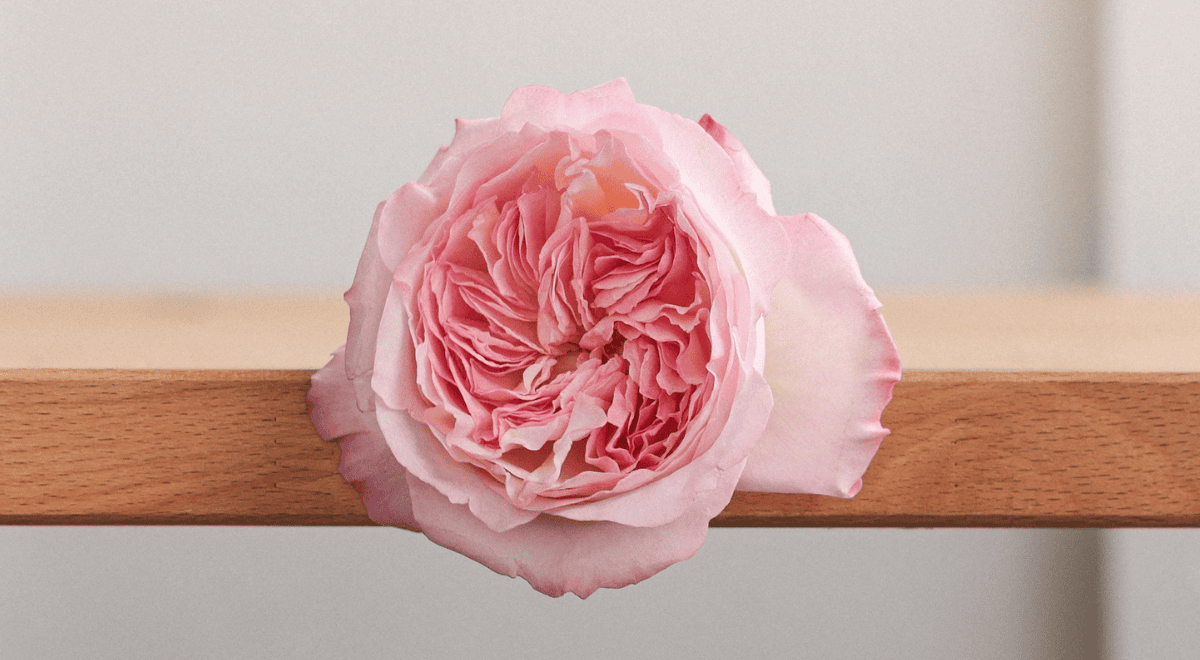
I love them so much that when we were planning Farmquarters, I may or may not have planned parts of the buildings around where the climbing roses would go. We've now planted about 450 shrub and climbing roses, including roughly 100 David Austin climbers, along barns, fences, and just about anywhere else I could find room for one. (I'm forever trying to squeeze in a few more.)
What I love most is that they don't look too perfect. The flowers open loose and a little messy and look different from one day to the next, and they smell like an actual rose, which shouldn't feel remarkable, but somehow does these days. A lot of standard florist roses have been bred to prioritize vase life, size, uniformity, and surviving a very long trip in a box. Those things matter (trust me, shipping flowers across the country is my whole job), but fragrance and that wild old-garden shape are usually what get lost along the way.
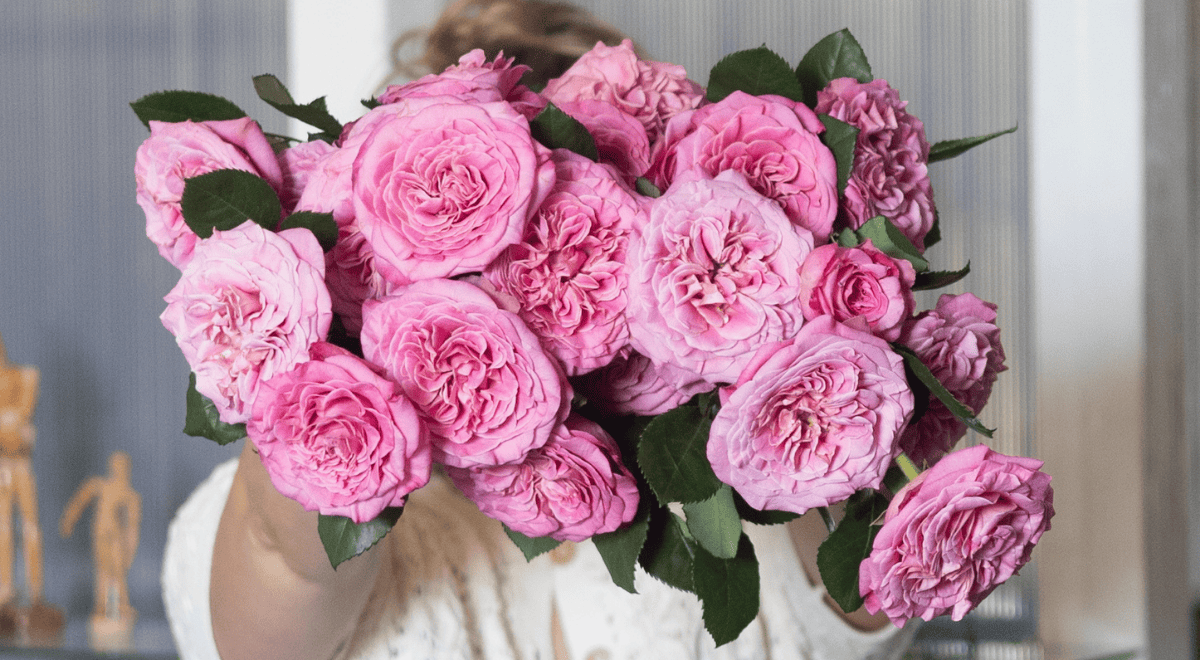
Ours surprised us by blooming their very first year, when I'd have been thrilled just to keep them alive. Now I slow down every time I walk past, because their season runs longer than the peonies' and there's always something new opening. More than anything else we've planted, they've made Farmquarters feel like the place I saw in my head when we started.
How to grow them: At least six hours of sun, rich but well-draining soil, and enough space between plants for air to move (crowding is how you get black spot and mildew). Here in the Pacific Northwest, where rain is not exactly in short supply, we planted many of ours on slopes and mounds so their roots won't sit in wet soil all winter. If your ground is heavy, do the same, and look for disease-resistant varieties if you garden somewhere damp or humid. Plant bare-root roses in late winter or early spring.
Old-fashioned roses to look for: true old garden roses like Madame Alfred Carrière, Madame Isaac Pereire, and Souvenir de la Malmaison, and modern English roses bred to look and smell like them, such as Gertrude Jekyll, Claire Austin (which is climbing up our design barn as I type!), and The Pilgrim. Those last three are a good reminder that something can feel wonderfully old-fashioned without technically being an heirloom.
2. Bearded iris: the flower that gets passed over the fence
Bearded iris are hardy perennials grown from rhizomes that have been divided, handed over fences, and passed from one gardener to the next for what feels like forever. That's a big part of why they feel so nostalgic, in the very best way. The clump in someone's yard might have come from her mother, who got it from an aunt, who got it from a neighbor nobody can quite remember now. The name is long gone, but the flower is still there.
They're also the kind of plant that makes a new gardener feel very competent once they get established, which I always appreciate. Half the iris in America probably trace back to somebody's aunt, and I find that kind of wonderful.
The deep purple iris may be the one most of us picture, but the color range now is incredible. We're planting blush, peach, cream, pale blue, and a soft periwinkle I cannot stop ordering, all colors that still have that old-fashioned shape and character.
How to grow them: Full sun and very well-draining soil. The one rule people break is planting them too deep. Set the rhizome so its top sits right at or just barely above the soil surface, with the roots down in the ground. It feels slightly wrong while you're doing it, but burying a rhizome like a bulb is the most common reason an iris refuses to flower. Plant or divide in late summer, and split the clumps every three or four years to keep them going.
Historic varieties to look for: Honorabile (1840s), Quaker Lady (1909), Alcazar (1910), and Wabash (1936). I love thinking about how many gardens those have already lived in before reaching ours.
3. Peonies: the flower people remember most
Peonies are long-lived herbaceous perennials that have been cultivated in China for at least 2,000 years. The American Peony Society's registry now lists more than 7,000 named varieties, and a happy plant can live for 100 years or more. They are also, by a very wide margin, the flower our customers love most: 92% of them name peonies as a favorite.
I probably should have put peonies first. We're growing around 36,000 peony plants at our Central Oregon farm, with at least another 1,200 at Farmquarters in Gig Harbor, which is a lot of peonies and, right now, also a lot of patience. We're hoping for a small harvest from the Oregon field in 2027 and the first full one in 2028 (or at least that's the plan, and we've established how Mother Nature feels about my plans), which feels very far away when you're looking at rows of dirt from the seat of a little John Deere.
That 100-year lifespan stopped me in my tracks when we started planting. It's humbling to put something in the ground knowing it will be here long after you're gone, and kind of wonderful to imagine the people who'll cut from it someday. Someone I'll never meet is going to walk those rows in June. I think that’s pretty special.
Peonies are also the flower our customers most often connect to someone they loved, usually a mother or grandmother who had a row beside the house or one big old plant that came back every spring without anyone appearing to do much of anything to it. I didn't know a single variety name as a kid. I just knew that peonies on the bank by the barn meant we'd finally made it through another Indiana winter.
How to grow them: Full sun, soil that drains well, enough winter cold to go dormant, and, most importantly, the right planting depth. Plant bare-root peonies in fall, ideally before your first hard frost, with the eyes (the little pink buds on the root) no more than one to two inches below the finished soil surface. Plant them deeper and you may get lots of leaves and very few flowers—sometimes for years. Not months. Years. Peonies will teach you patience whether you were looking to learn it or not.
Once the foliage has died back in fall, we cut ours down to about one to two inches above the ground and remove all of the old leaves and stems from the field. That helps reduce the chance of botrytis and other fungal diseases overwintering around the plants. Most home gardeners probably don’t need to be quite as militant about cleanup as we are in a production field, but removing diseased or dying foliage in fall is one of those small things that can absolutely help keep peonies healthier year after year.
What we learned planting 36,000 of them: Ideally you get them in the ground before the first frost. Ours were delayed by the port strike a couple of years ago, so we planted after the first frost, in 29-degree weather, breaking through ice on the dirt to get the roots in the ground. It was, and I cannot stress this enough, brrrr. Even so, about 98% of them came up the next spring, which tells you how forgiving a peony root is. The roots were also much bigger than we expected; the largest auger we could find wasn't big enough for some of them. We planted mostly 3-to-5-eye roots, which cost more than 2-to-3-eye roots and less than the 7-to-8-eye ones, and they've worked great for us. If you're planting one in your own garden, a 3-to-5-eye root is the sweet spot between price and patience.
If you want a lot of stems: The highest-yielding peonies we grow are Sarah Bernhardt, Red Charm, Alexander Fleming, Félix Crousse, Monsieur Jules Elie, Coral Charm, Coral Sunset, Karl Rosenfield, and Kansas. Happily, they're also the most affordable, because they're the ones grown commercially for cut flowers, and there's a lesson in there somewhere about the classics.
The varieties to look for: The peonies most commonly grown in American gardens include Sarah Bernhardt, the reigning queen and probably the most widely planted peony in the country, along with Festiva Maxima, Duchesse de Nemours, Karl Rosenfield, Red Charm, Coral Charm, and Bowl of Beauty. Many of these have been growing in gardens for well over a century, which helps explain why so many of us associate them with our mothers and grandmothers. After growing them ourselves, we've found out why they've stuck around: they're some of the hardiest varieties out there, more resilient to drought and water issues, and they have the highest success rate we've seen in terms of plant health and yield (the number of stems you can harvest per plant). Grandma knew what she was doing.
A few things I've learned the expensive way: My personal favorite is Etched Salmon, with Red Charm a close second, and the roots for Etched Salmon cost at least ten times what a Red Charm root does. That's the other reason the classics have stayed classics: they're reasonable. The trendiest peony right now, Pastelegance, can run close to $200 for a single root, while the standards cost a fraction of that. The good news is that a peony is an investment that pays you back. After a few years in the ground (three at minimum; waiting until after the fifth growing season gives you much better odds), you can dig and divide the roots, which is exactly how grandmothers ended up with a whole row from one plant, and how their daughters ended up with a plant of their own. We haven't divided ours yet, so I'll report back. :)
4. Zinnias: the cutting garden workhorse
Zinnias are heat-loving annuals that have been cottage garden and cutting garden staples for generations because they're cheerful, wildly productive, and one of the easiest flowers to grow from seed. Which is especially satisfying after you've spent months babying something far more demanding (see: everything above).
We grew a lot of zinnias at Farmquarters this year and they became the office favorite almost immediately. I'm usually drawn to softer colors, so the blush, peach, cream, and oatmeal-toned ones were what I kept reaching for. They felt completely different from the bright crayon-box zinnias I remembered, but they still had that happy, slightly unruly quality that makes a zinnia a zinnia.
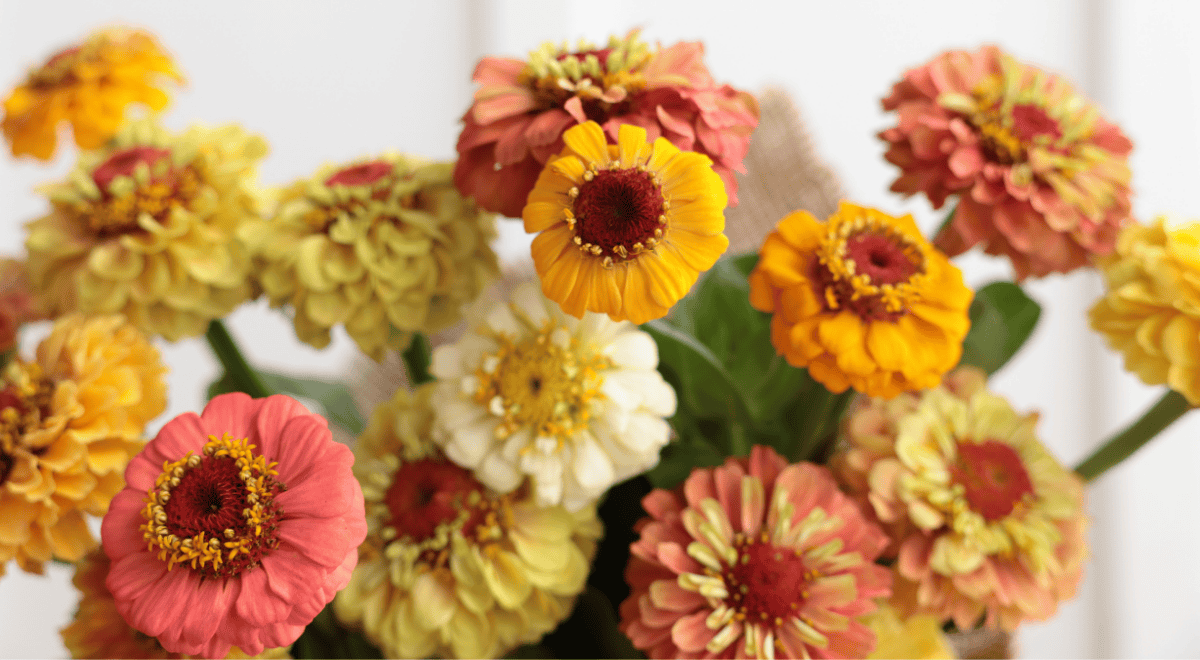
There are old standbys like California Giant, Lilliput, and Cut and Come Again, along with newer specialty varieties that have made zinnias an "it" flower again. The ones we grew, Queeny (the Queen Lime series), Zinderella, Ballerina, and Linen, come in nuanced, antique colors and shapes that can look almost like little dahlias. Linen is especially beautiful, with mostly double flowers in oatmeal, cream, pale peach, and blush. It looks exactly like it sounds.
How to grow them: Full sun, plenty of warmth, and good airflow (powdery mildew is their one weakness). Don't rush them into cold spring soil; wait until after your last frost. Once they start, the only real challenge is keeping up. The more you cut or deadhead, the more they give you, right through summer and into fall in many regions. One harvest tip: give the stem a little wiggle about five inches below the flower. If the neck flops around, it isn't ready. If the stem is stiff, cut away.
5. Chrysanthemums: not your hardware store mums
Chrysanthemums are one of the oldest cultivated flowers in the world, grown in China since as early as the 15th century BC according to the National Chrysanthemum Society, which recognizes 13 distinct bloom forms, from enormous incurved exhibition flowers to shaggy spiders and tiny, perfectly round pompons. Long before the tidy domes stacked outside the hardware store every September, gardeners were growing heirloom chrysanthemums in shapes that are hard to believe belong to the same flower.
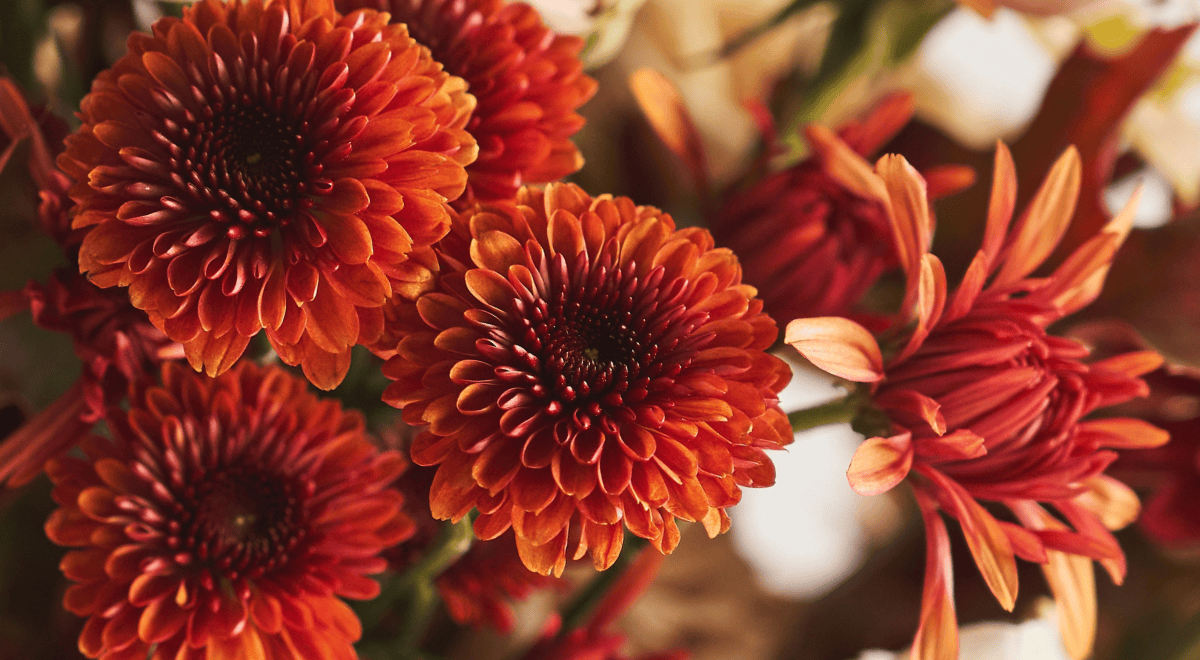
I'll happily defend mums to anyone who thinks they begin and end with those hardware store pots. Those have their place, but judging all mums by them is a little like judging all roses by the sad red ones at the gas station. There is so much more to see.
We're growing about 350 specialty mums at Farmquarters, including spider, anemone (or pincushion), pompon, football, spoon, and quill varieties in bronzes, peaches, golds, burgundies, and mauves. Some look like fireworks. Some look like little buttons. The huge football mums can look almost like peonies, which is probably why I'm drawn to them. Once you realize how many forms there are, the word "mum" starts to feel hilariously inadequate.
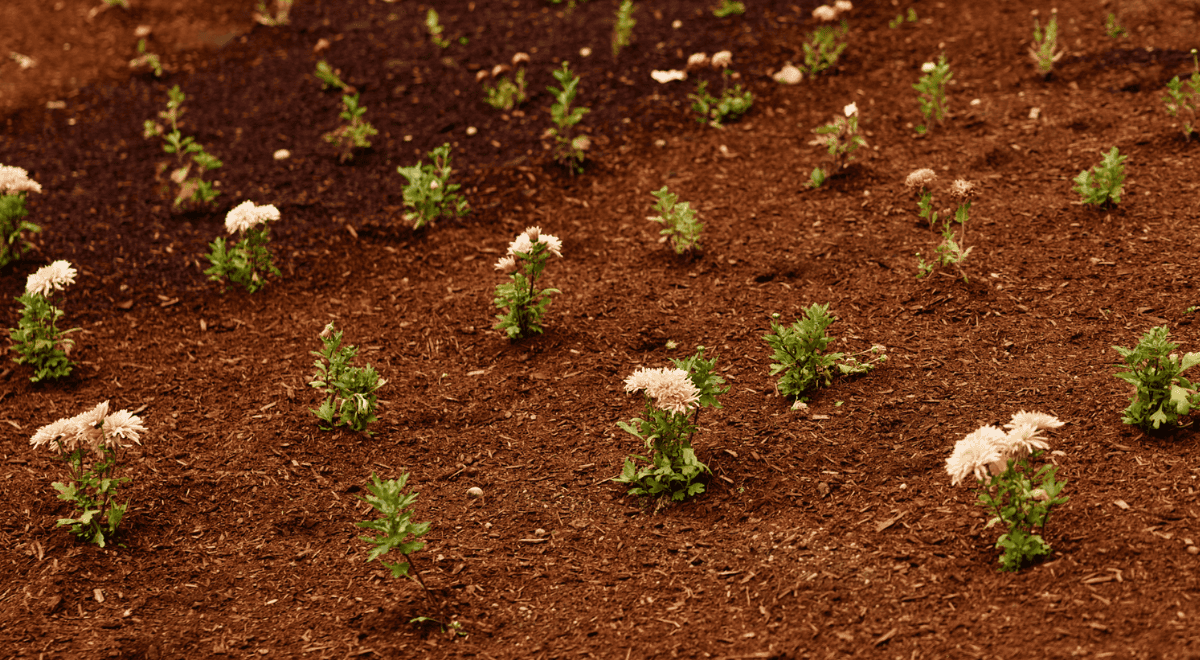
How to grow them: Full sun and fertile, well-drained soil. Pinch the growing tips back in late spring and early summer to encourage branching and more stems (many growers stop around the Fourth of July) so the plants have time to set their fall buds. And check the hardiness of the exact variety you're buying: some garden and heirloom mums come back reliably for years, while many florist and exhibition types need winter protection or fresh cuttings each season. They are not all the same, which is exactly the point.
6. Dahlias: the flower that steals every show
Dahlias are tender perennials grown from tubers that gardeners have obsessed over for generations, even as they've gone in and out of fashion in the cut flower world. In the garden, I'm not sure any flower gets more attention. Not even our garden roses, and that's saying something.
Dahlias are my favorite flower to grow, which is different from saying they're my favorite flower to ship. At Farmgirl our relationship with them is loving but complicated. In the garden they're glorious. We grow ball, pompon, cactus, and dinnerplate types, including plants nearly six feet tall with flowers bigger than your face, and I've found bees asleep in their petals in the morning, which may be one of my favorite things I have ever seen on the farm.
As cut flowers, though, dahlias are little divas. They’re finicky, they don’t travel well, and their vase life is notoriously short. Our customers love how they look and understandably wish they’d stay that way longer. I do too. But in your own garden, none of that really matters. Cut them the morning you want to enjoy them, bring them inside, and you will never be disappointed.
At Farmgirl, we only ship a handful of dahlia varieties—the ones we’ve found travel the best and hold up the longest in a vase. Most of those are ball varieties, which are incredibly beautiful and almost look like little honeycombs in flower form. What they don’t have, though, is the sheer size and drama of the giant dinner-plate dahlias. Those are spectacular, but they’re just not built for a trip across the country in a box. So for those, we’ll happily stick to growing them at the Farm Quarters and cutting them straight from the garden.
How to grow them: Full sun, rich soil, consistent water, and, for the tall ones, support. Stake them before they need it, because wrestling a six-foot plant upright after a rainstorm is when you start regretting your life choices. Plant tubers after the last frost once the soil has warmed, and keep cutting; the more you cut, the more they bloom. One honest warning: every creature on the farm loves dahlias as much as I do, slugs most of all, and they can mow down tender shoots overnight, so start watching the minute growth appears. In cold climates, lift and store the tubers after frost. In milder zones they may overwinter in the ground, but our cold, wet Pacific Northwest soil will rot them, so we never take drainage for granted.
Historic varieties: Kaiser Wilhelm (1880s), Mrs. I. de Ver Warner (1921), and Jersey's Beauty (1923). For that enormous, romantic dinnerplate look, Café au Lait is still hard to beat, even if she is a diva once cut.
7. Marigolds: the flower at the end of every vegetable row
Marigolds are tough, inexpensive annuals that almost everyone remembers from a parent's or grandparent's garden, mostly because they'll flower from early summer right up to the first hard frost with almost no help from anyone.
My mom planted them at the ends of our vegetable rows, partly because they were cheap and tough and partly because everyone said they'd keep the critters away. I've tried the same trick for a few years now, and I'm sorry to report that our bunnies and chipmunks are perfectly willing to eat around them. (Some marigolds really can help with certain soil nematodes under specific conditions, but they do not create the pest-repelling force field I was hoping for.) I'll keep planting them there anyway, because the minute I see those bright little flowers next to a row of vegetables, I think of my mom. That feels like reason enough.
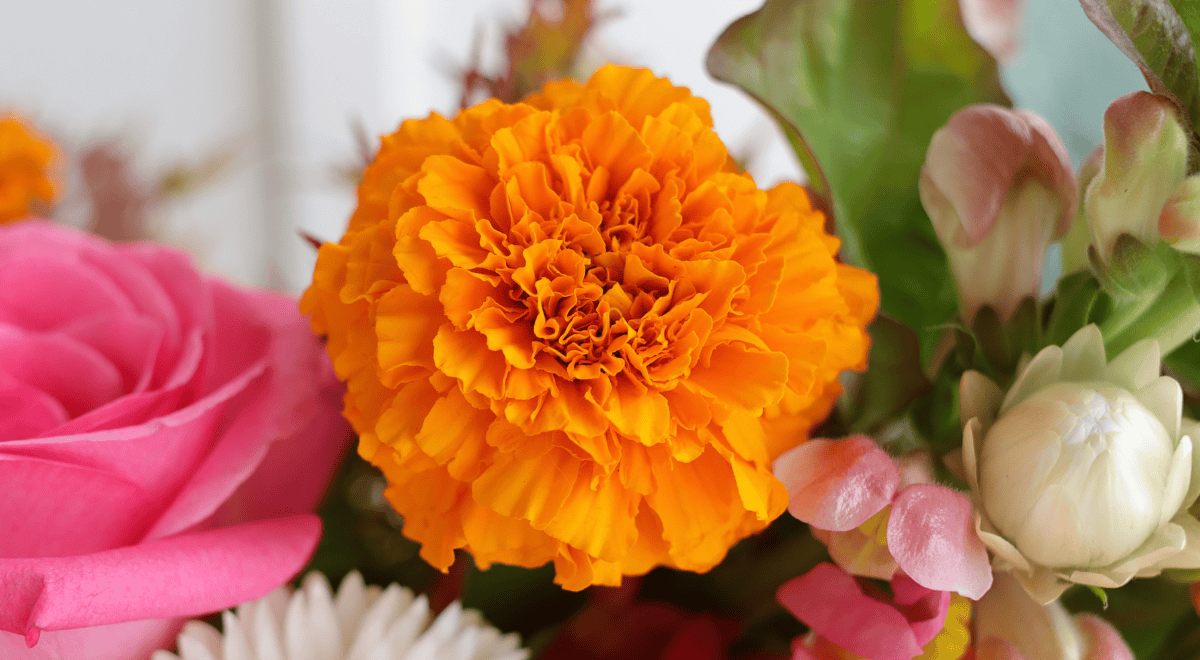
How to grow them: Full sun and reasonably well-drained soil. Sow directly after frost or set out transplants, water them in, and mostly leave them alone. Taller African marigolds like the Crackerjack series and Kilimanjaro White are great for cutting; smaller French marigolds are perfect for edging beds and tucking around vegetables. They may not stop a determined chipmunk, but they'll make the garden happier while he's robbing you.
8. Lilacs: the scent that takes you straight back
Lilacs are hardy, long-lived flowering shrubs and small trees whose spring fragrance is so distinctive that, after peonies, they're the flower our customers most often mention when they tell us about someone they miss or a garden they remember. You don't have to work very hard to recall a lilac memory. The flower does the work for you.
I already told you about the swing set with the purple lilac on one side and the white one on the other, so I'll just add this: when they were blooming, the warm air carried their scent clear across the yard, and I can still feel that air on my face sitting at a desk 40-some years later. That's a pretty powerful thing for a flower to hold onto.
How to grow them: Plenty of sun, good drainage, and room for air to move. Traditional lilacs need a real winter chill, though newer low-chill varieties have made them possible in warmer regions. And please learn from my mistake: lilacs flower on old wood, meaning next year's buds form right after this year's flowers fade, so the only safe time for a real pruning is immediately after they bloom. Prune in fall or winter and you're cutting off next spring's flowers. It's a very effective way to learn this lesson exactly once.
Classic varieties: Common Purple, Common White, Madame Lemoine, Sensation, and Krasavitsa Moskvy (usually sold here as Beauty of Moscow). Though honestly, even the unnamed lilac that came with an old house can become the one a family remembers forever.
9. Garden phlox: the quintessential cottage garden flower
Garden phlox (Phlox paniculata) is a hardy perennial with big, fragrant clusters of flowers that arrive right in the middle of summer, and it has that loose cottage garden look that somehow feels nostalgic and completely current at the same time. Which is to say, it looks like your grandmother's garden, and that is very much in style right now.
I haven't planted it at Farmquarters yet, which is a rare thing for me to admit, since my usual response to seeing a flower I like is to immediately order far too many of it. The flower farmers around us grow beautiful phlox, though, so it's on the list for next year. It's a perennial in USDA zones 4 through 8, which makes it a value play: plant it once and, with reasonable care, it gives you flowers for years. In a garden where plenty of things have to be started over every spring, that's a very good deal.
How to grow it: Full sun to light afternoon shade, fertile soil, and consistent moisture without waterlogged roots. Good spacing and airflow help prevent powdery mildew, which matters even more somewhere damp like ours, so look for mildew-resistant varieties such as David (a white classic) or the Opening Act and Fashionably Early series. For cutting, harvest when about a third to half of the little flowers in each cluster have opened. Divide every few years to keep clumps vigorous.
10. Cosmos: the most generous flower in the garden
Cosmos are fast-growing annuals that have been grown for generations because they're about as unfussy and generous as a flower can be. Give them sunshine, keep cutting them back, and they'll bloom their hearts out from midsummer to frost.
We love them because they're wild and wonderfully imperfect. Their airy stems and fluttery petals soften everything around them, in the field and in a bouquet, and they make a garden look like someone has loved it for decades even if you scattered the seed a few months ago. Ours grew more than six feet tall last year, which was both beautiful and slightly ridiculous. Keeping up with the deadheading starts to feel like a chore once they really get going, but what a gift that kind of chore is.
How to grow them: Full sun and leaner soil. Cosmos do not need encouragement; give them rich soil or fertilizer and you'll get enormous leafy plants with surprisingly few flowers. Sow directly after your last frost, give the tallest varieties a little support, and cut constantly. Well, that, and somehow persuading the chipmunks not to eat the seedlings.
Varieties we love: Sensation, Purity, Cupcakes Blush, Double Click Cranberries, and Apricotta. I'm especially drawn to the whites, blushes, and soft pinks, which add movement without shouting for attention.
11. Hollyhocks: the flower that makes a new garden look old
Hollyhocks are tall biennials or short-lived perennials whose flower spires have grown beside cottages, barns, and fences for centuries. If there's one flower that can make a brand-new garden look like it's been sitting next to an old farmhouse for generations, this is it.
They reseed so happily that a patch can appear to come back forever, and I love plants that make themselves at home like that. Their real magic is in the garden rather than the vase: height, a little wildness, and instant nostalgia wherever they land.
How to grow them: Full sun and good airflow, ideally toward the back of a border where five- to eight-foot stems won't hide everything else. Hollyhock rust is common, so water at the soil line, pull badly affected leaves, and resist the urge to squeeze them too close together.
Old-fashioned varieties: The Watchman, Nigra, Chater's Double, and Indian Spring, or the fig-leaved Happy Lights, which resists rust better than many traditional types.
12. Sweet peas: the old-fashioned cutting flower
Sweet peas are cool-season annuals that have been treasured for centuries for their ruffled petals and intense fragrance, with early varieties like Cupani helping to inspire generations of breeding and seed saving. They're the definition of an old-fashioned cutting flower: delicate, impossibly fragrant, and completely incapable of looking mass-produced. Even their stems refuse to grow straight.
They feel fleeting and special in the way so many of the best flowers do. And unlike the heat lovers on this list, they want cool weather, which makes them the first thing worth cutting each year.
How to grow them: In mild climates, sow in fall or late winter; in colder regions, plant as soon as the soil can be worked in spring. Give them full sun, rich soil, regular moisture, and a sturdy trellis to climb. Then cut them. Cut them for your kitchen, cut them for your neighbors, cut them for absolutely no reason at all. The more flowers you take, the longer the vines keep going; once they're allowed to set seed pods, they decide their work here is done, which is botanically sensible and a little inconvenient. (Ornamental sweet peas aren't edible, despite the very inviting name.)
Varieties to start with: Cupani, Painted Lady, Matucana, or Old Spice Mix, for fragrance and history.
A few more old-fashioned flowers on our to-plant list
Bleeding heart (the heart-shaped pink flowers dangling by every grandmother's porch), lily of the valley (tiny, ridiculously fragrant white bells for shade), foxglove (tall speckled spires that pollinators adore; toxic if eaten, so site it thoughtfully), snapdragons (the ones kids have pinched open to make "talk" for generations), bachelor's buttons (true-blue and easy from seed), and four o'clocks (fragrant trumpets that open in late afternoon, hence the name). We haven't planted these at Farmquarters yet. I make no promises about how long that will last.
Building a cut flower garden from these flowers
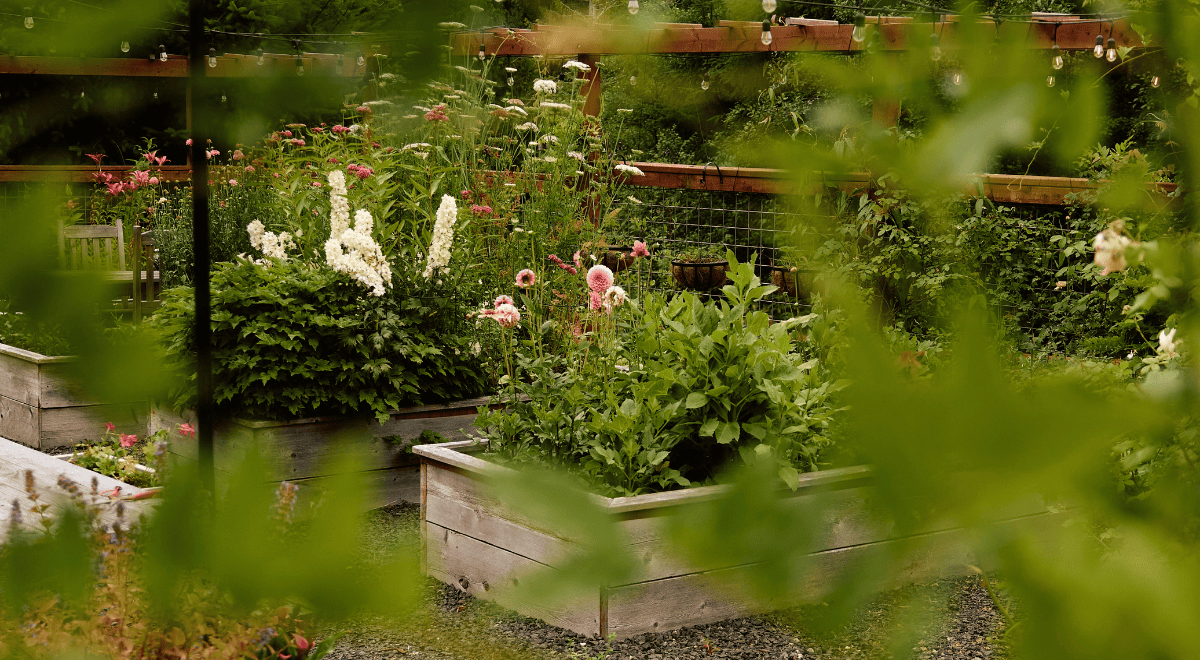
A cut flower garden is simply a garden planted to be harvested, and the best cutting garden flowers are the ones that keep producing after you cut them: zinnias, cosmos, dahlias, snapdragons, sweet peas, and garden roses among the old-fashioned favorites, with peonies, chrysanthemums, and phlox filling in the shoulders of the season. For the longest possible harvest, start with cool-season sweet peas and late-spring peonies, follow with summer zinnias, cosmos, and dahlias, and finish with chrysanthemums in fall.
Since people ask, here's what we actually love to grow for cutting at Farmquarters, in our zone 8b corner of Washington. The things we plant fresh every year: dahlias, cosmos, zinnias, marigolds, specialty sunflowers, scabiosa (Fata Morgana and the annual types especially, plus the pods, which are just as useful as the flowers), lilies, snapdragons, statice, strawflower, and lisianthus, which is a tough one to grow but worth the fight. The perennials that come back for us: garden roses, peonies, delphinium, alstroemeria, specialty chrysanthemums, astilbe, astrantia, clematis, hydrangeas (oakleaf especially), mock orange, perennial scabiosa, foxglove, hellebore, hypericum, and snowberry. Your climate will shuffle that list, but the principle holds: a few workhorse annuals you cut daily, a backbone of perennials and shrubs you plant once, and something fragrant near the door.
The most fragrant old-fashioned flowers
If fragrance is the point (and for a lot of us, fragrance is the memory), the most fragrant old-fashioned garden flowers are lilacs, peonies, garden roses, sweet peas, garden phlox, lily of the valley, and stock. Among the flowers we grow or wish we could grow more of, my personal favorite scent is jasmine, and tuberose and sweet peas are team favorites. Sweet peas especially. We'd ship them tomorrow if they'd survive the trip, so instead we grow them for ourselves and consider it a perk of the job.
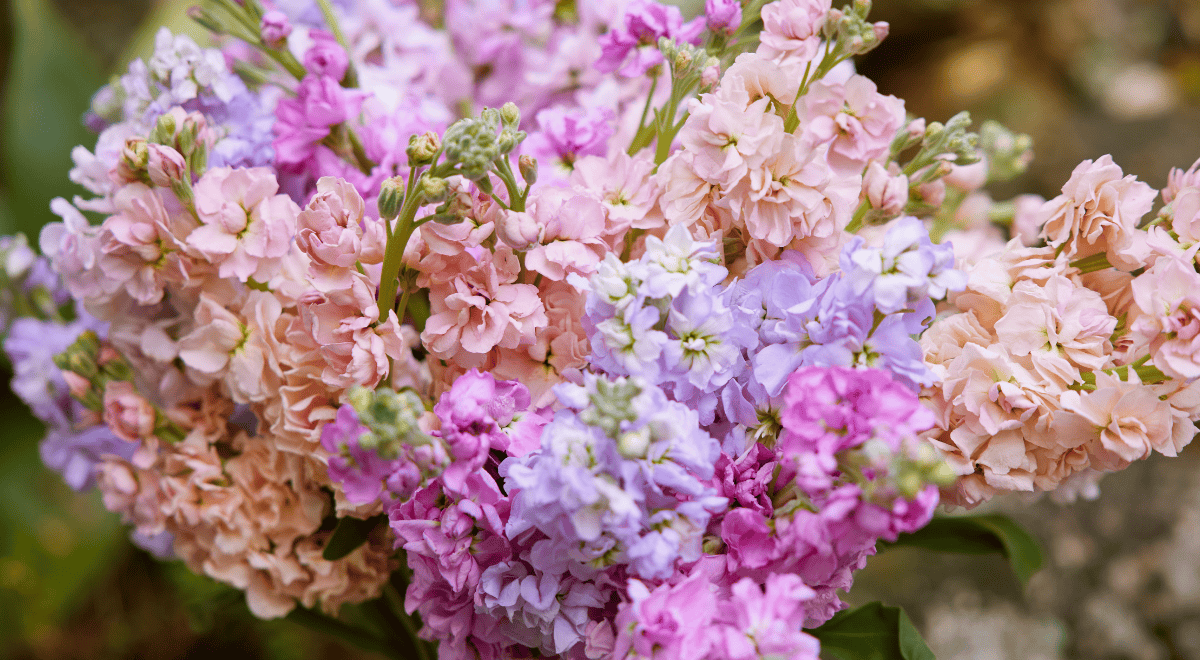
The rest of our fragrance list, for anyone planting a garden they want to smell as well as see: honeysuckle, rosemary, lavender, carnations, marigolds, freesia, nicotiana, paperwhites and other narcissus, oriental lilies, mock orange, gardenias, sweet alyssum, and old-fashioned scented geraniums. Plant a few of these where you walk past them every day. That's the whole trick.
Why are old-fashioned flowers popular again?
Old-fashioned flowers are popular again because they feel personal in a way mass-produced flowers can't. They aren't uniform, many of them won't fit neatly in a shipping box, and none of them bloom according to anyone's content calendar. They flop over, reseed where they weren't invited (our sweet peas are a major culprit of this!), get eaten by slugs, and occasionally refuse to flower for years because someone (me) planted them two inches too deep.
But they also smell incredible. They give bees a place to sleep. They make us stop what we're doing to see what opened overnight. And after months of planting, watering, and staring at what looks like nothing but dirt and weeds, they give us that first flower and somehow make all of it feel worth it.
Most of all, they connect us to people. A lilac takes me back to the swing set behind our farmhouse. A row of peonies puts me right beside the old red barn. Marigolds still make me think of my mom's vegetable garden, even while the chipmunks are eating everything around them. In a world where so much is designed to be fast, disposable, and exactly the same, there's something deeply reassuring about growing a flower people loved 50, 100, or even 2,000 years before we got here.
Maybe that's the real reason heirloom flowers matter. They're beautiful enough, and meaningful enough, to keep passing along. I hope you'll plant a few. And if you do, plant the peony first. Someone you'll never meet will thank you.
Xx, Christina
FAQ
What are heirloom flowers?
Heirloom flowers are open-pollinated flower varieties that have been grown for at least 50 years and passed down between gardeners rather than developed by commercial breeders. Because they grow true from seed or division, the same variety can survive for generations. Common examples include old garden roses, peonies, bearded iris, zinnias, cosmos, marigolds, lilacs, hollyhocks, and sweet peas.
What is the difference between an heirloom flower and an old-fashioned flower?
An heirloom flower is an older named variety that has been preserved and passed down for at least 50 years. "Old-fashioned flower" is a broader, less technical term for any flower strongly associated with historic, cottage, or grandmother-style gardens. Roses, peonies, iris, and zinnias all come in both true heirloom varieties and modern versions bred to look like them.
What flowers did grandmothers typically grow in their gardens?
The flowers most associated with a grandmother's garden are peonies, lilacs, garden roses, bearded iris, hollyhocks, garden phlox, zinnias, marigolds, cosmos, sweet peas, chrysanthemums, and dahlias. Most are perennials or easy self-seeding annuals, which is why they persisted in home gardens for decades. At Farmgirl Flowers, peonies and lilacs are the two flowers customers most often connect to a family memory.
Which old-fashioned flowers come back every year?
Peonies, garden roses, bearded iris, lilacs, and garden phlox are dependable perennials in suitable climates. Some chrysanthemums are perennial, though hardiness varies by variety. Hollyhocks are biennials or short-lived perennials that keep a patch going by reseeding. Dahlias are tender perennials that must be lifted for winter in cold or wet climates. Zinnias, marigolds, cosmos, and sweet peas are annuals that finish in one season.
What is the easiest heirloom flower to grow?
Zinnias, cosmos, and marigolds are the easiest heirloom flowers to grow. All three are annuals sown directly in the garden after the last frost, need only full sun and average soil, and flower continuously through summer when deadheaded. Among perennials, bearded iris is the most forgiving once established, provided the rhizome isn't planted too deep.
When should you plant peonies?
Plant bare-root peonies in fall, ideally four to six weeks before your first hard frost, so the roots can settle before the ground freezes. Fall planting gives peonies the winter chill they need to bloom the following spring. If your roots arrive late, plant anyway: at Farmgirl Flowers we planted 36,000 roots after the first frost in 29-degree weather and still had about 97.5% of them come up.
How deep should you plant peonies?
Plant bare-root peonies with the eyes (the small pink or white buds on the root) one to two inches below the soil surface, no deeper. Peonies planted too deep may take years longer to bloom or produce far fewer flowers. Plant in fall, in full sun with well-draining soil, and expect a couple of seasons before heavy flowering.
When should you divide peonies?
Divide peonies in fall, after the plant has been in the ground at least three years; waiting until after the fifth growing season gives better results. Dig the whole root, rinse off the soil, and cut it into sections with at least three to five eyes each, then replant each division with the eyes one to two inches below the surface. Peonies don't need dividing to stay healthy, so divide only when you want more plants.
When should you prune lilacs?
Prune lilacs immediately after they finish blooming in late spring. Lilacs flower on old wood, forming next year's buds during summer, so pruning in fall or winter removes the following spring's flowers. Limit annual pruning to removing spent flowers and a few of the oldest stems.
Which old-fashioned flowers are best for a cutting garden?
Garden roses, peonies, zinnias, chrysanthemums, dahlias, garden phlox, cosmos, and sweet peas are all excellent cutting garden flowers. For the longest harvest season, start with cool-season sweet peas and late-spring peonies, follow with summer zinnias, cosmos, and dahlias, and finish with chrysanthemums in fall.