


Flowers and Plants Safe for Cats and Dogs (and the Ones to Keep Out of Reach)
Oct 04, 2026
In short: According to the ASPCA, roses, sunflowers, gerbera daisies, snapdragons, alstroemeria, zinnias, celosia, and phalaenopsis orchids are non-toxic to cats and dogs, and so are houseplants like spider plants, Boston ferns, parlor palms, calatheas, and peperomias. Lilies are the flower to worry about most: the ASPCA lists true lilies as toxic to cats and potentially fatal, even in small amounts. Tulips, daffodils, hydrangeas, chrysanthemums, carnations, peonies, dahlias, and eucalyptus are on the ASPCA's toxic list too, mostly for digestive upset, and so are common houseplants like pothos, monstera, and snake plants. If your pet eats any flower or plant, call your veterinarian or the ASPCA Animal Poison Control Center at (888) 426-4435.
I’ve always loved dogs. We had farm dogs growing up, and I loved them so much, but they were farm dogs. Which meant they were outside dogs with a job to do. The closest they ever came to being indoor pets was getting upgraded to the breezeway on a particularly cold Indiana night.
So while I’ve always been a dog person, I’ve never really been much of an indoor-pet person. Which feels a little dangerous to admit on the internet, but there you go.
Then I met Roscoe.
Roscoe is technically our family dog, but I usually refer to him as my third stepson. I got married last year, and with that came an amazing husband, two wonderful stepsons…and Roscoe. And I’m not going to lie, I was a little skeptical about how I was going to feel about having a little dog. A little indoor dog, no less. That was definitely never part of my plan.
He’s a 14-year-old Cairn Terrier with perpetually askew salt-and-pepper fur, a very distinguished little white beard, and a body shape that our head of ops, Kat, lovingly described as an “overstuffed tube sock.” And she’s not wrong. He’s slightly less overstuffed these days thanks to his current weight-loss journey with The Farmer’s Dog (#notanad, I just really like them), but the nickname has stuck, and I chuckle thinking of a marled black tube sock with Roscoe’s face and ever wagging tail every time I look at him now.
The funny part is, if you’d asked me what kind of dog I’d ever have, I would have immediately said something big. A German Shorthaired Pointer or a Weimaraner, perhaps.. Something strapping and athletic that could hop (or maybe even leap) into the back of the Gator and spend all day running around a farm with me.
Instead, I got Roscoe, who absolutely cannot come to Farm Quarters because the poor guy has essentially no sense of direction, and I’m fairly certain we’d spend the rest of the day trying to find him before the coyotes did.
And our actual farm dogs aren’t exactly the majestic German Shorthairs I pictured either. We have two little fluffy, yippy dogs with approximately two-inch legs who spend their days tearing around Farm Quarters behind their guy, Tim—aka Tim the Toolman—who keeps approximately everything around here running. I have absolutely no idea how those tiny legs keep up with him all day, but somehow they do.
None of it looks quite like the picture I had in my head. But if I’ve learned anything by this point in my life, it’s that life almost never does. And a lot of the time, what you get instead turns out to be even better than what you thought you wanted in the first place.
Roscoe certainly did. Somewhere along the way, that little overstuffed tube sock completely stole my heart. He also made me think a lot more about something I admittedly didn't spend much time thinking about before: what we bring into our homes around pets. And because I own a flower company, that very often means flowers.
We send a lot of cut flowers into a lot of homes, and plenty of those homes have dogs and cats who are curious about absolutely everything. I'm always going to care about what looks beautiful in a vase, but now I also pay a lot more attention to which flowers are better choices for homes with pets, especially when that vase is going on a coffee table, kitchen counter, or anywhere else a determined little nose might eventually find it.
And since flowers aren't the only things we grow around here, I figured we might as well go a little further. So this is my very practical, very pet-person-converted guide to pet-friendly cut flowers, houseplants, and garden plants, including quite a few we grow ourselves at Farmquarters, and the ones I now keep well out of Roscoe's reach.
One thing before we start. I've spent nearly sixteen years around cut flowers. I am not a veterinarian, and neither is anyone on our team (Kat's tube-sock diagnosis notwithstanding). So everything below comes from the ASPCA Animal Poison Control Center's plant database, which is the reference vets themselves point people to, and where a plant simply isn't on their list, I've said so instead of guessing. If your cat or dog eats part of a flower or plant, please call your vet or the ASPCA hotline first. This post will still be here when you get back.
The Quick List
Roses: Non-toxic to cats and dogs. Thorns are the only real hazard.
Sunflowers: Non-toxic to cats and dogs.
Gerbera daisies: Non-toxic to cats and dogs.
Snapdragons: Non-toxic to cats and dogs.
Alstroemeria: Non-toxic to cats and dogs. Also called Peruvian lily, but it isn't a true lily; mild stomach upset possible.
Zinnias: Non-toxic to cats and dogs.
Celosia: Non-toxic to cats and dogs.
Phalaenopsis orchids: Non-toxic to cats and dogs.
Baby's breath: Non-toxic to cats and dogs. ASPCA notes mild stomach upset is possible if eaten.
Sweet peas: Non-toxic to cats and dogs. Listed toxic to horses only.
Lilies (true lilies, Lilium): Toxic to cats, can cause kidney failure. Listed non-toxic to dogs; ASPCA says effects are far more severe in cats. The one that isn't a maybe.
Daylilies: Toxic to cats, can cause kidney failure. Non-toxic to dogs.
Calla lilies, peace lilies: Toxic to cats and dogs. Mouth irritation, drooling, vomiting.
Lily of the valley: Toxic to cats and dogs. Affects the heart; call immediately.
Tulips: Toxic to cats and dogs. Vomiting, diarrhea, drooling; bulb is worst.
Daffodils, hyacinths, amaryllis: Toxic to cats and dogs. Vomiting, diarrhea; daffodil bulbs most dangerous.
Hydrangeas: Toxic to cats and dogs. Vomiting, diarrhea.
Chrysanthemums (mums): Toxic to cats and dogs. Vomiting, diarrhea, drooling, skin irritation.
Carnations: Toxic to cats and dogs. Mild digestive upset, mild skin irritation.
Peonies: Toxic to cats and dogs. Vomiting, diarrhea.
Ranunculus: Toxic to cats and dogs. Vomiting, drooling, mouth sores.
Dahlias: Toxic to cats and dogs. Mild digestive upset, mild skin irritation.
Iris, gladiolas: Toxic to cats and dogs. Vomiting, drooling, lethargy.
Eucalyptus: Toxic to cats and dogs. Drooling, vomiting, weakness.
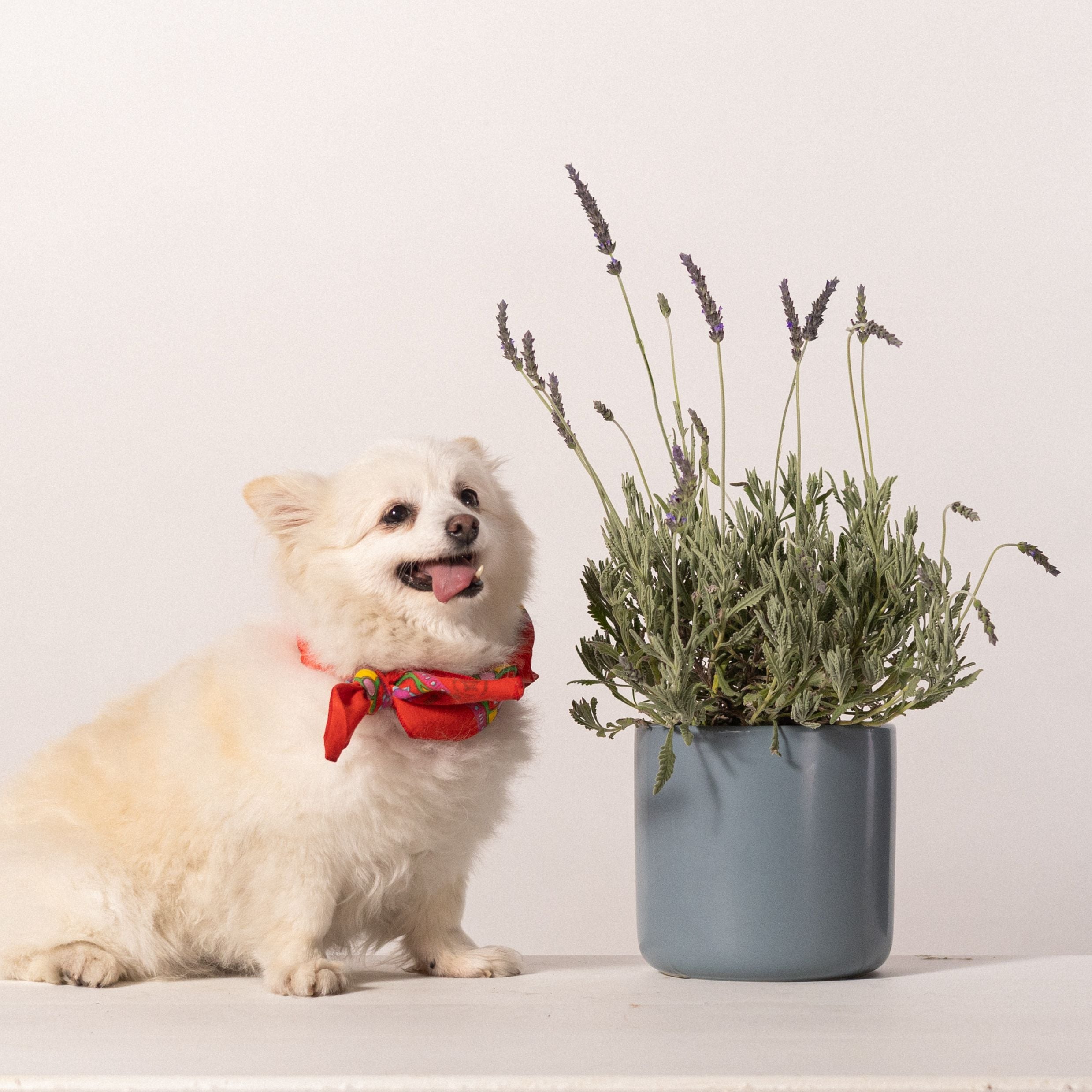
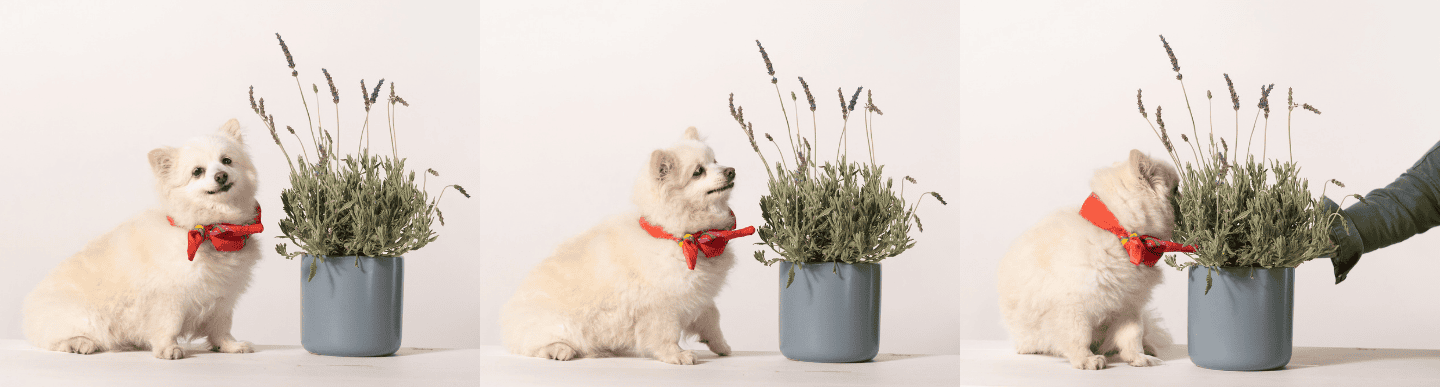
Lavender: Toxic to cats and dogs. Nausea, vomiting.
Delphinium / larkspur, foxglove, oleander: Toxic to cats and dogs. Serious; call immediately.
Anemone, freesia, statice, lisianthus, stock, waxflower, cosmos: Not on the ASPCA list for cats or dogs. Treat as unknown, not as safe.
Source: ASPCA Animal Poison Control Center, Toxic and Non-Toxic Plants database, checked October 2026. "Non-toxic" on the ASPCA list means the plant isn't expected to cause serious harm; eating any plant can still upset a stomach.
What cut flowers are safe for cats and dogs?
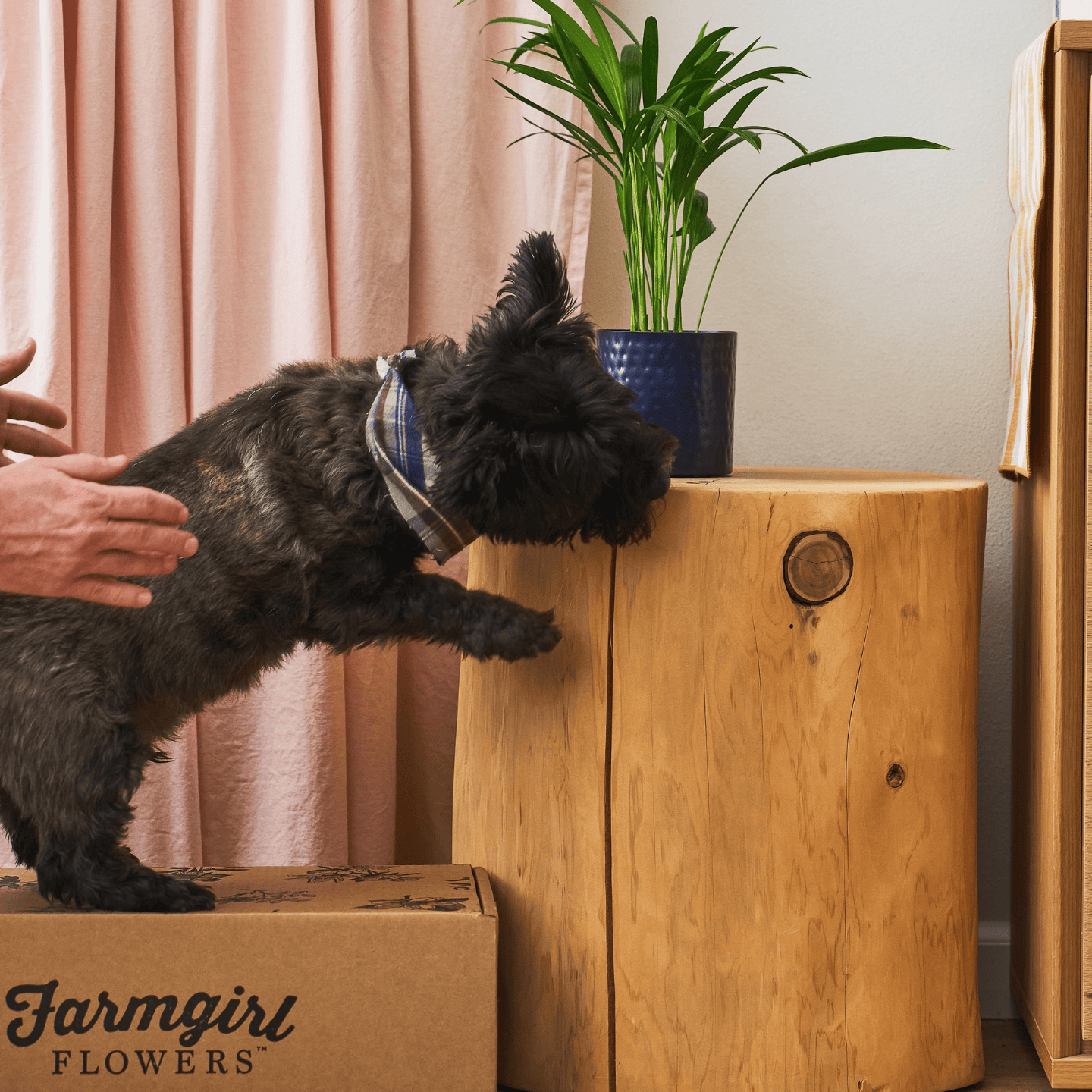
The cut flowers the ASPCA lists as non-toxic to both cats and dogs include roses, sunflowers, gerbera daisies, snapdragons, alstroemeria, zinnias, celosia, and phalaenopsis (moth) orchids. Baby's breath and sweet peas are also on the non-toxic list for cats and dogs, though the ASPCA notes baby's breath can cause mild stomach upset if eaten.
Here's the good news hiding in that list: roses are on it. I know, I know. Roses have a bit of a reputation problem, but if you're sending flowers to a house with a cat who treats every vase as a salad bar, a bouquet of garden roses is about the safest, and prettiest, thing you can do. Our whole Pet Friendly Shop is built around this idea: mostly single-variety garden roses, alstroemeria, and living phalaenopsis orchids, chosen so there's nothing tucked in the middle you have to wonder about.

A word on "non-toxic." On the ASPCA list it means the plant isn't expected to cause serious harm, not that it's a snack. A dog who eats a dozen rose stems is going to have an unpleasant evening, and a rose thorn is a rose thorn. Keep the vase up high anyway. Roscoe, for the record, has shown zero interest in flowers and total interest in whatever is on the kitchen counter, which is its own kind of lesson.
Which flowers are toxic to cats?
The flowers the ASPCA lists as toxic to cats include true lilies and daylilies (the most dangerous by far), tulips, daffodils, hyacinths, amaryllis, hydrangeas, chrysanthemums, carnations, peonies, ranunculus, dahlias, iris, gladiolas, calla lilies, lily of the valley, eucalyptus, and lavender. Most of these cause vomiting, drooling, or diarrhea. Lilies are in a different category: even a small amount can cause kidney failure in cats.
I'll take these one at a time, because "toxic" covers everything from "she'll throw up on the rug" to "go to the emergency vet right now," and the difference matters.
Lilies: the one that isn't a maybe
True lilies (Asiatic, Oriental, Stargazer, and Easter lilies), along with daylilies, are listed by the ASPCA as toxic to cats, with kidney failure and death as possible outcomes. The ASPCA says all parts of the plant are toxic and that "small amounts can cause severe injury to the kidneys," and it specifically warns that drinking the vase water or grooming pollen off fur can cause problems too. The signs the ASPCA lists are vomiting, loss of appetite, and lethargy. If a cat has so much as brushed against lily pollen and groomed it off, call your vet. Don't wait to see.
This is why several of our lily bouquets carry a warning right on the product page, and why I'd gently ask you not to send lilies to anyone with a cat, however much they love them. (Dogs get off easier here. The ASPCA's plant database lists true lilies as non-toxic to dogs, and its guidance says lilies "can be toxic to both dogs and cats, however the effects are much more severe in cats." Cats are the ones with the specific vulnerability.) If you want that big, fragrant, dramatic look for a cat household, a bouquet of open garden roses gets you most of the way there.
Calla lilies and peace lilies are a different plant family entirely, and the ASPCA lists them as toxic to both cats and dogs, though for a different reason: they contain calcium oxalate crystals that cause mouth irritation and burning, drooling, and vomiting. Painful, but not usually the emergency that true lilies are for cats. Lily of the valley is different again; the ASPCA lists it as toxic to cats and dogs and it affects the heart, so that one is a call-right-now plant.
Are tulips toxic to cats and dogs?
Yes. The ASPCA lists tulips as toxic to cats, dogs, and horses. The toxic compounds (tulipalin A and B) are most concentrated in the bulb, and the ASPCA lists vomiting, depression, diarrhea, and excessive drooling as the signs. A cat nibbling a tulip petal from a vase is a much smaller exposure than a dog digging up and eating a bulb from the garden, but both are worth a call to the vet.
Are roses toxic to cats or dogs?
No. The ASPCA lists roses as non-toxic to cats, dogs, and horses. The only real hazard is the thorns, and we strip most of them before your bouquet ships (most, not all, so a little care with the stems is still smart). Roses are the flower I'd point every pet owner toward first.
Are orchids toxic to cats?
Phalaenopsis orchids, the moth orchids most of us have on a windowsill, are listed by the ASPCA as non-toxic to cats, dogs, and horses. If you want to send a living plant to a cat person, this is the one. (Not every gift plant is so forgiving: the ASPCA lists peace lilies, kalanchoe, and cyclamen as toxic.)
Are carnations toxic to cats?
Yes, mildly. The ASPCA lists carnations as toxic to cats, dogs, and horses, with mild digestive upset and mild skin irritation as the signs. I love carnations and will defend them to anyone, but they're not the ones for a nibbling cat.
Are sunflowers toxic to cats?
No. The ASPCA lists sunflowers as non-toxic to cats, dogs, and horses. A vase of sunflowers is one of the easiest pet-friendly gifts there is, which is a nice thing to be able to say about a flower that already makes everyone happy.
Are hydrangeas, peonies, and dahlias toxic to pets?
All three are on the ASPCA's toxic list for cats and dogs, in the "digestive upset" tier. Hydrangeas contain a cyanogenic glycoside and can cause vomiting and diarrhea. Peonies contain paeonol and can cause vomiting, diarrhea, and lethargy. Dahlias cause mild digestive upset and mild skin irritation. None of these is usually life-threatening, but none of them belongs on a coffee table a cat can reach, and all of them deserve a call to the vet if eaten. (Yes, this means the 37,000 peonies we've planted are officially not Roscoe-approved. He has taken the news well.)
Is eucalyptus safe for dogs and cats?
No. The ASPCA lists eucalyptus as toxic to cats, dogs, and horses because of its essential oils, with drooling, vomiting, diarrhea, and weakness as the signs. This one matters because eucalyptus is one of the most common greens in the industry, ours included, and it's the reason a bouquet of perfectly safe roses isn't automatically a safe bouquet. Always check the greenery, not just the flowers.

The same goes for hypericum (the little berries) and yarrow, both on the ASPCA toxic list, and lavender, which the ASPCA lists as toxic to cats and dogs for its oils. Ruscus, salal, and dusty miller, on the other hand, don't appear on the ASPCA list at all.
What about the flowers that aren't on the list?
Anemone, freesia, statice, lisianthus, stock, waxflower, and cosmos don't have an ASPCA entry as either toxic or non-toxic. I'm telling you that instead of rounding it to "safe," because "we don't know" and "it's fine" are different answers, and a lot of websites blur them. If you have a determined nibbler, stick to the flowers that are actually on the non-toxic list.
Which houseplants are safe for cats and dogs?
The houseplants the ASPCA lists as non-toxic to cats and dogs include spider plants, Boston ferns, parlor palms, areca palms, ponytail palms, calatheas (including prayer plants and rattlesnake plants), peperomias, hoyas, Christmas cactus, bromeliads, haworthias, echeverias, cast iron plants, polka dot plants, staghorn ferns, money trees, African violets, and phalaenopsis orchids. Pothos, monstera, snake plants, philodendrons, dieffenbachia, peace lilies, dracaenas, aloe, jade plants, English ivy, and sago palms are all on the ASPCA toxic list.
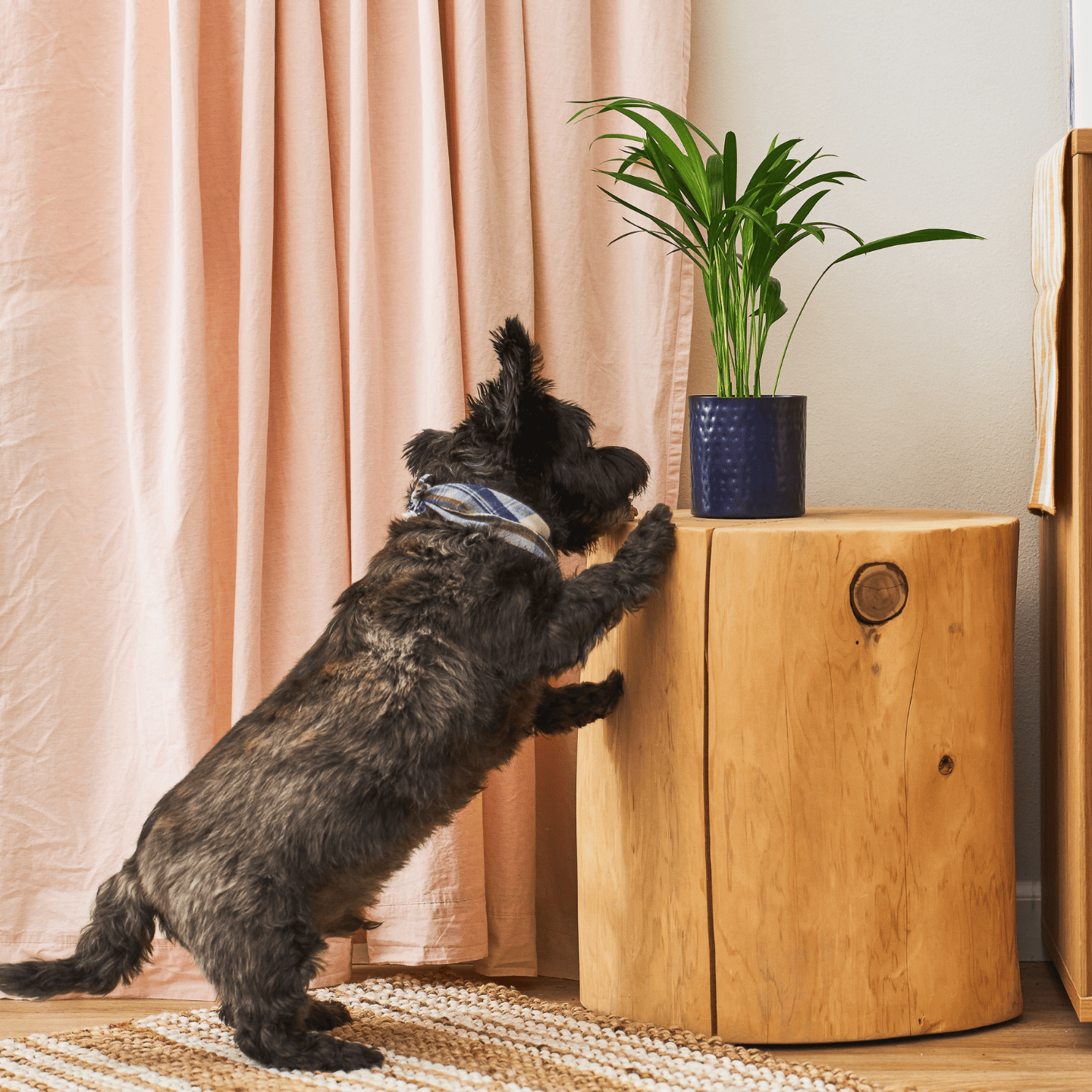
I'll be honest: this section is where I learned the most, because roughly half the plants on every "easy houseplant" list I've ever seen are on the toxic side. Pothos, monstera, and philodendron, the three plants that live on every windowsill in America, all contain insoluble calcium oxalate crystals, which the ASPCA says cause irritation and burning of the mouth, drooling, and vomiting. Snake plants and dracaenas contain saponins (vomiting, diarrhea). Aloe is on the toxic list too, gel notwithstanding. And the sago palm is the one to take seriously: the ASPCA lists liver failure and death among the possible outcomes, so if you have one and a dog who chews, it needs to go.
The good news is that the non-toxic list is long and, frankly, prettier than people give it credit for. If you want a big, lush, statement plant, a parlor palm, areca palm, or Boston fern does the job. If you want pattern, calatheas and prayer plants are non-toxic and gorgeous. If you kill everything, a cast iron plant is named that for a reason, and the ASPCA lists it as non-toxic to cats, dogs, and horses. Spider plants are non-toxic (though cats famously love to chew them, so expect some spider-plant-flavored hairballs). And for the succulent people, haworthia and echeveria are both non-toxic, while jade and aloe are not, which is worth knowing before you build the windowsill collection.
A few we sell, for the record: phalaenopsis orchids are non-toxic and the one living plant I'd send to any pet household without a second thought. Peace lilies, anthuriums, and gardenias are on the ASPCA toxic list, and we say so on each of those product pages.
Which garden plants are safe for dogs and cats?
Garden and landscape plants the ASPCA lists as non-toxic to cats and dogs include roses, sunflowers, zinnias, snapdragons, hollyhocks, sweet peas, calendula (pot marigold), petunias, impatiens, nasturtiums, coral bells, camellias, star magnolia, hibiscus, crape myrtle, forsythia, and the culinary herbs rosemary, sage, thyme, and basil. Common garden plants on the ASPCA toxic list include peonies, dahlias, lilies and daylilies (for cats), hydrangeas, hostas, boxwood, yew, azaleas and rhododendrons, foxglove, delphinium, hellebores, clematis, wisteria, lily of the valley, autumn crocus, chrysanthemums, and spring bulbs (tulips, daffodils, hyacinths).
This is the part where I have to come clean about our own garden. We've planted about 450 roses at Farmquarters, and roses are non-toxic, so that's a good start. Our zinnias, sunflowers, snapdragons, and sweet peas are all on the safe list too. But we also grow dahlias, hellebores, foxglove, delphinium, clematis, hydrangeas, specialty mums, and lilies, all on the ASPCA toxic list (the lilies for cats), plus, oh yes, about 1,200 peonies here and another 36,000 at our peony farm in Oregon, which the ASPCA lists as toxic to both dogs and cats. Which is a very long way of saying that Roscoe's lack of a sense of direction is not the only reason he stays home.

If you're planting with a pet in mind, the safe side of the list is more than enough for a beautiful garden. Roses, obviously. Hollyhocks for height, zinnias and sunflowers for color, snapdragons and sweet peas for cutting, coral bells and camellias for structure, and a whole herb bed (rosemary, sage, thyme, basil; skip the mint and lavender, which the ASPCA lists as toxic for their oils). Petunias, impatiens, and nasturtiums fill the pots. None of that reads like a compromise.
Two dogs-in-the-garden specifics worth knowing. Bulbs are the biggest risk, because a dog will dig up and eat a tulip or daffodil bulb in a way no cat ever would, and the bulb is where the ASPCA says the toxins are most concentrated. And yew is the one shrub I'd never plant with a dog around: the ASPCA lists it as capable of causing sudden death from heart failure. Most "toxic" garden plants mean an upset stomach; yew, foxglove, sago palm, autumn crocus, and lily of the valley are the ones that mean the emergency vet.
Plants people ask about that the ASPCA doesn't list either way: lilacs (we have a couple at Farmquarters, and I'd love a verdict), mock orange, coneflower, astilbe, cosmos, and Japanese maple. Unknown is not the same as safe.
How to send flowers to someone with a cat or dog
The safest bouquet for a pet household is a single-variety bouquet of an ASPCA non-toxic flower, with no mixed greenery, kept somewhere the pet can't reach. In practice that means roses, sunflowers, gerbera daisies, or alstroemeria, or a living phalaenopsis orchid.
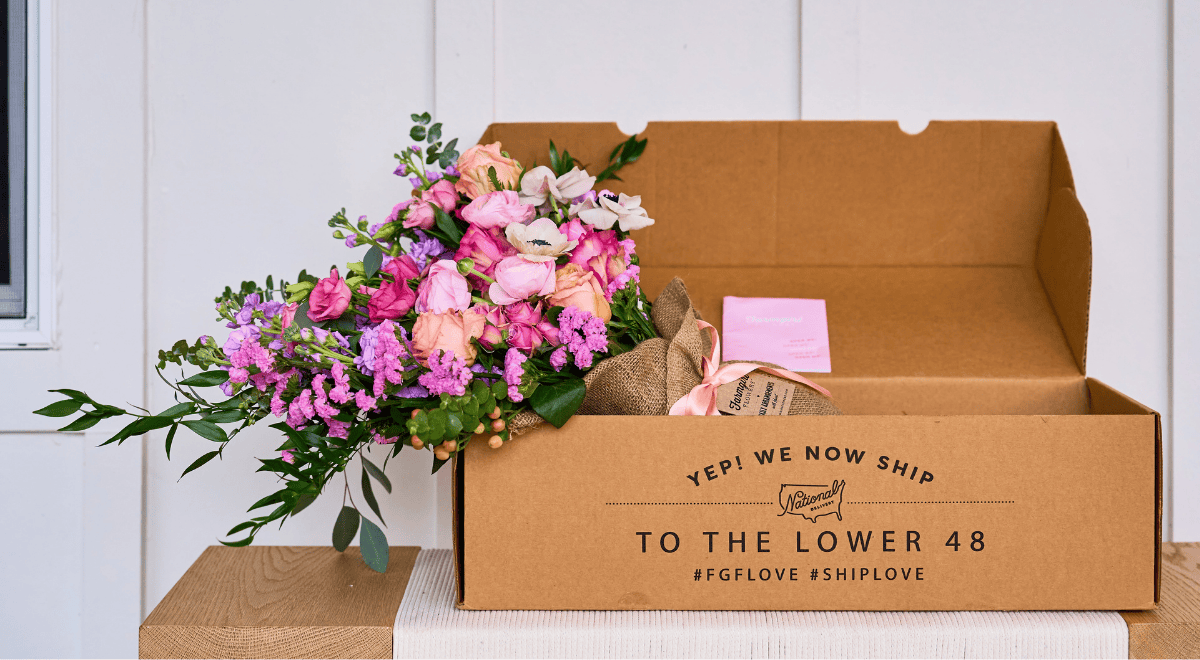
Here's how I'd think it through:
- Choose single-variety. The risk in a mixed bouquet isn't usually the star flower, it's the filler and the greenery. A dozen garden roses with their own foliage has nothing hidden in it. That's the logic behind our Pet Friendly Shop, and it's why almost everything in it is one flower, done well.
- Read what's in it. Our product pages list the flowers in each bouquet. If it says eucalyptus, mums, or lilies, it isn't the one for a cat house, no matter how pretty. Several of our lily bouquets say so right on the page.
- Tell the recipient. A short line in the gift note, "these are roses, pet-safe per the ASPCA, but keep the vase up high," is thoughtful, not fussy. They'll appreciate that you thought of the dog.
- Keep the vase out of reach, and the water too. Cats drink from vases. With lilies that's dangerous; with everything else it's just gross. A high shelf or a closed door solves most of this.
- Non-toxic doesn't mean edible. A pet who eats enough of anything is going to have an unhappy stomach, so a bouquet is decor, not dinner, even when it's roses.
What to do if your cat or dog eats a flower or plant
If your pet eats any part of a flower or plant, call your veterinarian, the ASPCA Animal Poison Control Center at (888) 426-4435, or the Pet Poison Helpline at (855) 764-7661 (the ASPCA may charge a consultation fee; Pet Poison Helpline charges a per-incident fee). Have the plant's name handy, note roughly how much was eaten and when, and don't try to make your pet vomit unless a vet tells you to.
If the plant was a lily and you have a cat, call immediately, even if she seems fine. The ASPCA says small amounts can cause severe kidney injury, so don't wait for symptoms; treat it as a same-day call.
One last thing
I sell flowers for a living, so it would be very convenient for me to tell you they're all fine. They're not though, and the ASPCA list is the reason I now check it before I bring anything home to Roscoe. But the list also has roses, sunflowers, snapdragons, orchids, and a whole windowsill of houseplants on it, which is more than enough to make a pet person's whole week.
So send the roses. Put them on the high shelf. Give the dog a treat so he doesn't feel left out. (Roscoe would like me to note that he is, technically, on a diet, and that he doesn't see what that has to do with anything.)
I spent most of my life picturing a big, strapping farm dog and a house full of whatever flowers I felt like. I got a fourteen-year-old tube sock and a shelf full of roses instead, and I wouldn't trade either one. The picture in your head is never the point. The one asleep at your feet is.
xx,
Christina

FAQs about that Flowers and Plants Safe for Cats and Dogs
Are lilies toxic to dogs?
Not the way they are to cats. True lilies (Lilium species) and daylilies are far more dangerous to cats than to dogs. The ASPCA's plant database lists them as non-toxic to dogs, and its guidance notes they may upset a dog's stomach while "the effects are much more severe in cats," where even a small amount, including pollen or vase water, can cause kidney failure. Calla lilies, peace lilies, and lily of the valley are different plants and are listed as toxic to both cats and dogs.
Is baby's breath toxic to cats?
No. The ASPCA lists baby's breath (Gypsophila) as non-toxic to cats, dogs, and horses, but notes that eating it can cause mild vomiting or diarrhea. It is considered safe but not something a pet should snack on.
Is lavender toxic to cats?
Yes. The ASPCA lists lavender as toxic to cats, dogs, and horses because of its essential oils (linalool and linalyl acetate), with nausea, vomiting, and loss of appetite as the signs. Serious poisoning is uncommon, but a lavender plant or bunch is not a good choice for a pet that chews on plants.
Are hydrangeas toxic to cats and dogs?
Yes. The ASPCA lists hydrangeas as toxic to cats, dogs, and horses. They contain a cyanogenic glycoside, and the typical signs are vomiting, diarrhea, and depression. Serious poisoning is uncommon, but call your veterinarian if your pet eats hydrangea.
Are peonies poisonous to cats?
Yes. The ASPCA lists peonies as toxic to cats, dogs, and horses. The plant contains paeonol, and eating it can cause vomiting, diarrhea, and lethargy. Serious poisoning is uncommon, but contact your veterinarian if your pet eats part of a peony.
Are daisies toxic to cats?
It depends on the daisy. Gerbera daisies are listed by the ASPCA as non-toxic to cats and dogs. Chrysanthemums, which the ASPCA lists under "Daisy" and which include many flowers sold as daisies, are on the toxic list and can cause vomiting, diarrhea, drooling, and skin irritation. Check the specific variety before assuming a daisy is safe.
What houseplants are safe for cats and dogs?
According to the ASPCA, spider plants, Boston ferns, parlor palms, areca palms, ponytail palms, calatheas and prayer plants, peperomias, hoyas, Christmas cactus, bromeliads, haworthias, echeverias, cast iron plants, polka dot plants, staghorn ferns, money trees, African violets, and phalaenopsis orchids are non-toxic to cats and dogs. Pothos, monstera, snake plants, philodendrons, dieffenbachia, peace lilies, dracaenas, aloe, jade plants, English ivy, and sago palms are on the ASPCA toxic list.
What flowers are safe for both cats and dogs?
According to the ASPCA, roses, sunflowers, gerbera daisies, snapdragons, alstroemeria, zinnias, celosia, baby's breath, sweet peas, and phalaenopsis orchids are non-toxic to both cats and dogs. For the safest bouquet, choose a single-variety arrangement without mixed greenery (eucalyptus is toxic to pets) and keep it out of reach.