


How to Grow Peonies: Everything We've Learned From Planting 37,000 of Them
Sep 30, 2026
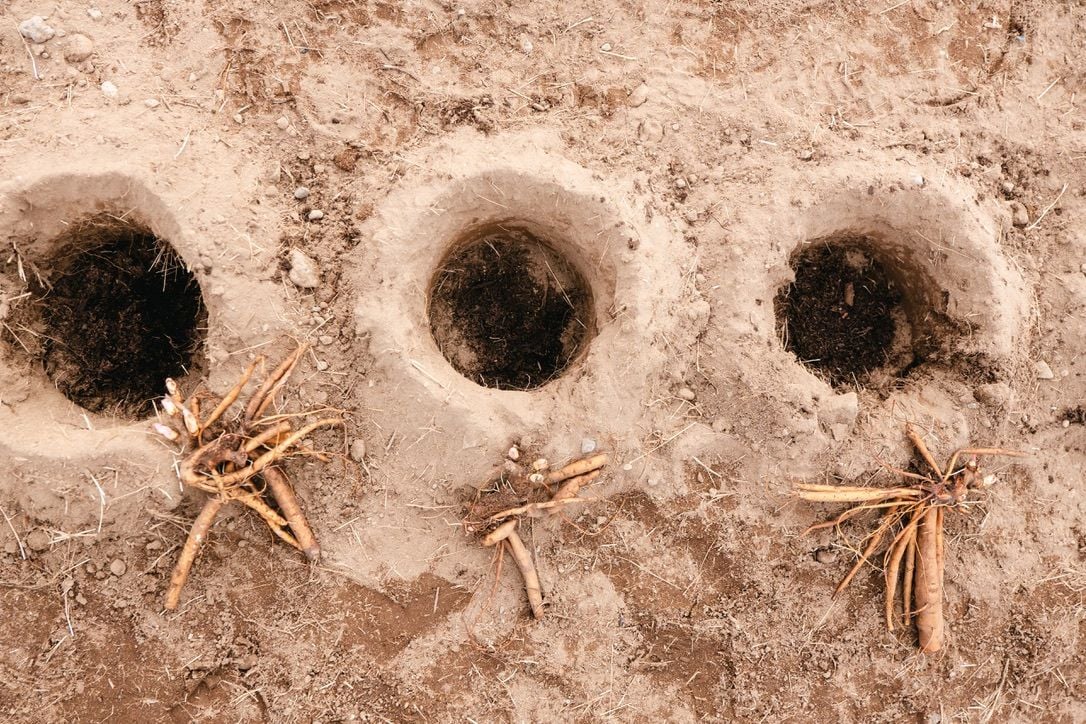
In short: Peonies are hardy perennials that want full sun, well-draining soil, a real winter, and to be planted in fall with the eyes no more than one to two inches below the soil. Get the depth right, leave them alone, and a peony will bloom every spring for 50 to 100 years. Here's the long version, with everything we've learned the hard way.
Peonies were part of my life long before Farmgirl Flowers was. One of my clearest memories from growing up on our family farm in a tiny town in northern Indiana is the row of bright pink peonies that lined the hill beside our big red bank barn. Every spring, after another very long Midwestern winter, they would somehow push their way back through the ground and bloom as if the previous six months had been no big deal at all.
If Farmgirl Flowers had an official flower (and maybe we should?), I think the peony would win by a landslide. In a recent Farmgirl customer survey, 92% (!!) of respondents named peonies as a favorite flower, and they’re also the flower people most often tell us reminds them of their mother, their grandmother, or a garden they loved growing up. They’re beautiful, nostalgic, and remarkably resilient. I won’t presume to call Farmgirl beautiful or nostalgic, but resilient? That one we’ve earned over and over again.
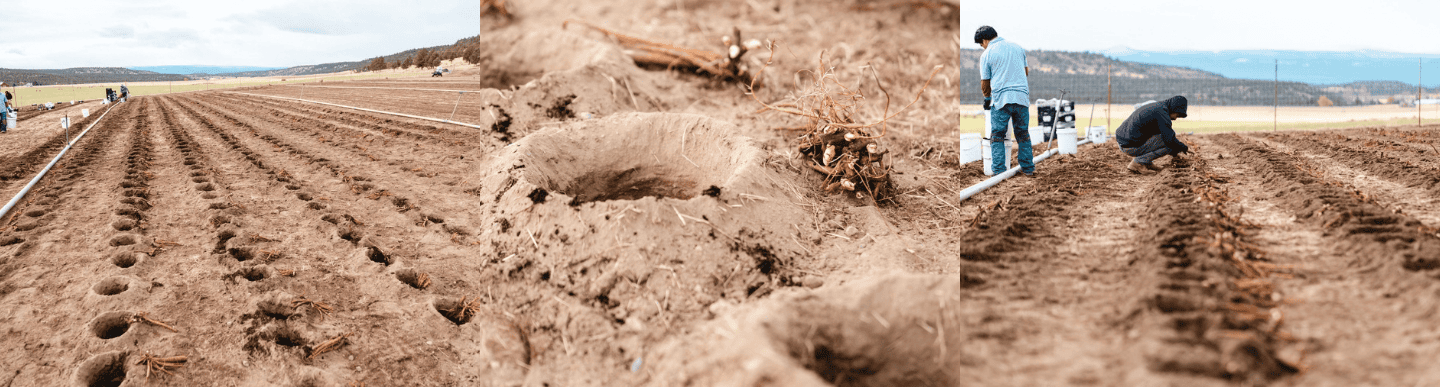
So naturally, a few years ago we did what any completely reasonable flower company would do and planted 36,000 of them at my mother and father in law’s farm in central Oregon, plus at least another 1,200 here at our Farmquarters, our farm and design studio in Gig Harbor, Washington. Because apparently simply loving peonies wasn’t enough for us. We needed 37,000 of them. That seemed like a very reasonable number to us, and I bet we’ll add to it at some point.
Before we go any further though, I should probably be honest about my credentials. I’ve sold peonies for nearly sixteen years, but I’ve only grown them at scale for about two, which makes me a very experienced beginner. I’ve also planted more peonies in those two years than most people will see in a lifetime—and made some mistakes in equally large quantities—so I’ve learned a lot, very quickly. This is everything we know so far, and exactly what I’d tell a friend who wanted to plant a few in her own yard.
Peony planting cheat sheet
- When to plant: Fall, after the roots have gone dormant and before the ground freezes (September–October in most of the U.S.); if they arrive late, plant anyway
- What to plant: Bare-root divisions with 3–5 eyes
- How deep: Eyes 1–2 inches below the soil surface (1 inch in warm climates, 2 in cold)
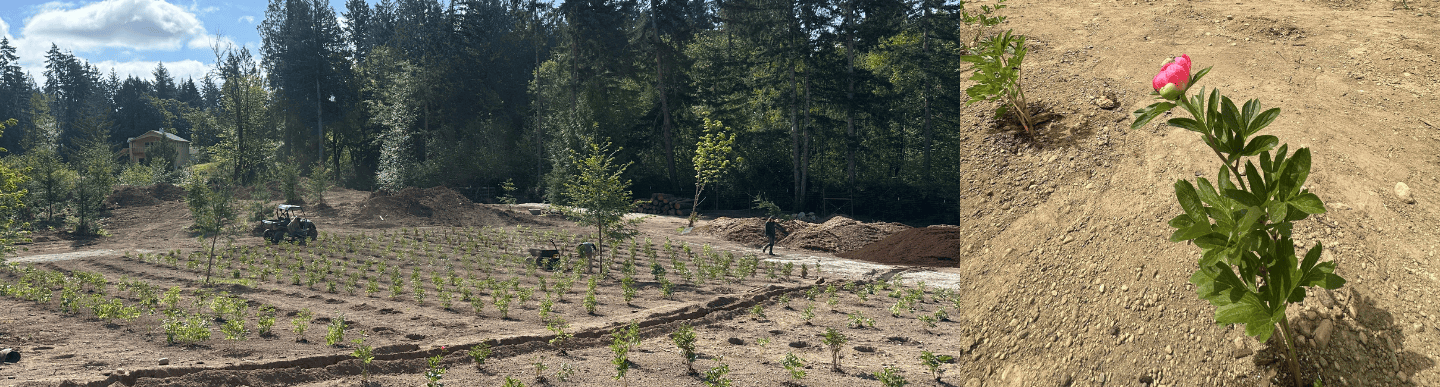
- Spacing: 3–4 feet apart in a garden (commercial growers go closer; we're at 18" between plants, 42" between rows)
- Sun: Full sun, 6+ hours; light afternoon shade in hot climates
- Soil: Rich, well-draining, neutral to slightly alkaline
- Zones: USDA 3–8 for herbaceous peonies (they need winter cold to bloom)
- Water: Deep and infrequent once established; never soggy
- Fertilizer: Light; low-nitrogen; compost in fall is plenty
- First real flowers: Year 2–3; full production by year 3–5
- Lifespan: 50–100+ years
Consider that a starting point rather than a promise. Peonies are forgiving of almost everything except being planted too deep and being planted in shade.
What kind of peony are you growing?
There are three main types of peonies commonly grown in gardens: herbaceous peonies, which die back to the ground every winter and are what most of us picture; tree peonies, which are woody shrubs that keep their stems year-round; and Itoh (or intersectional) peonies, a cross between the two with the big flowers of a tree peony on a plant that behaves like an herbaceous one. This guide is about herbaceous peonies, because that's what we grow, what your grandmother grew, and what you'll find sold as bare roots every fall.
Within herbaceous peonies, the flower forms range from single (one ring of petals around a golden center) through Japanese and anemone (a ring of petals around a puff of staminodes), semi-double, and full double and bomb types, which are the ruffled, can't-see-the-center flowers people mean when they say "peony." Doubles are the showstoppers; singles and Japanese types tend to stand up better without staking and are the smarter choice in hot climates.
When to plant peonies
Plant bare-root peonies in fall, ideally after they've gone dormant and before the ground freezes. Earlier gives the roots more time to settle, but if they arrive late, plant them anyway. In most of the country that means September through October; in the coldest zones it's early September, and in the warmest it can stretch into November. Fall planting matters because peonies need a cold, dormant winter to set flower buds. Spring-planted roots will live, but they'll spend the whole first year catching up.
That's the rule. Here's what happened to us. Our first big shipment of roots was delayed by the port strike a couple of years ago, so instead of planting in a crisp October, we planted after the first frost, in 29-degree weather, breaking through ice on the dirt to get the roots in the ground. It was, and I cannot stress this enough, SO COLD. And yet about 98% of them came up the following spring. So if your roots show up late, plant them anyway. A peony root would rather be in cold ground than in a box.
How to plant peonies (and why depth is everything)
Plant a bare-root peony with the eyes, the little pink or white buds on the top of the root, no more than one to two inches below the finished soil surface, in a hole wide enough to spread the roots out. Planting depth is about the single thing peony growers agree on, because it's the single thing that most often goes wrong (can you see my arm in the air with this one as I have definitely done this!). Plant the eyes too deep and you'll get a healthy green plant that produces lots of leaves and almost no flowers, sometimes for years. Not months, but years (yikes!).
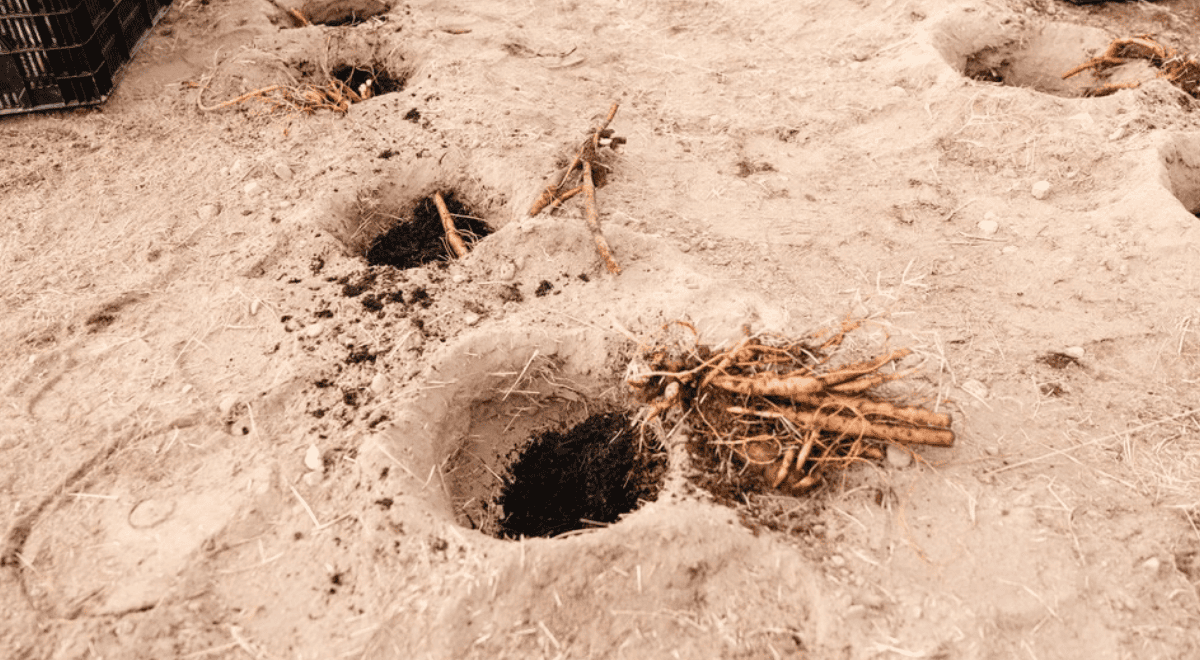
A few specifics we've picked up:
Buy 3-to-5-eye roots. Roots are sold by eye count. Two-to-three-eye roots are cheapest and slowest; seven-to-eight-eye roots are the fastest to bloom and cost accordingly. We planted mostly 3-to-5-eye roots, which sit in the middle on price and have worked beautifully. For a home garden, that's the sweet spot between patience and your wallet.
The roots are bigger than you think. Ours were so much larger than we expected that the biggest auger we could find wasn't wide enough for some of them. Dig a generous hole, 12 to 18 inches wide, and don't try to cram a root into a space it doesn't fit.
Adjust depth for your climate. In cold zones, two inches of soil over the eyes protects them from heaving out in a freeze. In warm zones, one inch (or even a little less) lets the crown feel the chill it needs. When in doubt, shallower.
Give them room. In a home garden, space plants three to four feet apart. It'll look absurdly empty the first year. By year four you'll understand. (Commercial growers pack them in much tighter for the sake of harvest efficiency; we planted ours 18 inches apart in rows 42 inches apart. Don't do that in your yard unless you also own a tractor.)
For most home gardeners, we'd buy roots rather than paying extra for potted plants. You'll sometimes see potted peony plants for sale in spring at a premium. In our experience, planting from a plant instead of a bare root doesn't save you a year. It just makes you feel better to see something green. A good 3-to-5-eye root planted in fall catches up to it by the second season.
Consider woven groundcover. Peonies hate competition and take years to fill in, so a commercial-grade woven groundcover with the plants set through it saves an enormous amount of weeding. Cut generous openings around each crown so the plants have room to expand, and skip the thin "landscape fabric" sold for home beds, which becomes a nightmare later. The catch: it needs to stay put. We have so much wind in Oregon that we didn’t do this, but we’re considering trying it with a very heavy mulch on top of it like we did in Gig Harbor. If we do, I’ll let you know how it goes.
We added mycorrhizae, and we'd do it again. When we planted, we dusted each root with a mycorrhizal inoculant, the beneficial fungi that partner with roots to help them take up water and nutrients. I'll be honest that I can't tell you how much of our 98% is the fungi and how much is the peony simply being a tough plant, and healthy garden soil often has plenty of its own. But it's inexpensive, it can't hurt, and for a plant you're hoping will outlive you, it felt like a reasonable thing to do on day one.
Water in, then mostly walk away. Water well at planting, keep the soil lightly moist through the first fall, and then let winter do its thing. Peonies hate wet feet more than they hate drought.
Where to plant peonies: sun, soil, and the winter question
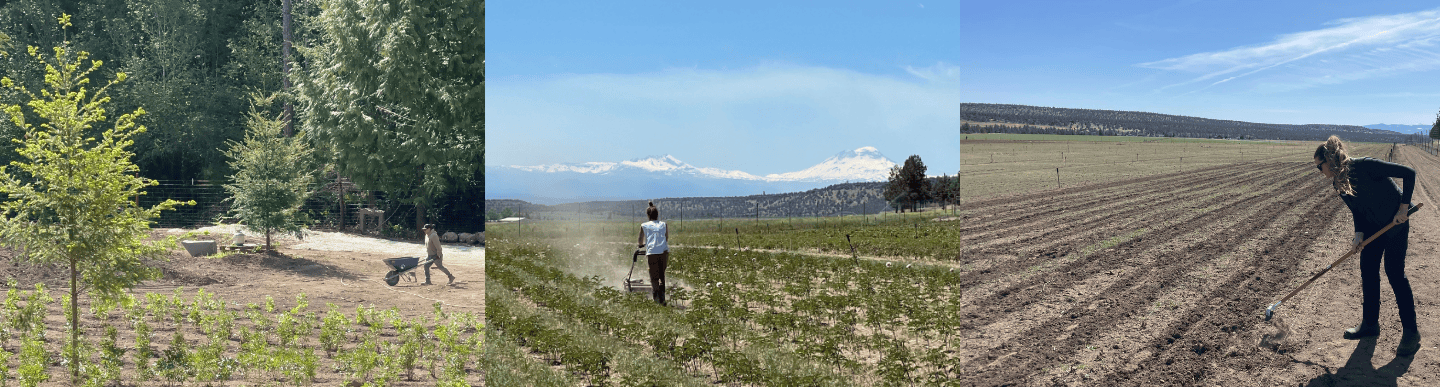
Peonies need at least six hours of direct sun, soil that drains freely, and a winter cold enough to send them fully dormant. Those three things decide almost everything. In our Pacific Northwest rain, drainage is the one we work hardest at; in the South, it's finding a spot with morning sun and a little afternoon shade so the flowers don't cook.
Sun. Yes, peonies need full sun. A peony in half shade will grow, but it will lean, flop, and flower poorly. If you're in a hot climate (zone 8), afternoon shade is a kindness; everywhere else, give them the sunniest spot you have.
Soil. Rich and well-draining, with a pH around neutral to slightly alkaline. If you have heavy clay, improve the drainage across the entire bed or plant on a slight berm or raised bed rather than filling one isolated hole with amended soil (a single amended hole in clay just becomes a bowl that holds water). We planted our garden roses on hills for the same reason, and the peonies got the same treatment.
Cold. Herbaceous peonies are reliably hardy in USDA zones 3 through 8, and they need the cold: a sustained period of winter cold and dormancy to set buds. That's why they're so at home in Indiana and Oregon and so difficult in California. That’s why we couldn’t grow them down there, but decided to the moment I moved further north. If you're at the warm edge, choose early-blooming and single or Japanese varieties, which need less chill.
How to care for peonies through the year
Peony care is mostly a matter of not overdoing it: light feeding, deep and infrequent water, support for the heavy doubles, and a thorough cleanup in fall. Peonies have survived in abandoned farmyards for a century with no help at all, which should tell you something about how much fussing they need.
- Spring. As the red shoots emerge, set a peony ring or stakes in place if you're growing big doubles, before the plant is tall enough to flop. A thin layer of compost around (not on) the crown is all the feeding most peonies need. If you want a fertilizer, use a low-nitrogen one; too much nitrogen gives you leaves instead of flowers.
- Give the big ones something to lean on. The full double varieties everyone loves (Sarah Bernhardt, Festiva Maxima, and friends) carry flowers so heavy that one good rain will lay the whole plant flat on the ground. A peony ring or grow-through grid set over the crown in early spring, while the shoots are still short, is the easiest fix; the stems grow up through it and hide it completely. Do it before you think you need to, because propping up a fully grown, soaking-wet peony is a losing battle. Singles, Japanese types, and many of the coral varieties have stiffer stems and usually stand on their own.If you're growing at scale, a T-post at each end of the row with a run of support wire down each side works great, and it's what we do.
- Bud stage. Ants will show up on the buds. This is the question I get asked more than any other, especially from folks back home in the Midwest, where a peony bud in May is basically an ant convention. Here's the deal: peony buds exude a sweet, sticky sap (nectar, technically) from tiny glands on the outside of the bud, and ants love it. They're harvesting sugar, they're not hurting the plant, and they are not required for the flower to open, no matter what your grandmother said. In fact, some research suggests the ants earn their keep by chasing off bud-eating pests while they're there. Let them be, and shake or rinse them off before you bring stems inside. Cutting at the marshmallow stage and giving the buds a dunk in cool water should get rid of them. If you want one enormous flower per stem instead of several smaller ones, pinch off the side buds when they're pea-sized (this is called disbudding, and it's how the giant exhibition flowers happen). We also disbud our young plants for the first few years for a different reason: every bud you remove sends that energy back into the root, so the plant gets established faster and gives you more stems down the road. It takes a ton of time to do it, but is worth it, I promise!
- Bloom. Water deeply during dry spells while the plant is flowering and setting next year's buds (which it does over summer, in the crown, quietly).
- Summer. Leave the foliage alone. Those leaves are feeding next year's flowers. Cutting a peony back in summer is the second most common way to end up with no flowers.
- Fall. After the foliage has yellowed or browned, usually following the first hard frost, cut the stems to the ground (or we cut to about 1”) and remove every scrap of debris from the bed. This is the one cleanup that matters, because peony foliage left over winter harbors botrytis, the fungus responsible for the blackened, mushy buds people blame on bad luck. Top-dress with compost and you're done until spring.
When do peonies bloom, and for how long?
Peonies bloom in late spring to early summer, roughly late April through June or July depending on your climate, and each plant flowers for about seven to ten days. Individual plants are brief; the season isn't. By planting very early, early, mid, late, and very late varieties, you can stretch peony season to five or six weeks in one garden, which is exactly what we've done in both of our locations.
New plants take time. The unofficial peony schedule is "sleep, creep, leap": the first year you may get a few flowers or none, the second year a handful, and by the third year the plant starts to look like a peony. Full production takes three to five years. Ours in Oregon should give us a small harvest in 2027 and the first full one in 2028 (or at least that's the plan, and we've established how Mother Nature feels about my plans). We had some water issues this year so we’ve lowered our expectations for next year and are going to give them a little more time.
Why won't my peonies bloom?
A peony that won't bloom is almost always planted too deep, too young, or too shaded. Don’t worry, I’ve done every single one of these mistakes and they’re all fixable. In rough order of likelihood: the eyes are more than two inches down (dig it up in fall and replant shallower); the plant is under three years old (wait); it gets less than six hours of sun (move it in fall); it was cut back in summer instead of after frost; it's been fed too much nitrogen; or a late frost or botrytis killed the buds. Nine times out of ten it's the first one or a lack of sunlight. Contrary to popular belief, an old, undisturbed clump is almost never the problem; peonies can bloom happily for decades without being divided.
How to cut peonies for a vase?
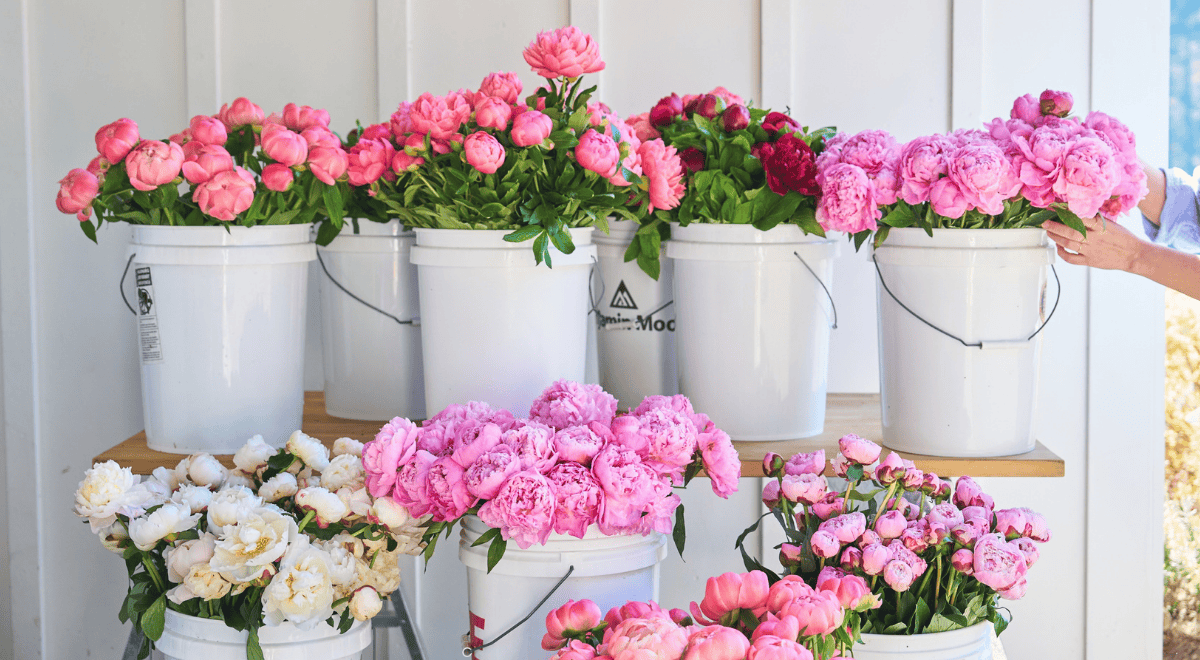
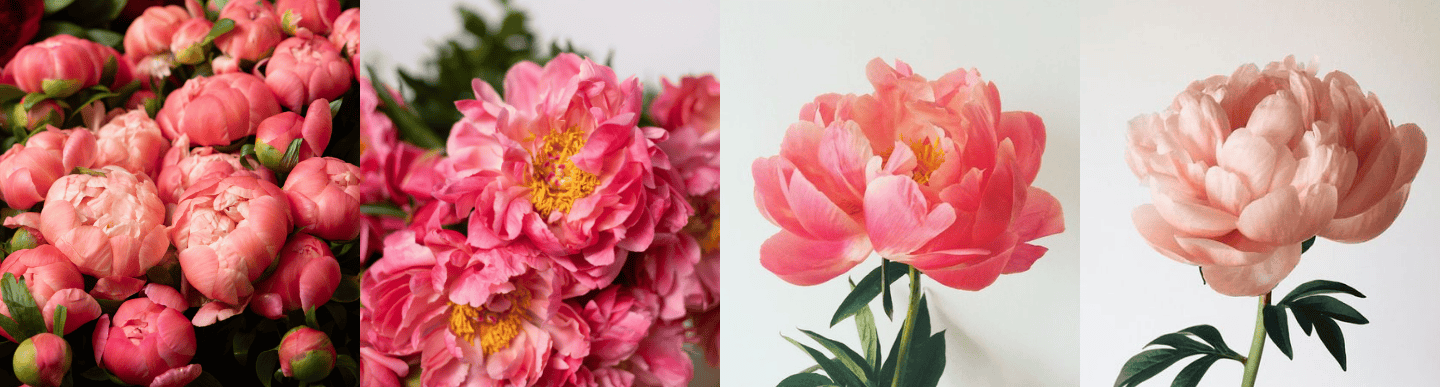
Cut peonies in the morning, at the "marshmallow" stage, when the bud is colored, soft, and squishes gently under your thumb like a marshmallow but hasn't opened. We cut right at marshmallow or just as the bud is cracking, when the stems look like a field of lollipops, which is exactly as charming as it sounds. Cut a stem 18 to 24 inches long, but leave at least two sets of leaves on the plant below your cut, and never take more than a third of the stems from a young plant. Those leaves are next year's flowers.
Strip the lower leaves that fall below the water line in your vase, put the stems in cool water, and they'll open over a day or two. Cut at the marshmallow stage, a peony gives you five to seven days in the vase; cut fully open, you may get only a few days. (If you want the full rundown on caring for peonies once they're cut, we wrote a whole post on it.)

When to cut back peonies?
Cut peonies back to the ground in fall, after the foliage has yellowed or browned (usually following the first hard frost), and never in summer. This is one of the most-asked peony questions and one of the easiest to get wrong, because the plant looks tired and floppy by August and every instinct says to tidy it up. Don't, even if it feels like it’s going to kill you. Wait for the foliage to go over (for us that's usually early November, after the first hard frost), then cut the stems an inch or two above the soil, bag the debris rather than composting it (botrytis again), and mulch lightly.
How to divide and transplant peonies?
Peonies don't need dividing to stay healthy, but if you want more plants, divide them in fall after the plant has been in the ground at least three years, and ideally after the fifth growing season for the best success. Dig up the entire root ball, rinse off the soil so you can see the eyes, and cut the root into sections with at least three to five eyes and a good chunk of root each. Replant each division right away, eyes one to two inches below the surface, and expect it to sulk for a year or two before it takes off.
This is how grandmothers ended up with a whole row from one plant, and how their daughters ended up with a plant of their own. We haven't divided ours yet (they're not old enough), so I'll report back when we do. :)
Transplanting a whole plant works the same way: fall, dig wide and deep, keep as much root as you can, replant at the same shallow depth. Peonies resent being moved and may skip a year of flowers to make the point, but they'll forgive you.
Which peonies should you plant?
If you want a lot of flowers, plant the classics: Sarah Bernhardt, Festiva Maxima, Duchesse de Nemours, Karl Rosenfield, Red Charm, Coral Charm, Coral Sunset, Monsieur Jules Elie, Alexander Fleming, Félix Crousse, Bowl of Beauty, and Kansas. These are the peonies most commonly grown in American gardens and the ones grown commercially for cut flowers, and there's a reason for both. These varieties are classics for a reason: they're widely available, proven performers, and among the most dependable varieties we've planted. So far, they've also handled our drought and watering mishaps better than many of the newer, more expensive varieties.
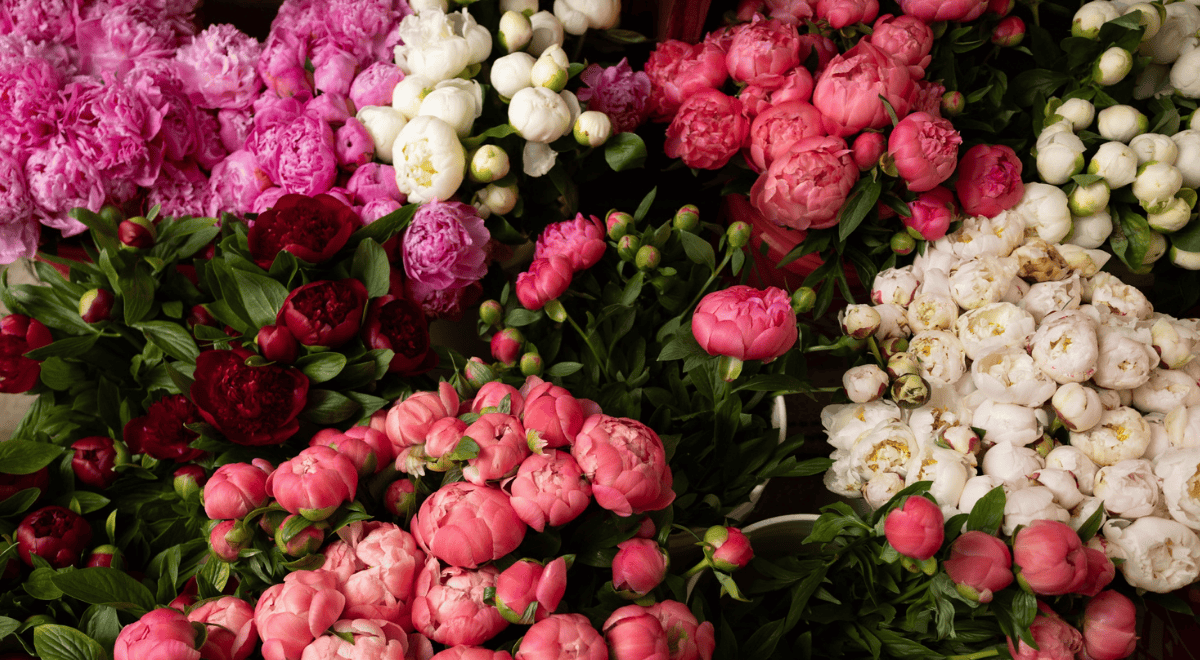
Sarah Bernhardt, in particular, is the reigning queen—probably the most widely planted peony in the country and still one of the very best. She’s likely what you picture when you hear the word peony: enormous, ruffly, blush-pink blooms that look almost too perfect to be real. Blair Waldorf and Carrie Bradshaw helped make armloads of pink peonies famous for a whole generation of women, but the variety has an even better celebrity story: it was introduced in 1906 and named after Sarah Bernhardt, the legendary French actress who was arguably the world’s first international superstar. So apparently celebrities have been helping make peonies famous for well over a century.
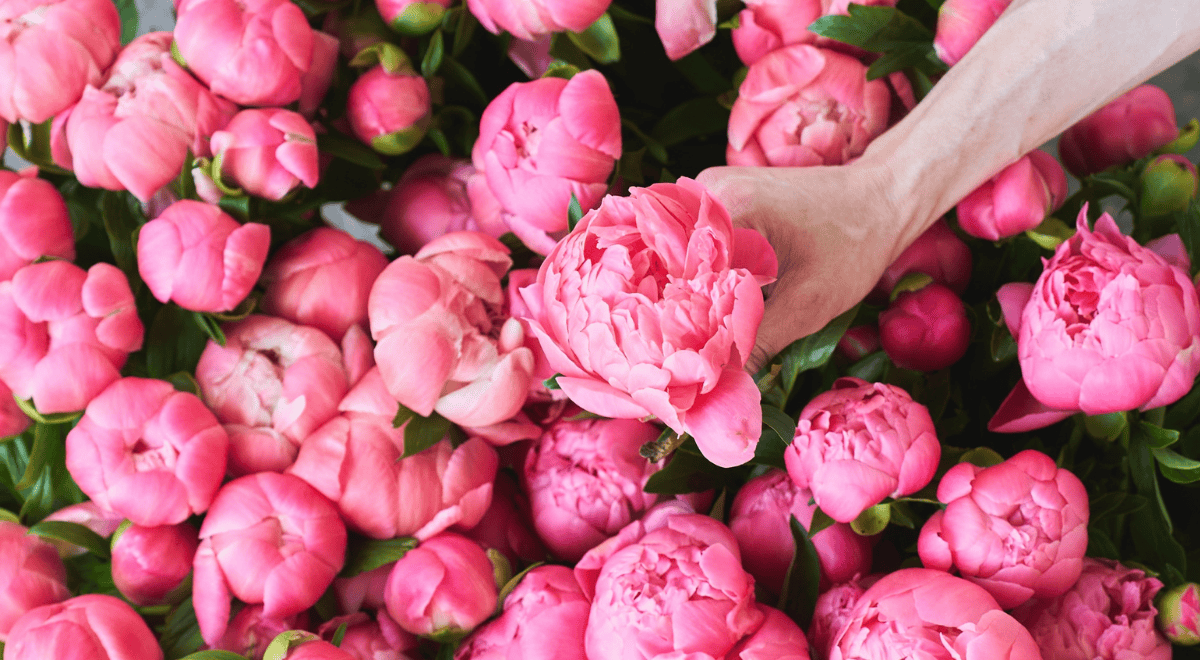
They're also the most affordable, which is not a coincidence. A root of one of the classics costs a fraction of the trendy varieties. My personal favorite is Etched Salmon, with Red Charm a close second, and an Etched Salmon root costs at least ten times what a Red Charm root does. The most fashionable peony right now, Pastelegance, can run close to $200 for a single root. If you're planting your first peony, plant a classic, let it teach you, and buy the expensive one when you've earned it. (I did not follow this advice. Learn from me).
A few honest words about patience
Everything about peonies happens slowly except the bloom, which is over in a week. You plant in the cold, wait a winter, get a handful of flowers, wait two more years, and then one May morning you walk out and the whole row has opened at once and you understand why people have been doing this for 2,000 years. I've stared at more rows of bare dirt than I'd like to admit over the past two years, from the seat of a little John Deere, wondering whether any of it was working. But it was, so consider this your friendly nudge to plant the peony.
xx, Christina

FAQs
Do peonies need full sun?
Yes. Peonies need at least six hours of direct sun a day to bloom well. In hot climates (zone 8 and warmer), a spot with morning sun and light afternoon shade protects the flowers from heat, but in most of the country the sunniest spot in the garden is the right one. Peonies grown in shade produce weak stems and few flowers. So many of my friends have shown me pictures of their peonies and asked why they don’t bloom for them. It takes me about .3 seconds to know the answer - it’s almost always the amount of sun they’re getting (or more accurately, not getting).
How long does it take for peonies to bloom after planting?
Peonies planted from bare roots in fall usually produce a few flowers in their second spring and begin blooming well in their third year, reaching full production in three to five years. First-year plants often produce no flowers at all, which is normal. Larger roots with more eyes bloom sooner than small ones. Peonies definitely teach you that patience really is a virtue.
Are peonies perennials?
Yes. Peonies are long-lived herbaceous perennials that die back to the ground each winter and return every spring. A well-sited peony can live 50 to 100 years or more with almost no care, which is why so many are still blooming in gardens planted generations ago. I think that might be the coolest thing about them. It’s amazing to think of the people who will pick the peonies I’ve planted years from now.
Can peonies grow in pots?
Peonies can grow in pots, but they're happier in the ground. If you must, use a container at least 20 to 24 inches wide and deep (roughly 10 to 15 gallons) with excellent drainage, plant the eyes one to two inches deep, give it full sun, and make sure the pot experiences real winter cold (peonies need dormancy to bloom). Expect fewer flowers than an in-ground plant and repot every few years.
Do deer eat peonies?
Peonies are generally considered deer-resistant, and rabbits usually leave them alone too, although a hungry deer may eat almost anything. At Farmquarters the deer ate every delphinium we planted and, once we fenced them out, the rabbits went after the mums, but the peonies have been left alone (phew!).
Why are there ants on my peonies?
Ants are attracted to the sweet, sticky sap (nectar) that peony buds exude from small glands just before opening. They don't harm the plant and, despite the old saying, they're not needed for the flowers to open; they may even help by deterring other insects. It's especially common in the Midwest, where peonies and ants have been sharing gardens for generations. Simply shake or rinse them off before bringing cut stems indoors. I promise, they won’t hurt them!
Are peonies poisonous to cats and dogs?
According to the ASPCA, peonies contain paeonol and are toxic to cats, dogs, and horses. Eating the plant can cause vomiting, diarrhea, and depression, so contact your veterinarian if you believe your pet has ingested any part of one.
How do you pronounce peony?
Both "PEE-uh-nee" and "pee-OH-nee" are accepted pronunciations of peony. "PEE-uh-nee" is the more common American pronunciation. The plural is peonies, pronounced the same way with an "s." Around our farm you'll hear both, sometimes from the same person in one sentence.
What do peonies symbolize?
Peonies traditionally symbolize prosperity, good fortune, romance, and honor. In China, where they've been cultivated for at least 2,000 years, the peony is known as the "king of flowers" and is associated with wealth and nobility. Peonies are also the traditional flower for a twelfth wedding anniversary. And, they are the state flower of Indiana, where I grew up which I take as a very good sign for our peonies farming adventures!