


Our 2026 Valentine's Day Report
Jan 22, 2026
VALENTINE’S DAY FLOWERS: A CONSUMER PREFERENCE STUDY
Key findings
This study set out to move past assumptions and better understand how Valentine’s Day gifting is actually received. What emerges is not a rejection of romance or tradition, but a clear signal that women increasingly value personalization, timing, and emotional awareness over traditional flowers.
And here’s what surprised us: these preferences don’t really split along age lines. Gen Z to Gen X and beyond, the sentiment is strikingly similar. Valentine’s Day preferences are not generationally divided—they are psychologically consistent. Across age groups, respondents expressed remarkably aligned views on timing, color, and meaning. Differences exist, but they are incremental—merely shades of preference.
Why we ran this study
Do we love a pie chart? Absolutely! But that's not really the only reason we did this. You see, for most of the year, our core customer is women gifting other women—friends, sisters, mothers, chosen family, and themselves. But when February 14th rolls around, the dynamic shifts meaningfully. Valentine’s Day brings a noticeable uptick in men gifting flowers, and the conversation changes with it.
Every year, we hear (and talk!) a lot about what people really want for Valentine’s Day - cue the clichés, eye rolls, and grocery-store red whatevers. But we always talk about it from our POV, which, after 15 years in business, should count for something! But this year, we decided to get real sciency (let the bar graphs flow!) and dig a little deeper. In other words, we actually asked recipients what they'd like to receive for V-day flowers.
To better understand what recipients want during this moment—and to help close the gap between intention and outcome—we surveyed 400+ women across multiple U.S. states, asking them to answer not as gift-givers, but as recipients.
The goal was simple: cut through the Cupid clichés and move past tradition-driven assumptions to capture honest preferences for Valentine’s Day, all through the lens of those on the receiving end of the gesture.
Some of the results surprised us. Others confirmed what we’ve quietly suspected for over a decade. Either way, the insights are in, and we’re excited to share what we learned. Here's the breakdown.
Chart 1: Respondent age groups
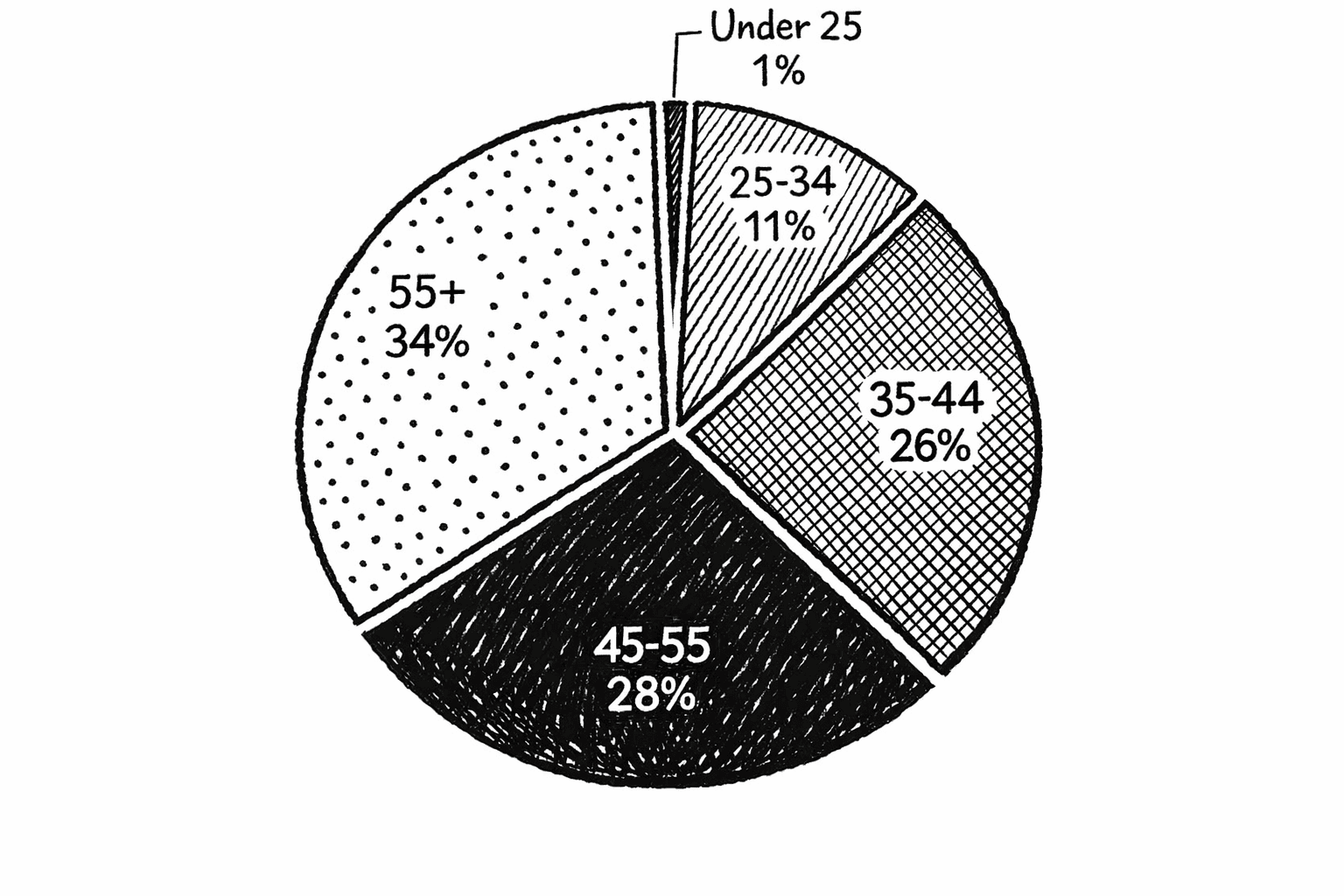
The respondent base skews toward women with lived Valentine’s Day experience—decades of it, in many cases. This matters because it grounds the findings in experience—not trend cycles or social media-driven preference shifts.
Despite spanning multiple life stages (early relationships, long-term partnerships, marriages, second marriages, and everything in between), preferences converge far more than they diverge. There is no sharp shift where younger generations “reject tradition” and older generations “cling to it.” Instead, the data reflects a shared desire for thoughtfulness over performative tradition, regardless of age.
As one respondent put it:
"Pay attention to what I actually like, not what the calendar says." — AD, 34
And by the way, let’s start with the calendar, because it turns out, this is where many gift-givers get tripped up, which is especially important this year.
When would recipients prefer to receive Valentine’s Day flowers?
In 2026 Valentine’s Day falls on a Saturday, which introduces a quiet but meaningful trap. Many will assume that “Saturday delivery = correct.” That seems like an easy one, right? Right!? Wrong! The data suggests otherwise.
The last time Valentine’s Day landed on a weekend was 2021, a very different moment culturally, emotionally, and logistically. The last time it fell on a Saturday it was 2015. This year, expectations are shaped by convenience, experience, and emotional pacing rather than strict calendar adherence.
We see that Friday delivery is not about being early, it is about maximizing emotional runway.
- Flowers arrive before the weekend rush
- They are enjoyed longer
- The gesture feels planned, not reactive
As two respondents noted:
“I want to enjoy them, not watch them arrive between errands.” — SB, 53
“If they arrive on Friday, it feels like it was planned. Saturday feels like a deadline.” — EC, 31
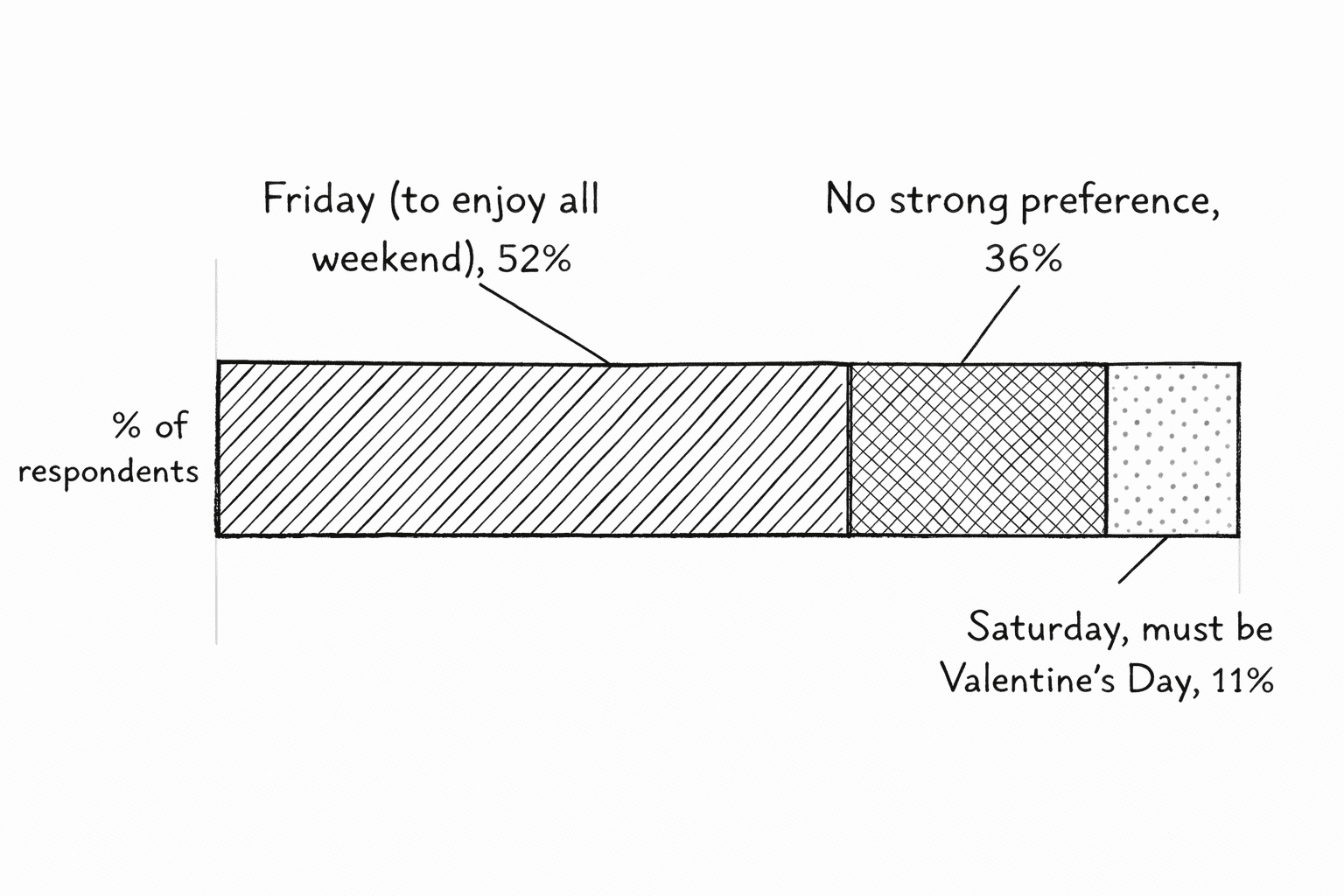
This represents a meaningful opportunity for gift-givers this year. Only 11% of respondents prefer receiving flowers on the official day itself. In other words, precision timing matters less than perceived intention. Saturday delivery is not wrong—but assuming it is required is where many gift-givers misread the moment.
Chart 2: When recipients prefer Valentine's Day flowers to arrive
Now let’s talk about what recipients prefer flower-wise.
Do women actually want red roses?
For decades, red roses have been the gold standard of Valentine’s Day, despite limited seasonal availability and steadily rising prices. So how did they become the thing?
Blame a mix of Victorian-era floriography (red = passion), 20th-century mass floriculture, and some serious mid-century marketing muscle from greeting card companies and advertisers. Somewhere along the way, the red rose wasn’t chosen—it was assigned.
At no point did consumers collectively vote. Red roses didn’t win, they defaulted.
Reframing the “safe choice” narrative
Red roses are often described as a safe option, and historically there is no evidence to say they were loved more than they are today. They may simply have been the expectation.
Chart 3: How recipients feel about red roses
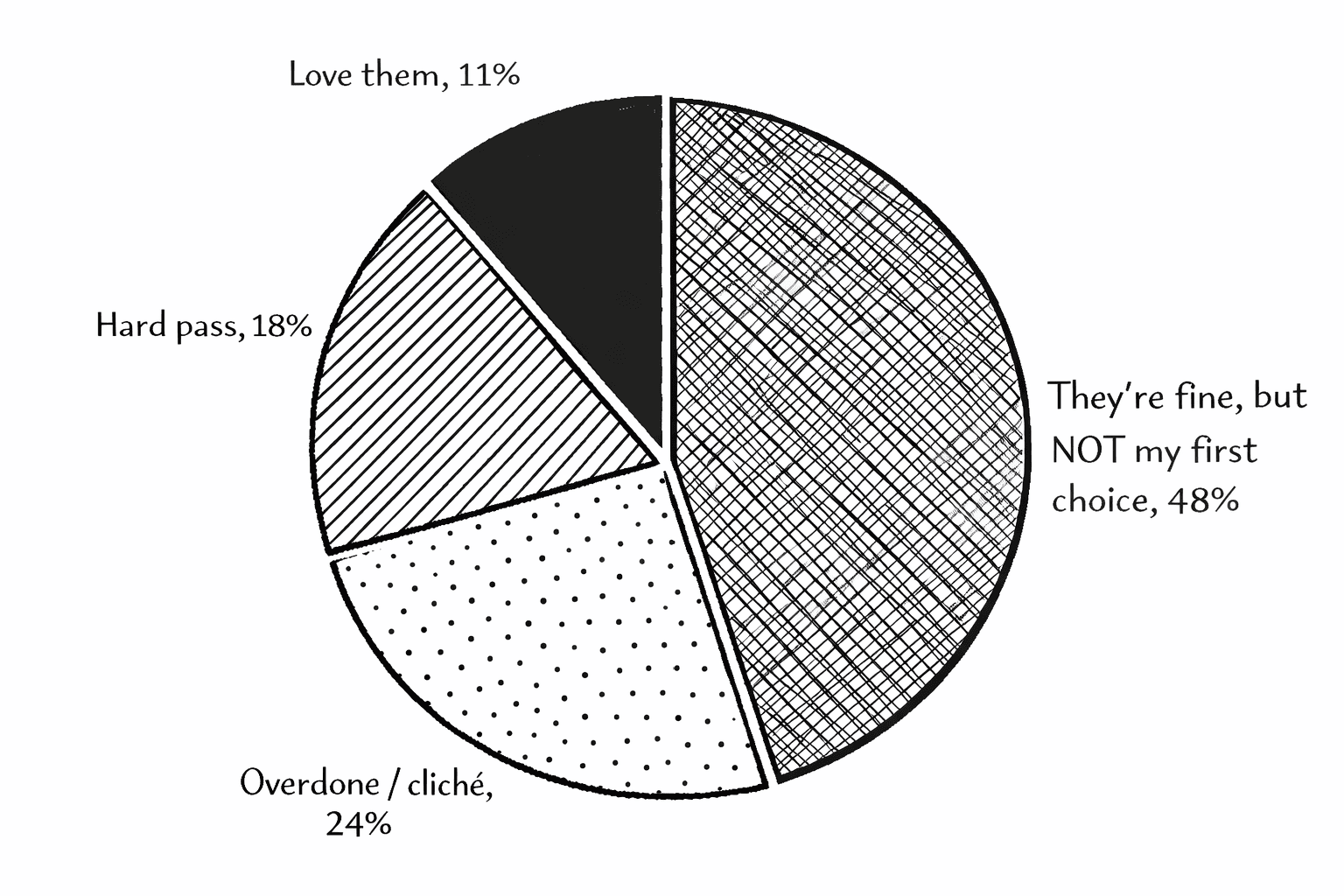
Red roses have not failed. They’ve just been...over-assumed. In today’s wide, wild world of floral options, reaching for red roses can sometimes feel like hitting “default.” And that’s not necessarily a bad thing—if the choice matches the recipient’s taste. But when it doesn’t? It risks coming off less like a grand romantic gesture and more like muscle memory and autopilot.
Intent still matters. But so does attention.
“Red roses feel like someone followed instructions, not like they chose something for me.” — AP, 33
What emerges across the data
Across the study, three main themes repeat:
1. Attention > tradition
“Notice what I like throughout the year.” — KJ, 41
2. Intentionality beats cost or bouquet size
“It feels better when it’s clearly chosen, not just bigger.” — RS, 32
“It’s not about spending more. It’s about paying attention earlier.” — DM, 35
3. Flowers should feel personal, not the norm
“Don’t let the holiday do the thinking for you.” — SB, 53
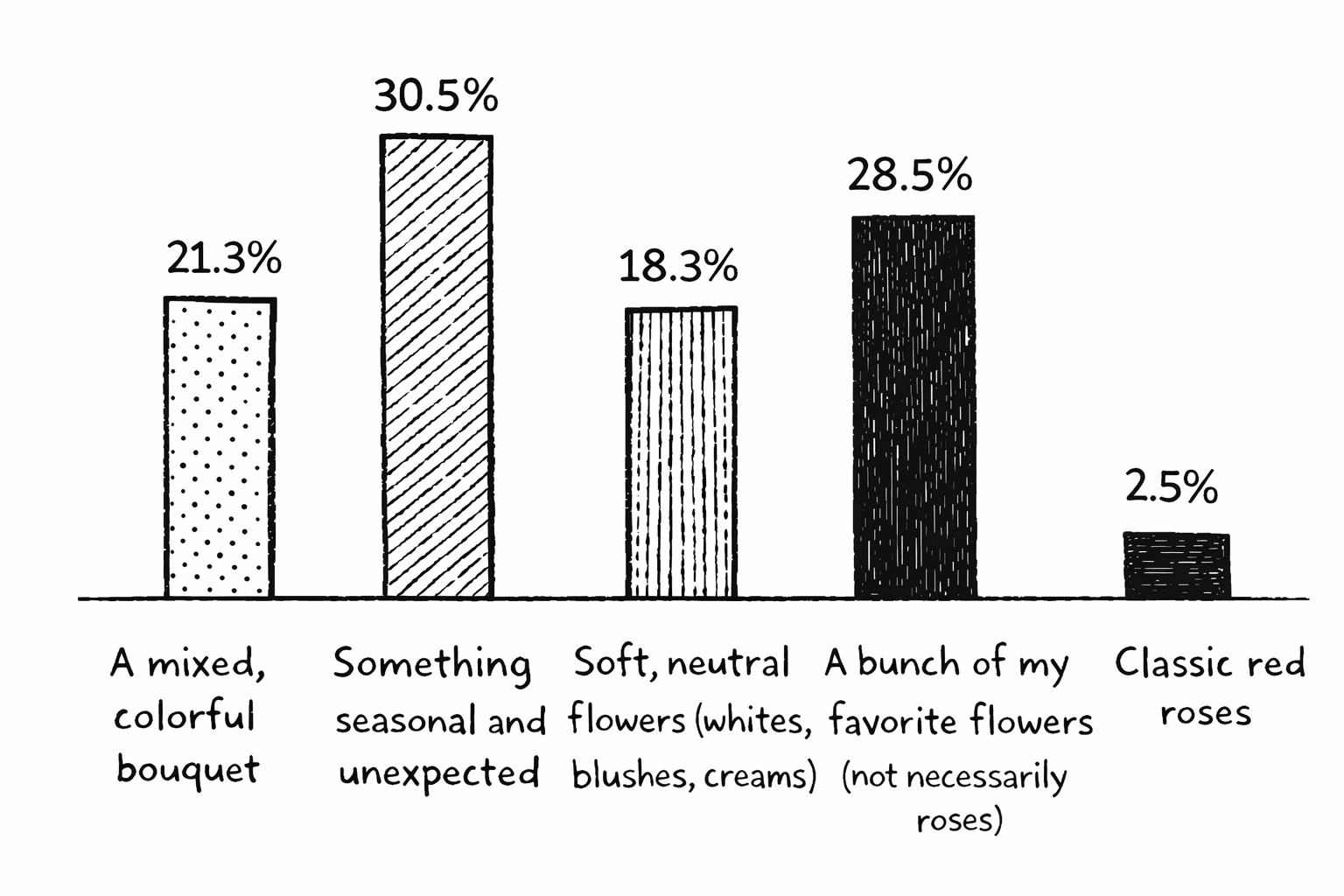
When asked to think about what they would get for themselves, responders navigated towards something that reflected the season and felt intentional, rather than the classics. Which means that even when 11% love red roses, only 2.5% of respondents said they would choose red roses this Valentine’s Day.
What would they choose instead? Something that feels designed, unexpected, or personal.
Chart 4: What recipients would choose for Valentine's Day
What flower colors do recipients prefer?
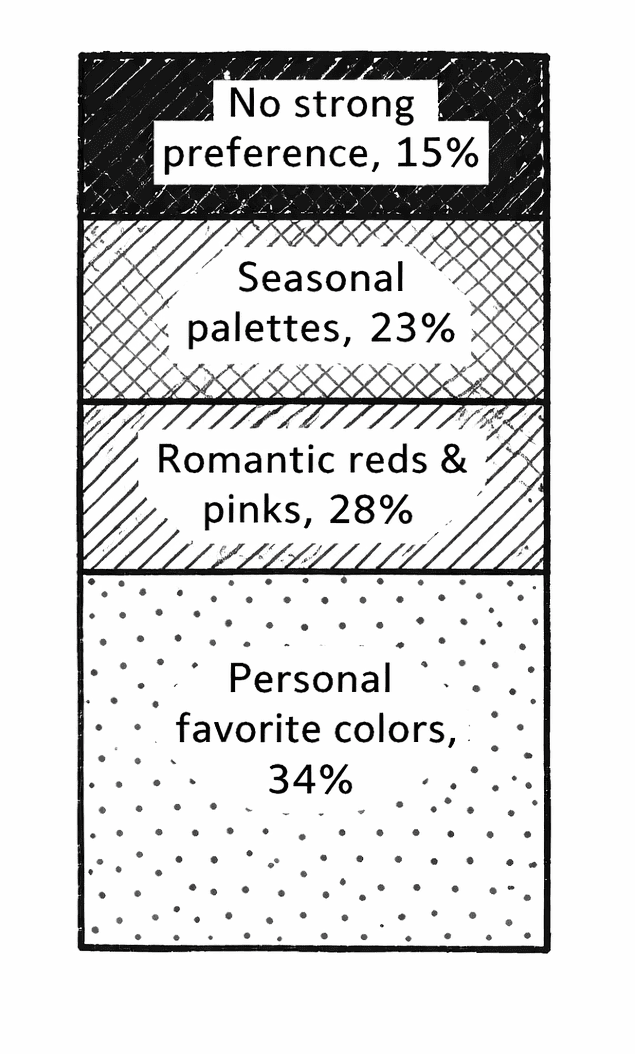
Multiple consumer psychology studies (including work by Elliot & Maier on color and emotion, and more recent retail personalization research) backs up what we’ve long suspected as designers: color preference isn’t random. It is closely tied to self-identity and emotional resonance.
Flowers are not just visual objects—they are symbolic stand-ins for attention, care, and understanding.
So when someone picks flowers that reflect the recipient —their personal vibe, palette, energy—rather than just the holiday’s greatest hits, it signals effort, attunement, and emotional fluency.
As one respondent shared:
“It doesn’t need to scream Valentine’s Day. It just needs to feel like me.” — L.M., 45
Chart 5: Valentine's Day flower colour preferences
The Generosity Gap: What people give vs. what they want
A gesture is always appreciated—flowers included. But many respondents drew a meaningful line: there’s a difference between doing something and doing something thoughtful. Valentine’s Day isn’t about minimum correctness. It’s about meaning.
This is where gifting flowers becomes less about the act itself and more about what it communicates: attention, care, and understanding.
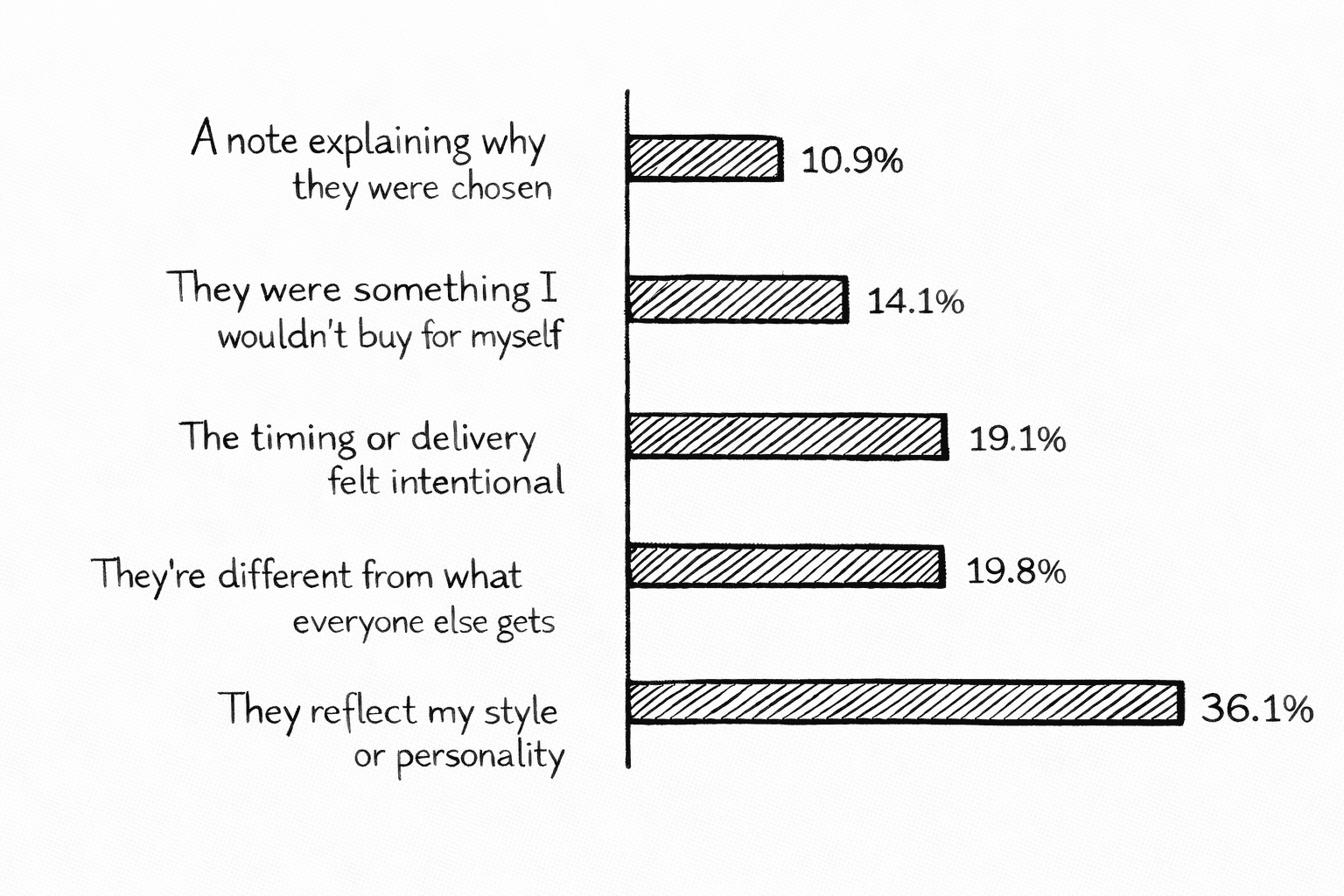
When asked what makes flowers feel truly thoughtful? The clear theme that emerged was attention and personalization.
Chart 6: What makes flowers feel thoughtful
What this means for gifting
This study does not suggest ditching tradition. It’s about rethinking it—with a little more intention and a lot more heart.
Valentine’s Day flowers work best when they feel less like a rule and more like a reflection of the person and the relationship.
And yes, of course, for the ~10% who truly love red roses, the romantics who mean it when they say “don’t change a thing,” the ones for whom tradition is the point— red roses will still live on.
How to get Valentine's Day flowers right
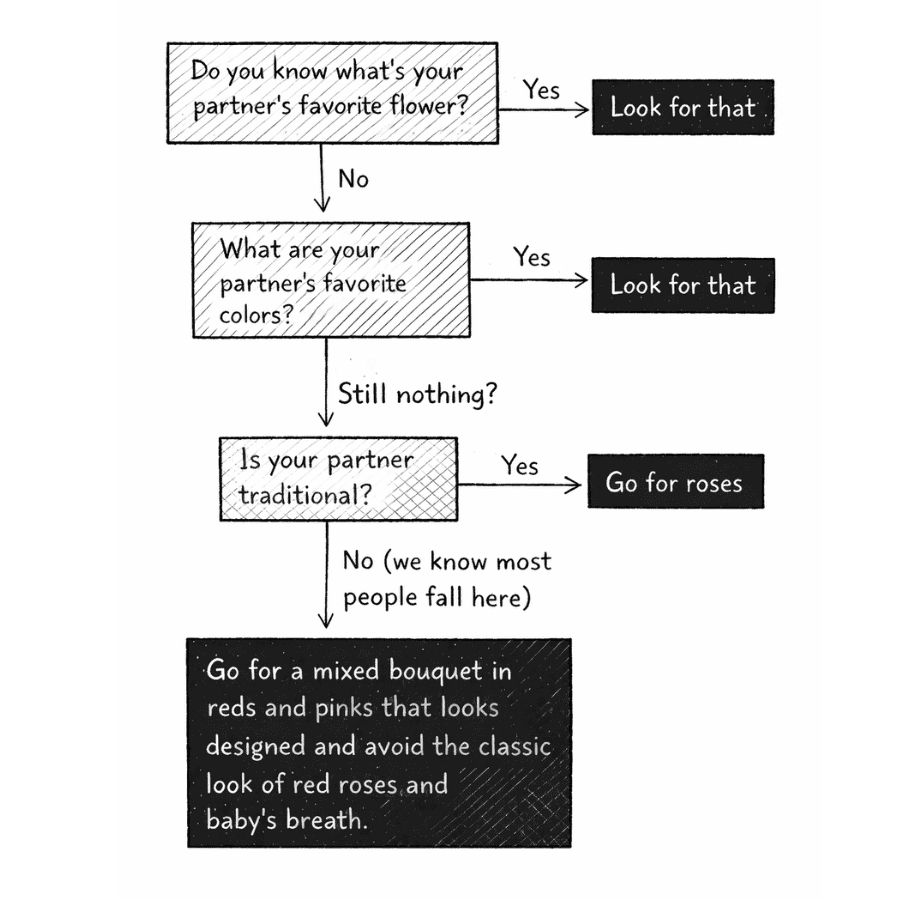
We couldn't have gone through all this effort and not provide gift givers with an actionable tool to do great this year. When it comes to choosing the right flowers, following these 3 simple questions will get anyone further than previous years. Essentially the TL;DR of this whole thing:
P.S. if you're curious to see how we tried to get it right this year, take a look at our 2026 Valentine's Day Collection.